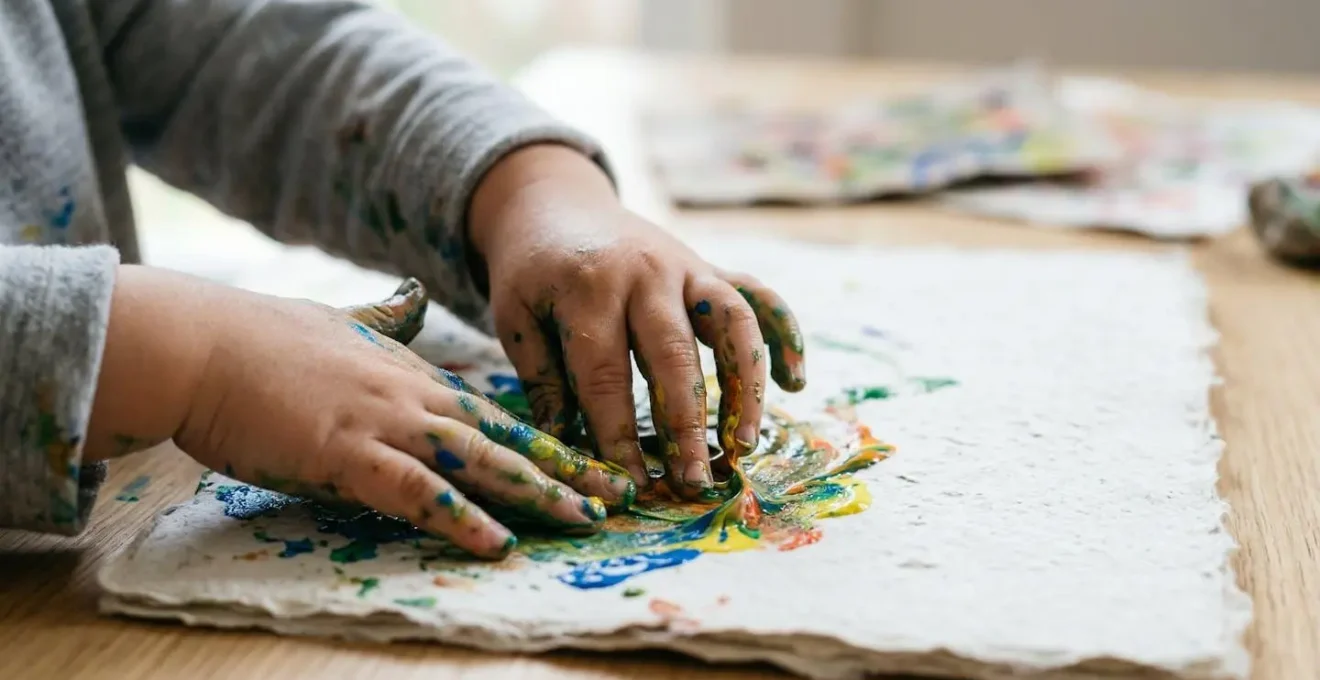
Contrary to popular belief, the goal of therapeutic art isn’t to create a masterpiece; it’s to give emotions a safe place to exist outside of the body.
- The physical act of creating—squishing, pounding, scribbling—serves as a direct outlet for pent-up physical and emotional tension.
- Valuing the process over the final product gives your child “creative permission” to express their true feelings without fear of judgment.
Recommendation: Shift your role from an art ‘teacher’ to a gentle ‘facilitator’. Get curious about what the process feels like for them, rather than what the final picture looks like.
When a child is overwhelmed, words often fail them. Their big feelings—frustration, sadness, anxiety—can become trapped inside, leading to meltdowns, withdrawal, or challenging behaviors. As a parent, it can feel helpless to watch, unable to access the inner world they can’t articulate. Many of us turn to common solutions, encouraging them to “talk it out” or distracting them with another activity. We might even try art, hoping a fun craft project will cheer them up, focusing on making a pretty picture for the fridge.
But what if the real power of art isn’t in the finished product at all? What if the true healing lies within the process itself? The key is to shift our perspective from art as a skill to be learned, to art as a language to be spoken. This isn’t about teaching them to draw a perfect circle or a yellow sun. It’s about providing the space and materials for their feelings to take shape, to be seen, and to be validated without a single word needing to be exchanged. It’s in the messy, tactile, and deeply personal act of creating that a child can finally process what’s going on inside.
This guide will walk you through the therapeutic principles that transform a simple art session into a profound opportunity for emotional regulation and connection. We will explore how to embrace the process, manage the practicalities of mess, and curate a “mental diet” of creative experiences that nurture your child’s emotional well-being from the inside out. You’ll learn to become a facilitator for their expression, creating a safe harbor where their creativity, and their emotions, can finally flow freely.
To help you navigate these transformative concepts, this article is structured to build from the core philosophy of process-focused art to practical applications in your home. Here is a look at what we will cover.
Summary: Using Creative Expression as a Therapeutic Tool for Children
- Why focusing on the “doing” matters more than the “result”?
- How squishing and pounding helps release physical tension?
- How to frame artwork to show you value their voice?
- The “Sun is Yellow” mistake that stifles creativity
- How to facilitate painting without ruining the dining table?
- How to create a damage-proof art corner in a rental property?
- Why fear of the mess stops kids from understanding cause and effect?
- Diverse Leisure Activities: Curating a Balanced “Mental Diet” for Kids
Why focusing on the “doing” matters more than the “result”?
In our goal-oriented world, we instinctively praise outcomes: “What a beautiful drawing!” or “You’re such a good artist!” While well-intentioned, this focus on the final product can create pressure and anxiety for a child. It sends a subtle message that their work will be judged and that there’s a “right” way to be creative. The true therapeutic benefit of art, however, comes from being completely absorbed in the act of creation itself. This state of being, often called “flow,” is where the magic happens. It’s in the rhythmic motion of a paintbrush, the feeling of colors mixing, or the repetitive pattern of drawing lines.
When a child is engaged in the process, they are grounded in the present moment. Their mind is quieted from worries about the future or regrets about the past. This is more than just a distraction; it’s a neurological shift. Groundbreaking neuroimaging research shows that this creative flow state is achieved when we let go of conscious supervision and allow our brains’ specialized networks to take over. By focusing on the “doing,” we give our children permission to release control, experiment, and simply be. This freedom is the foundation of authentic self-expression.
Your role as a parent is not to be a critic, but a curious observer. By shifting your language from praise of the product to curiosity about the process, you validate their experience and reinforce that their feelings are more important than their performance. This builds intrinsic motivation and emotional resilience, teaching them that the act of creation is a powerful tool for self-soothing they can turn to anytime.
Your action plan: Shifting to Process-Focused Language
- Focus on sensory mindfulness: Invite your child to notice one specific part of the process, asking, “What does it feel like to spread that blue paint?” or “I love the sound the chalk is making.”
- Use process-based questions: Instead of “What is it?,” try “You used so many lines in this area, tell me about that part,” or “What do you notice about how that color moves?”
- Model problem-solving self-talk: If frustration arises, say, “This paint is dripping more than we thought. Let’s take a deep breath and think about our next step together.”
- Anchor them in the moment: Use the present-focused nature of art to ground a dysregulated child. “Let’s just focus on the feeling of the crayon on the paper right now.”
- Get curious about their feelings: If they express frustration, gently ask, “Does this feeling of being stuck ever show up at other times, like with homework?” This connects the art experience to their broader emotional life.
How squishing and pounding helps release physical tension?
Feelings aren’t just in our heads; they live in our bodies. When a child is anxious, they might have a “tummy ache.” When they are angry, their fists might clench and their jaw might tighten. This physical manifestation of emotion is called somatization. One of the most direct ways to address these stored feelings is through proprioceptive input—activities that involve heavy work for the muscles and joints, like pushing, pulling, and squeezing. This is why materials like clay, playdough, or kinetic sand are not just toys; they are powerful therapeutic tools.
The act of squishing, pounding, rolling, and pulling these materials provides an immediate and safe outlet for physical energy. Pounding a ball of clay on a table is a much healthier release for anger than hitting a sibling. Squeezing a piece of dough can help a child’s nervous system process the jittery energy of anxiety. This isn’t just symbolic; the resistance of the material sends signals back to the brain that help to organize the sensory system, resulting in a feeling of calm and regulation. It allows a child to “do” something with their anger or frustration, transforming a chaotic internal feeling into a focused external action.
This paragraph introduces the concept of using tactile materials for emotional release. To truly understand its impact, it is helpful to visualize the deep sensory engagement involved. The illustration below captures this moment of physical expression.
As you can see, the engagement is total. This sensory anchoring brings the child completely into the present moment, offering a powerful antidote to overwhelming emotions. You don’t need to analyze what they are making. Simply providing the material and the permission to get physical with it is often enough. You can sit with them and do it too, modeling that this is a healthy way to work through tough feelings.
How to frame artwork to show you value their voice?
Once a piece of art is created, what happens next sends a powerful message to your child. Is it casually put aside, or worse, subtly judged? (“Oh, that’s… interesting.”) The way we receive and honor their creation is a direct reflection of how we value their inner world. Displaying their artwork isn’t about decorating your home or showing off their talent; it is an act of deep listening. It tells them, “I see you. What you have expressed matters to me.” This act of validation is a cornerstone of building a child’s self-worth and emotional security.
However, the method of display matters. A chaotic collage on the fridge can sometimes feel like clutter. A more intentional approach involves creating a dedicated, respectful space for their work. This could be a single, special frame where you rotate their newest piece, a corkboard “gallery,” or a simple string with clips. The key is to treat their art with the same respect you would any other piece of art. When you do this, you’re not just framing paper and paint; you are framing their voice. You are showing them that their perspective is worthy of being seen and celebrated.
This moment of shared appreciation is where deep connection happens. It creates a space for dialogue that goes beyond the art itself. This is a quiet, powerful moment of connection that reinforces your bond and their sense of being truly understood.
In this shared gaze, as shown above, there is no critique, only connection. You can use this time to revisit the process with them. Ask open-ended questions like, “I remember when you were mixing those colors. What was that part like for you?” or “This part of the drawing feels so energetic.” This reinforces that you value their experience as much as the outcome, turning a simple drawing into a lasting memory of being seen and heard.
The “Sun is Yellow” mistake that stifles creativity
One of the most common ways adults unintentionally shut down a child’s creative expression is through gentle correction. “The sun is yellow, not purple!” “People don’t have blue hair.” “That doesn’t look like a real house.” These comments come from a place of wanting to teach, but they deliver a devastating message: your unique perception is wrong. This is the “Sun is Yellow” mistake. It teaches a child that there is a single, correct way to see the world and that their own imaginative vision is less valid than reality.
When a child paints a purple sun, they aren’t making an astronomical error; they are making an emotional or aesthetic choice. Perhaps purple feels happy or mysterious to them. Maybe they just love how the color looks next to the blue sky they painted. By questioning their choice, we pull them out of their creative flow and force them into a logical, analytical mindset. This stifles their willingness to experiment and take risks, not just in art, but in other areas of life. They learn to seek approval by guessing what the adult wants to see, rather than expressing what they truly feel.
The impact of this kind of criticism is more than just discouraging. Research has shown it can fundamentally alter how children process the world around them. For example, a Binghamton University study using neural markers found that children of highly critical parents showed significantly less attention to emotional facial expressions. In essence, constant correction can numb their ability to perceive and process emotion, increasing their risk for anxiety and depression. True creative permission means accepting and celebrating the purple sun. It’s about asking, “Tell me about your purple sun,” and being genuinely curious about their answer.
How to facilitate painting without ruining the dining table?
One of the biggest hurdles for parents wanting to encourage creative expression is a completely valid one: the fear of mess. Visions of paint on the walls, clay ground into the carpet, and glitter that will still be found years later can be enough to make anyone hesitant. This anxiety is real, and if a parent is stressed, the child will pick up on it, making it impossible for them to relax and create freely. The solution isn’t to avoid messy art, but to reframe it with smart containment strategies that allow for freedom within boundaries.
By creating a “yes-mess” zone, you lower your own anxiety and give your child the green light to explore. This doesn’t have to be a dedicated art studio. It can be as simple as putting a cheap shower curtain liner on the floor, using a large, shallow cardboard box that your child can sit inside to paint, or designating an old t-shirt as the official “art shirt.” The goal is to create a space where you’re not constantly saying, “Be careful!”
Embracing different forms of art can also reduce the stress of cleanup. Not all art has to result in a permanent artifact. These “ephemeral” experiences are powerful because they purely emphasize the process of creation:
- Water painting: Use brushes and a bucket of water on a warm sidewalk or fence. The art appears and then magically vanishes as it dries.
- Window drawing: On a foggy window or a steamy shower door, fingers can become the perfect drawing tool.
- Bath time art: Use bath crayons or bath paints that are specifically designed to wash away easily from tub and tile surfaces.
Finally, transform the cleanup itself into part of the therapeutic process. Instead of it being a frantic chore, frame it as a calm, closing ritual. Washing brushes, wiping the table, and putting supplies away can be a mindful, rhythmic activity that helps a child’s nervous system down-regulate after the stimulating energy of creation. It provides a gentle transition back to the day’s other activities.
How to create a damage-proof art corner in a rental property?
For families living in rental properties, the fear of mess is compounded by the fear of losing a security deposit. The idea of permanent marker on the walls or paint stains on the floor can make setting up a creative space feel impossible. However, with the right approach and materials, you can create a fully functional, damage-proof art corner that respects both your child’s creative needs and your lease agreement. The key is to focus on solutions that are mobile, vertical, and low-mess.
A mobile art station, like a simple rolling cart, is a renter’s best friend. You can stock it with supplies and wheel it to the safest, easiest-to-clean area of your home, like the tiled kitchen floor, for messy activities. When art time is over, it can be neatly rolled back into a closet or corner. This mobility gives you complete control over where creation happens. Another strategy is to go vertical. Walls are often seen as off-limits, but they don’t have to be. Removable chalkboard or whiteboard vinyl decals can be applied to a wall or door, providing a large canvas that peels off without a trace. You can also use a tension rod in a doorway to hang a roll of paper, creating an instant, space-saving easel.
Choosing your materials wisely is also crucial. A curated “low-mess kit” can provide hours of creative engagement with minimal risk. This might include watercolor pencils (which only become paint with a wet brush), LCD writing tablets, or mess-free marker systems like Crayola’s Color Wonder. The following table compares some rental-friendly solutions to help you choose the best fit for your space and family, based on ideas from art therapists and resourceful parents.
| Solution Type | Setup Method | Mess Level | Portability | Best For |
|---|---|---|---|---|
| Mobile Art Station (Rolling Cart) | Tiered cart with organized supplies, wheels to safest spot | Contained – movable to easy-clean areas | High – fully portable | Small spaces, multiple rooms, flexibility |
| Vertical Space Solutions | Removable chalkboard/whiteboard vinyl decals or paper roll on tension rod | Low – wall-mounted activities | Medium – semi-permanent but removable | Hallways, doorways, maximizing space |
| Low-Mess Materials Kit | Watercolor pencils, LCD writing tablets, Color Wonder markers | Very Low – mess-free systems | High – fully portable | Cautious renters, young children, travel |
| Ephemeral Art Approach | Water on sidewalk, foggy window drawing, bath crayons | None – temporary, no artifact | Very High – no equipment needed | Teaching process focus, mess-averse families |
Key takeaways
- The therapeutic power of art lies in the sensory experience of the process, not the quality of the final product.
- Your role is to be a curious facilitator who validates the child’s experience, rather than an art teacher who corrects their work.
- Managing mess through smart containment and rituals reduces parental anxiety, which in turn gives the child permission to create freely.
Why fear of the mess stops kids from understanding cause and effect?
When a parent’s fear of mess leads them to over-manage a creative activity—”Don’t mix the colors!” “Use less glue!”—they are doing more than just trying to keep things tidy. They are interrupting a fundamental learning process. For a young child, making a mess is a form of scientific experimentation. What happens when I mix blue and yellow? What is the texture of paint when it drips? How far will this splatter go? These are not acts of defiance; they are acts of discovery. This hands-on exploration is how children learn about cause and effect in a tangible, memorable way.
When we intervene out of a desire for cleanliness, we rob them of these small discoveries. We prevent them from understanding the properties of materials and the consequences of their own actions. As research on parental attitudes revealed, parents who can tolerate the messiness of creative play actively promote their child’s development, while those who cannot often stifle this crucial engagement. By allowing for a certain level of mess, we are telling our children that their curiosity is more important than our tidiness. We are giving them the space to be little scientists, to test hypotheses, and to learn from the results, even if those results are a bit gooey.
This is especially important for emotional expression. When a child is stressed or upset, their ability to use language and logic diminishes. Art provides a way to communicate that bypasses the need for words. As art therapist Erica Curtis explains, it offers a vital, non-verbal outlet.
Art provides a non-verbal, visual, and kinesthetic language that permits access and gives form to emotions even when stressed or upset. When we feel hurt, stressed, or upset, our brain’s problem-solving capabilities decrease, as does its ability to process and use language.
– Erica Curtis, Art Therapist, Art Therapy-Inspired Activities for Calming Behaviors
If we add anxiety about mess on top of their existing stress, we shut down this essential channel of communication. Embracing a little chaos is embracing your child’s natural way of learning and healing.
Diverse Leisure Activities: Curating a Balanced “Mental Diet” for Kids
Just as a healthy body needs a balanced diet of different foods, a healthy mind needs a balanced “mental diet” of different types of activities. In the realm of creativity, this means curating a mix of experiences that both fill your child’s “creative well” and provide outlets for them to process what’s inside. It’s a dynamic flow of inspiration and expression, intake and output. Focusing only on output activities (like drawing or painting) without providing new input can lead to creative burnout, even in children.
This is about broadening our definition of “art.” It isn’t just about the materials we buy; it’s about the world we encourage our children to observe. A balanced approach ensures they are not only expressing themselves but are also being nourished with new ideas, emotions, and sensory experiences. According to a study highlighted by the National Endowment for the Arts, this balanced engagement pays dividends, with nearly 70% of students in arts programs reporting better emotional expression.
Thinking in terms of a balanced diet allows you to be more intentional. Is your child feeling low and lethargic? Maybe an “activating” art activity is needed. Are they feeling anxious and overwhelmed? A “calming” activity might be more appropriate. A helpful framework includes:
- Input Activities (Filling the well): These are activities that provide inspiration. This includes reading stories together, looking at picture books, listening to different kinds of music, visiting a museum, or simply spending time in nature observing the shapes of clouds or the texture of bark.
- Output Activities (Processing and expressing): This is the “doing” of art—drawing, painting, sculpting, dancing, or building—where internal experiences are made external.
- Activating Arts (For low energy): To combat sadness or lethargy, try large-scale scribbling on big paper, painting to fast-paced music, or energetic dance.
- Calming Arts (For high energy): To help with anxiety or anger, focus on activities that are rhythmic and contained, like watercolor painting, coloring in detailed patterns, tracing, or slowly sculpting with clay.
By consciously offering a variety of these experiences, you become a curator of your child’s emotional and creative life. You are providing them with a rich, diverse palette of tools they can use to navigate their inner world for the rest of their lives.
By embracing art as a process, you give your child one of the greatest gifts: the knowledge that their feelings are valid, their perspective matters, and they have a powerful, lifelong tool for understanding themselves and navigating the world. Start today by setting up a small, mess-friendly space and offering an invitation to simply create, with no expectations.