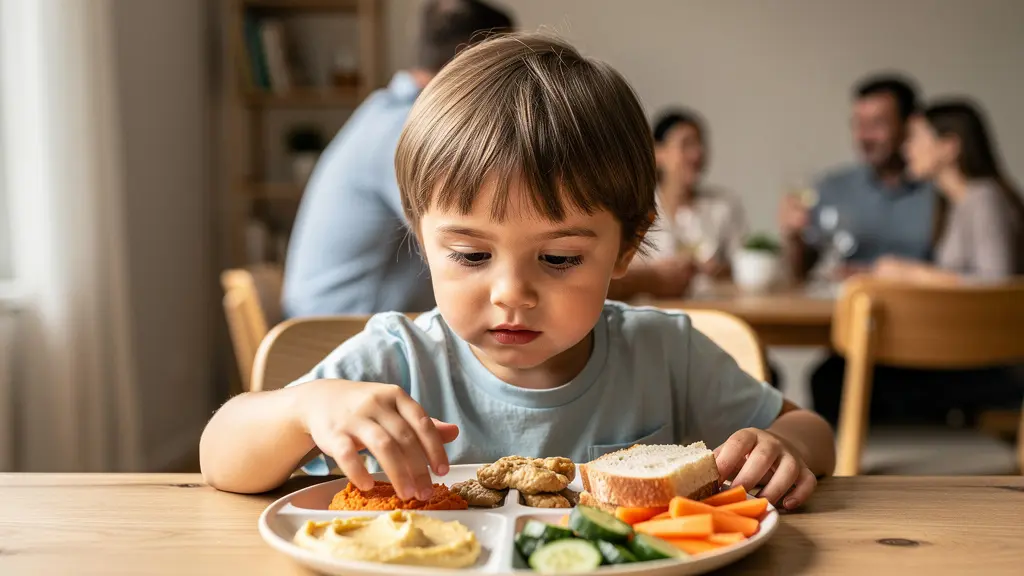
The constant mealtime battles aren’t a sign of your child’s defiance; they are often a signal of a legitimate sensory processing challenge that makes certain food textures feel threatening.
- Forcing or tricking a child with sensory issues to eat can create long-term food aversion and anxiety.
- Success comes from respecting the child’s sensory reality through systematic, respectful exposure and strategic nutrition.
Recommendation: Shift your goal from “getting them to eat this meal” to “teaching their sensory system to accept more foods over time” while ensuring their nutritional needs are met through fortification.
As a pediatric nutritionist, I’ve sat with hundreds of parents who are exhausted, frustrated, and worried. They describe the same scene: a meal they spent an hour preparing is rejected after a single, tentative look. They’ve tried everything—hiding vegetables in brownies, cutting sandwiches into star shapes, and pleading for “just one bite.” Yet, their child’s list of “acceptable” foods only seems to shrink, often limited to a few specific brands of crunchy crackers or plain pasta.
The common advice to “just keep offering it” or to not “cater” to them often misses a crucial point. While these strategies can work for simple picky eating, they fail when the root cause isn’t behavior but biology. Many of these children are not being stubborn; they are experiencing a sensory overload. For them, the texture of a steamed carrot or a mixed casserole isn’t just unpleasant—it can be genuinely overwhelming, like nails on a chalkboard for their mouth. This is a key distinction that changes everything about our approach.
The solution isn’t to be found in a power struggle. It’s in understanding the “why” behind the rejection. This isn’t about giving in; it’s about being strategic. We must shift our focus from winning the battle of the dinner plate to playing the long game: systematically helping their sensory system adapt while ensuring their growing bodies get the nutrients they need right now. It’s a two-pronged approach of respectful desensitization and intelligent nutritional fortification.
This guide will walk you through this professional approach. We will deconstruct the common mistakes that inadvertently worsen the problem and build a new framework based on proven therapeutic and nutritional strategies. You’ll learn how to re-introduce foods without force, maximize the nutritional value of the few bites they do eat, and ultimately, bring peace back to your dinner table.
Summary: Creating balanced meals for children with food texture sensitivities
- Why forcing a child with sensory issues to eat backfires?
- How to serve broccoli so a texture-sensitive child will try it?
- Separate Plates or Mixed Dishes: Which encourages eating better?
- The “Just One More Option” mistake that creates a lifelong picky eater
- How to pack maximum nutrition into the 3 bites they actually eat?
- Why the iron in cereal isn’t absorbed as well as meat?
- Why you should serve strawberries with spinach?
- How to Introduce Fiber-Rich Grains to Kids Who Only Eat White Bread?
Why forcing a child with sensory issues to eat backfires?
The impulse to say “You’re not leaving the table until you eat your peas” comes from a place of love and concern. We worry about nutrition. However, for a child with sensory challenges, this approach is not just ineffective; it’s actively harmful. Their refusal is not a power play; it’s a physiological response. When we force the issue, we are not teaching them to like peas. We are teaching them that the dinner table is a place of anxiety and conflict, and that their internal feelings of discomfort are invalid.
This pressure creates a powerful negative association. The brain learns to link the sight, smell, and thought of that specific food—and sometimes all new foods—with stress. The body’s fight-or-flight response can be triggered, leading to gagging, tantrums, or even vomiting. This is not defiance; it is a sensory system screaming “danger!” Over time, this erodes trust and can escalate a simple texture preference into a full-blown feeding disorder that requires intensive therapy.
Instead of applying pressure, our first job is to become a detective. Is this simple pickiness or a deeper sensory issue? Observing their reactions provides the clues. True sensory sensitivities are consistent and often extend beyond a single food. Recognizing these signs is the first step toward shifting from a framework of discipline to one of accommodation and strategic support.
Your checklist for recognizing sensory feeding issues
- Observe reactions: Watch for gagging at the sight, smell, touch, or taste of certain foods—this indicates sensory sensitivities rather than defiance.
- Note texture preferences: Does your child only eat specific textures (e.g., only crunchy or only soft) and insist on specific brands or colors of food?
- Monitor messiness tolerance: Observe their comfort level with messiness during meals and in other activities like crafting or sand play. Aversion to messy hands can be a clue.
- Check for food pocketing: Notice if they hold food in their cheeks for extended periods, which may indicate poor oral sensory awareness or chewing difficulties.
- Track avoidance patterns: Document which sensory aspects (texture, temperature, smell) trigger the strongest reactions to identify a clear pattern.
The goal is to build a bridge to new foods, not to dynamite the path. By removing pressure, we create a safe environment where curiosity has a chance to bloom, which is the only state in which a child will voluntarily explore a new food.
How to serve broccoli so a texture-sensitive child will try it?
For a child sensitive to texture, a piece of steamed broccoli can be a nightmare. It’s soft and mushy in some parts, firm in others, and has tiny, unpredictable bits at the top. The common advice to “just put it on their plate” is destined for failure. The key is not to present the final, challenging version of the food, but to deconstruct it into manageable sensory steps using a method known as the “texture hierarchy.”
This approach, often used in feeding therapy, involves introducing a food in its least threatening form and gradually moving toward more complex textures. Instead of seeing “broccoli” as one thing, we see it as a spectrum of textures. The goal is not to get them to eat the steamed floret today, but to get them comfortable with the *idea* of broccoli in a form their sensory system can handle.
For example, a texture hierarchy for broccoli might look like this:
- Step 1 (Dry & Crunchy): Start with freeze-dried broccoli “crisps.” The texture is predictable, uniform, and crunchy, which is often a preferred texture.
- Step 2 (Raw & Firm): Offer very thin, almost see-through slices of the raw stem, like a tiny coin. The texture is firm and consistent.
- Step 3 (Roasted): Roast small florets at high heat until the edges are dark and crispy. This provides a mix of firm and crunchy textures, a step up in complexity.
- Step 4 (Steamed): Finally, introduce the ultimate challenge: a small, lightly steamed floret.
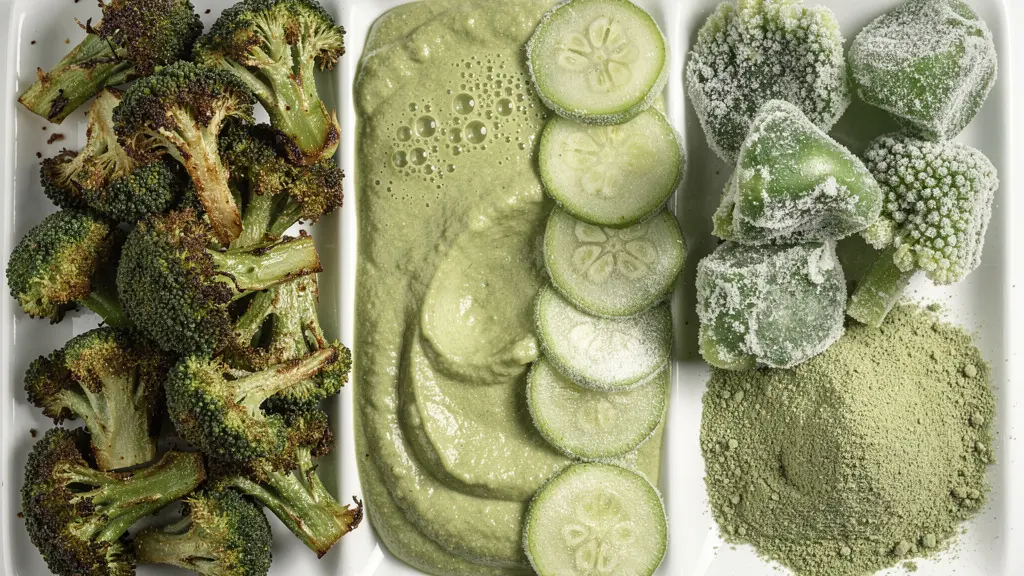
As this visual progression shows, each step builds on the last, making the journey less intimidating. The Feeding therapists often use a ‘texture hierarchy’ to introduce new foods in a manageable way, and this method has shown remarkable success. By breaking a food down into its sensory components, we give the child a predictable and controllable experience, which is essential for building the confidence to try new things.
Remember, each step is a victory. Licking a raw broccoli coin or crunching on a freeze-dried piece is a successful interaction. We are playing the long game of sensory desensitization, not the short game of a clean plate.
Separate Plates or Mixed Dishes: Which encourages eating better?
You’ve prepared a delicious, balanced casserole, only to watch your child painstakingly pick out every single piece of onion. This common scenario highlights a central dilemma for parents of texture-sensitive children. For a child with an over-responsive sensory system, a mixed dish is not a harmonious blend of flavors; it’s a sensory minefield. The unpredictable combination of soft noodles, firm meat, and mushy vegetables can trigger immediate rejection.
As the specialists at The OT Toolbox wisely state, this is where the power of deconstruction comes in. Their experts highlight the core of the issue:
For a texture-sensitive child, a mixed dish is a sensory minefield. A deconstructed plate with ‘safe zones’ between foods gives them the control they need to feel safe enough to explore.
– Occupational Therapy Specialists, The OT Toolbox – Food Texture Issues Guide
This insight leads to a clear strategy: start with separation. Using a divided plate or simply leaving space between different food items on a regular plate creates “safe zones.” It allows the child to see each component clearly and assess it on its own terms. This sense of control is not “giving in”; it’s a prerequisite for exploration. A child who feels safe is far more likely to consider trying a new food than one who feels overwhelmed.
As outlined in a helpful comparative analysis, the choice between separate and mixed dishes depends on the child’s level of sensitivity and their stage in the feeding journey.
| Presentation Style | Benefits | Challenges | Best For |
|---|---|---|---|
| Separate/Divided Plates | Creates ‘safe zones’ between foods; Gives child control; Prevents flavor contamination | May reinforce food separation habits | Initial exposure to new textures; Children with high sensory sensitivity |
| Mixed Dishes | Encourages food combination; More typical eating pattern | Can trigger sensory overload; Unpredictable textures | Children with lower sensitivity; Later stages of therapy |
| Bridge Method | Gradual transition; Child maintains some control | Requires patience and consistency | Transitioning from separated to mixed eating |
The goal is to eventually move towards mixed dishes, but this must be a gradual process. You can use a “bridge” food, like a favorite dip, to encourage touching a new food (dipping a carrot stick) or serve the components of a casserole separately with the sauce on the side. It’s all about providing a scaffold that helps them move from a safe, separated world to a more integrated one at their own pace.
The “Just One More Option” mistake that creates a lifelong picky eater
It’s 6 PM. The meal is served. Your child takes one look and declares, “I don’t like this.” Your heart sinks. The fear that they’ll go to bed hungry is powerful, so you do what any loving parent would do: you jump up and make them a quick bowl of plain pasta or a piece of toast. You’ve just fallen into the “short-order cook” trap, perhaps the single most significant mistake that reinforces picky eating for the long term.
While it solves the immediate problem, this reaction teaches a detrimental lesson: “If I refuse what’s offered, something better (or at least, safer) will appear.” This behavior, known as parental accommodation, is strongly linked to persistent picky eating into adulthood. In fact, a 2024 study in the Journal of Eating Disorders found that adults who are picky eaters showed a strong correlation with childhood picky eating and these exact parental accommodation behaviors. You are not creating a solution; you are cementing a lifelong problem.
The expert-recommended antidote to this cycle is the “Division of Responsibility” in feeding. This model, championed by feeding specialists, is simple in principle but requires iron-clad consistency.
The Division of Responsibility in Practice
As outlined by public health experts, this highly successful model assigns clear roles. The parent decides what food is served, when it is served, and where it is served. The child’s job is to decide whether to eat it and how much to eat. The key to making this work without a hunger strike is proactive, not reactive. Parents should always include 1-2 “safe” foods—foods they know their child will usually eat—as part of the main meal. This removes the parent’s fear of the child going hungry and eliminates the child’s need to request a special meal. The choice is no longer “eat this or I’ll make you something else,” but “here is the meal, and you can choose to eat the chicken, the bread, and/or the apple slices from it.” This proactive approach eliminates the need for short-order cooking and empowers the child within healthy boundaries.
This method requires a leap of faith. You must trust that your child will not starve. They might eat only the bread roll for one or two meals, but their internal hunger cues will eventually lead them to try the other options on their plate, especially when they realize no other food is coming. It’s about holding a firm, loving boundary that fosters self-regulation and food exploration.
How to pack maximum nutrition into the 3 bites they actually eat?
While you’re working on the long-term goal of expanding their palate, there’s the pressing short-term reality: ensuring your child gets the vitamins, minerals, protein, and healthy fats they need to grow and thrive. When a child’s intake is limited to a small volume of food, we must make every single bite as nutritionally powerful as possible. This is the art of nutrient fortification.
This is not about “hiding” vegetables in a way that feels deceptive. It’s a strategic, transparent approach to enhancing the nutritional profile of foods they already accept. Think of their favorite foods as delivery vehicles for essential nutrients. A plain pancake, a bowl of oatmeal, or a fruit smoothie are all blank canvases. With a few simple, flavorless or complementary additions, you can dramatically increase their caloric and nutritional density without triggering sensory alarms.
The key is to use ingredients that blend in seamlessly, either in taste, texture, or color. This requires some experimentation, but the payoff is immense peace of mind. You can relax a little about the uneaten broccoli when you know their pancake contained a significant protein and fiber boost.
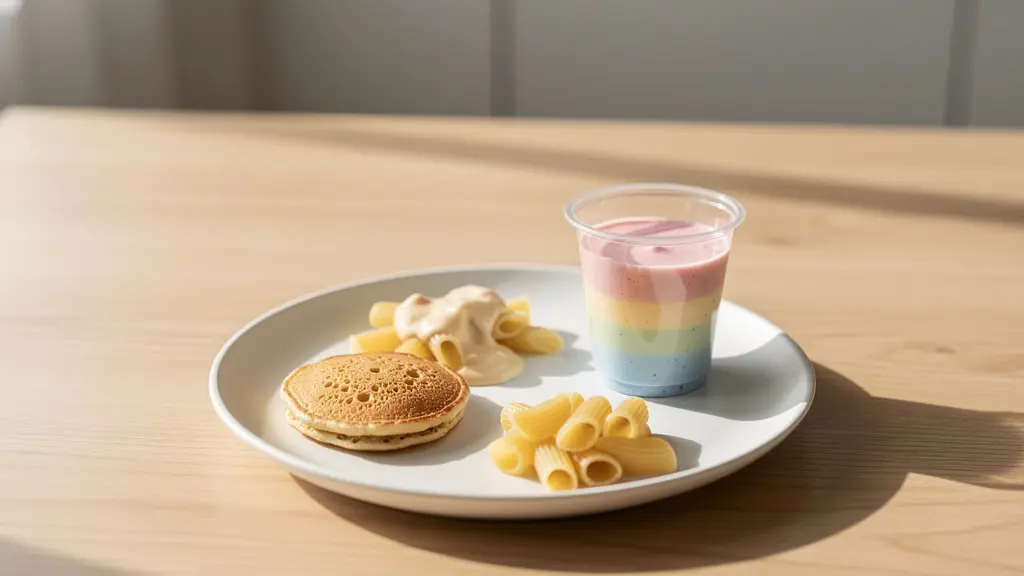
Here are some effective fortification strategies to get you started:
- Swap water for bone broth when cooking rice or pasta for added protein and minerals.
- Blend white beans or silken tofu into pancake or muffin batter for an invisible protein boost.
- Add nutritional yeast to pasta sauce or scrambled eggs for B-vitamins and a cheesy flavor.
- Mix avocado oil or a spoonful of nut butter into smoothies for healthy fats and extra calories.
- Create “power powders” from ground flax seeds, chia seeds, or hemp hearts to stir into strongly flavored foods like yogurt or oatmeal.
- Fortify accepted dips like hummus or yogurt with pureed roasted garlic and hemp hearts for nutrient density.
By focusing on nutritional density, you are addressing the immediate health needs of your child. This frees up the emotional energy you need to patiently and persistently work on the behavioral and sensory aspects of eating, turning mealtime from a source of stress into an opportunity for progress.
Why the iron in cereal isn’t absorbed as well as meat?
Parents often rely on iron-fortified cereals as a primary source of this crucial mineral for their children. However, many are surprised to learn that the iron in that bowl of O’s is not the same as the iron in a piece of chicken. Understanding the difference between heme iron (from animal sources) and non-heme iron (from plant and fortified sources) is fundamental to ensuring your child is truly absorbing the nutrients you provide.
Heme iron, found in meat, poultry, and fish, is highly bioavailable, meaning our bodies can absorb it very efficiently. Non-heme iron, found in plants (like beans, spinach) and fortified foods (like cereals and bread), is a different story. Its absorption is much less efficient because it is often bound by compounds called phytates, which are naturally present in grains, nuts, and legumes.
These phytates act like tiny handcuffs, preventing a significant portion of the non-heme iron from being absorbed in the gut. Calcium also competes for the same absorption pathways, which is why the common practice of serving iron-fortified cereal with cow’s milk is, from a purely biochemical standpoint, counterproductive for iron uptake. It doesn’t mean you must stop, but it does mean you need a strategy to overcome this inhibition.
This is where Vitamin C becomes your nutritional superhero. It has a remarkable ability to counteract the negative effects of phytates. As research published in the Annals of the New York Academy of Sciences confirms that Vitamin C can effectively reverse the inhibiting effects of phytates on non-heme iron absorption. It essentially “unlocks” the iron, making it available for the body to use. The more Vitamin C present in the meal, the more non-heme iron is absorbed.
So, that fortified cereal isn’t useless—far from it. It just needs a partner. By consciously pairing non-heme iron sources with a dose of Vitamin C in the same meal, you can transform a poorly absorbed mineral into a bioavailable nutrient, ensuring your child gets the iron they need for energy, growth, and cognitive development.
Why you should serve strawberries with spinach?
The principle of pairing non-heme iron with Vitamin C is one of the most powerful and practical tools in a parent’s nutritional toolkit. Serving strawberries with spinach isn’t just about making a tasty smoothie; it’s a strategic biochemical decision. The Vitamin C in the strawberries dramatically increases the absorption of the non-heme iron from the spinach, turning a good food into a great one for your child’s body.
This concept is not just a theory; its real-world impact has been demonstrated. A compelling study of preschool children found that those consuming vitamin C-rich foods or drinks with their iron-fortified breakfast had significantly higher hemoglobin levels and a lower prevalence of anemia compared to children who ate the cereal with milk alone. This proves that a simple food pairing at mealtime can have a measurable impact on a child’s health status.
The beauty of this strategy is its simplicity and versatility. It doesn’t require special ingredients, just thoughtful combinations of everyday foods. Once you start looking for these pairings, you’ll see them everywhere. The goal is to ensure that whenever a major source of non-heme iron is on the plate, a source of Vitamin C is right there beside it.
Here are some simple, kid-friendly pairings to put this science into practice:
- Pair bell pepper strips (high in Vitamin C) with hummus (made from iron-rich chickpeas).
- Add mandarin orange segments to a soup made with lentils.
- Serve kiwi slices alongside a bowl of iron-fortified oatmeal.
- Use a tomato-based sauce (rich in Vitamin C) on chickpea or lentil pasta.
- Squeeze fresh lemon or lime juice over beans, chicken, or fortified pasta just before serving.
- Combine strawberries and spinach in a smoothie—a classic pairing where the sweet fruit boosts iron absorption and masks the flavor of the greens.
For parents of children with limited diets, this strategy is a game-changer. It allows you to maximize the nutritional value of the plant-based and fortified foods your child already accepts, ensuring they get the iron they need for focus, energy, and overall healthy development.
Key takeaways
- Stop the fight: Recognize that texture sensitivity is a sensory issue, not a behavioral one. Forcing food creates long-term aversion.
- Be a strategist, not a short-order cook: Use the Division of Responsibility, offering safe foods alongside new ones, but never a separate meal.
- Make every bite count: Use nutrient fortification to enhance the nutritional value of accepted foods while you work on expanding the palate.
How to Introduce Fiber-Rich Grains to Kids Who Only Eat White Bread?
The transition from fluffy, uniform white bread to the denser, more flavorful world of whole grains can be a major hurdle for a texture-sensitive child. The slightly gritty texture and nuttier taste of whole wheat are often detected and rejected immediately. Just as with vegetables, the key is a gradual, strategic introduction rather than an abrupt switch.
One of the most effective methods is the “fade” technique. Start by mixing a very small amount of whole wheat flour into your recipe for homemade pancakes, muffins, or even bread. We’re talking about a ratio of 1:8 (one part whole wheat to eight parts white flour) to start. The change will be imperceptible. Once that is accepted for a week or two, you can slowly, incrementally increase the ratio to 1:7, then 1:6, and so on, over a period of weeks or months. This slow desensitization allows their palate and sensory system to adapt without feeling ambushed.
Another approach is to explore different types of whole grains. Not all grains have the same texture. “White” whole wheat flour is made from a different variety of wheat and has a much milder flavor and lighter color than traditional red whole wheat. Oat flour provides a soft, moist texture. Quinoa flakes can be blended into batters almost invisibly. Experimenting with these alternatives can help you find a fiber-rich option that meets your child’s specific sensory threshold.
What if my child can detect even small amounts of whole grain flour?
Start with white whole wheat flour, which has a milder flavor and lighter color. You can also try oat flour or quinoa flakes, which have softer textures than traditional whole wheat. These are often more easily accepted.
Can I add fiber without changing the bread itself?
Yes! This is an excellent strategy. Try “external fiber” by adding a teaspoon of ground flaxseed, chia seeds, or psyllium husk powder to things that go *on* the white bread. Mix it into peanut butter, jam, cream cheese, or a yogurt spread. The flavor of the spread will mask the fiber, and the texture is often not noticeable.
Ultimately, patience is your greatest tool. A rejection today is not a “never.” It’s just a “not yet.” By using the fade technique, exploring different grain types, and fortifying externally, you can guide your child toward a more fiber-rich diet without the mealtime battles, building a healthier foundation for their future.