The most common parenting advice for handling losses often backfires by invalidating a competitive child’s intense feelings.
- True resilience is built by intentionally shifting the family’s focus from winning to skill development and personal growth.
- The moments immediately after a game, particularly the car ride home, are the most critical and delicate teaching opportunities.
Recommendation: Stop acting as a simple cheerleader and start performing as a skilled coach for your child’s emotional and social development.
The silence in the car after a tough loss is heavy. You see your child’s slumped shoulders in the rearview mirror, fighting back tears or simmering with frustration. Your instinct is to fix it—to say, “It’s just a game,” or, “You played great!” But for a competitive child, these well-intentioned phrases can feel dismissive, deepening their sense of failure. Many parents are told to praise effort, not outcomes, but this advice often feels superficial when faced with a genuine meltdown over a missed goal or a strikeout.
The challenge isn’t the loss itself; it’s the meaning your child attaches to it. When sports become a measure of self-worth, every defeat feels like a personal indictment. This is where many parenting strategies fall short. They try to soothe the emotion without addressing the underlying framework through which the child views competition. The pressure to win, whether internal or external, can overshadow the very reason we enroll our kids in sports: to build character, learn teamwork, and develop a healthy relationship with challenge.
But what if the key wasn’t to diminish the importance of the game, but to redefine its purpose? This guide takes a different approach, grounded in youth sports psychology. We will shift the focus from a ‘performance outcome’ to a ‘development process.’ It’s about equipping you, the parent, with the tools to act as a coach for your child’s emotional life, transforming losses from painful events into powerful opportunities for growth. We’ll explore how to navigate difficult coaches, manage sibling rivalry, and turn that dreaded car ride home into a sanctuary for building resilience.
This article provides a structured path to help you reframe your child’s experience with competitive sports. The following sections will break down the most common challenges parents face and offer practical, psychology-backed strategies to foster a healthy, process-oriented mindset in your young athlete.
Contents: Guiding Your Child Through the Ups and Downs of Team Sports
- What can a child learn from not being the star player?
- How to talk to your child about a coach they don’t like?
- Stick it Out or Quit: What to do mid-season if they hate it?
- The “Car Ride Home” mistake that makes kids quit sports
- How your shouting affects your child’s performance anxiety?
- Cycling or Soccer: Which suits the introverted child better?
- Why a peer’s correction teaches social norms faster than a parent’s?
- Competitive Challenges: Healthy Drive vs. Toxic Stress in Siblings
What Can a Child Learn from Not Being the Star Player?
In a culture that glorifies the star quarterback and the top scorer, it’s easy for parents and children to see time on the bench as a failure. We instinctively want our kids to be in the spotlight, believing that’s where the most valuable experiences happen. However, from a developmental psychology perspective, the role of a non-starter or “bench player” is a powerful, often overlooked, engine for growth. It teaches a set of skills that the star player may not have the opportunity to develop, such as resilience in the face of adversity and the importance of contributing to a team in multiple ways.
The time spent on the sidelines is not passive. It’s an active learning lab. A study of youth athletes found that bench players often develop a unique perspective, turning observation into a form of practice. They analyze teammates’ techniques, absorb the coach’s strategies, and understand the game’s flow from a macro level. This builds a higher “sports IQ.” As noted by youth development experts, these players are essential for a healthy team dynamic. They “must push themselves harder to prove themselves and push starters to be better during practice, keeping starters on their toes.” This internal competition elevates the entire team’s performance.
Furthermore, not being the star player decouples a child’s self-worth from their in-game performance. They learn to find value in their role, whether it’s encouraging teammates, being ready to substitute at a moment’s notice, or maintaining a positive attitude that boosts team morale. This fosters a process-oriented mindset, where personal effort and contribution are valued as much as the final score. It teaches them that their worth isn’t defined by minutes on the field but by their character and commitment to the group—a profound lesson that extends far beyond sports.
How to Talk to Your Child About a Coach They Don’t Like?
It’s a common and difficult scenario: your child comes home complaining about their coach. They might feel the coach is unfair, too harsh, or doesn’t recognize their talent. Your first instinct as a parent is often to protect your child, which can mean immediately blaming the coach. However, this situation is a critical opportunity to teach your child how to navigate difficult authority figures—a skill they will need throughout their life. The goal isn’t to solve the problem for them, but to empower them with a framework for communication and self-advocacy.
The first step is to listen without judgment. Create a safe space for your child to express their frustration. Use open-ended questions like, “Tell me more about what happened at practice,” or, “What is it specifically that feels unfair?” This validates their feelings and helps you separate objective issues (like a coach violating team policy) from subjective feelings (like disappointment over playing time). This conversation is best had in a calm, private environment, reinforcing that you are their trusted ally.
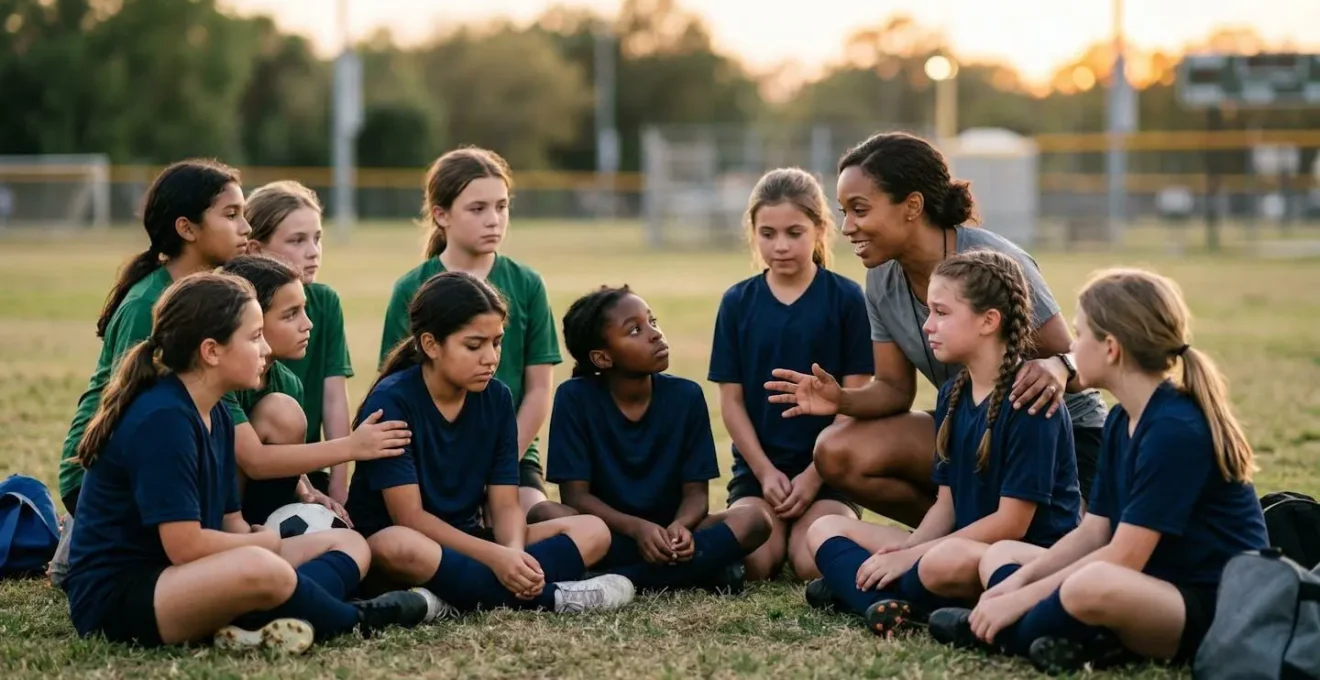
As this image illustrates, the foundation of resolving this conflict is a supportive and open dialogue between you and your child. Once you have the full picture, you can coach them on how to handle it. If the issue is minor, you might encourage them to focus on what they can control: their effort, attitude, and sportsmanship. If the issue is more significant and requires your intervention, it’s crucial to approach the coach constructively rather than confrontationally. The following plan provides a clear framework for that interaction, ensuring the conversation remains productive.
Your Action Plan: A Framework for Productive Parent-Coach Communication
- Implement the 24-Hour Rule: Before addressing any game-related concerns with the coach, wait a full day. This allows emotions to settle for everyone and leads to a more rational and constructive discussion.
- Define Communication Channels: Respect the coach’s time. Identify appropriate channels (email, scheduled call) and times for conversations, avoiding impromptu confrontations before or after a game.
- Understand the Philosophy: Attend pre-season parent meetings to understand the coach’s philosophy, team expectations, and policies on playing time. This context is vital before raising a complaint.
- Maintain Open Dialogue: Approach the conversation with a goal of collaboration, not accusation. Frame your concerns as questions seeking understanding (e.g., “Can you help me understand what my child needs to work on to earn more playing time?”).
- Involve a Neutral Party: If a direct conversation fails or the conflict becomes disruptive, involve a neutral third party like an athletic director or league administrator to mediate.
Stick It Out or Quit: What to Do Mid-Season If They Hate It?
“I want to quit.” These four words can trigger a wave of anxiety in any parent. We’ve invested time and money, and we believe in the value of commitment. The temptation is to reply, “We don’t quit in this family.” But this dilemma is more complex than a simple lesson in perseverance. According to Aspen Institute’s Project Play, “The average child today spends less than three years playing a sport, quitting by age 11.” This is a systemic issue, not just an individual failure of grit.
The first step is to become a detective. Why do they want to quit? “Hating it” is a symptom, not a diagnosis. Is it a difficult coach? Social anxiety with teammates? Burnout from too much pressure? Or is the sport simply a bad fit for their personality? Forcing a child to finish a season in a toxic environment can do more harm than good, potentially souring them on sports altogether. Research consistently shows that a primary reason kids leave sports is because it’s no longer fun. In fact, multiple studies have found that nearly 70% of kids quit sports by age 13, largely due to mounting pressure and a lack of enjoyment.
This doesn’t mean quitting is always the answer. The key is to create a collaborative decision-making process. Sit down with your child and map out the pros and cons. You could propose a compromise: “Let’s agree you’ll finish this season, but we will not sign up for this sport next year. In the meantime, let’s focus on one small goal you want to achieve before the season ends.” This approach honors their feelings while still teaching the value of seeing a commitment through. It transforms the narrative from “enduring misery” to “finishing with a purpose.” The ultimate goal isn’t to create a professional athlete but to foster a lifelong love of physical activity. Sometimes, that means knowing when to pivot to a different sport or activity that better suits their spirit.
The “Car Ride Home” Mistake That Makes Kids Quit Sports
The game ends, the team heads to the parking lot, and the most critical coaching moment of the day begins: the car ride home. For many well-meaning parents, this is the time for a post-game analysis. “Why did you miss that shot?” “You should have passed the ball sooner.” While intended to be helpful, this immediate critique is often the single biggest mistake a parent can make. As one expert puts it, “The car ride home after a sports loss can either build your child’s resilience—or chip away at their love for the game.”
During this period, a child is in a state of high emotional sensitivity and physical exhaustion. Their brain’s prefrontal cortex—responsible for logic and emotional regulation—is effectively offline. They are not receptive to constructive criticism; they are processing the raw feelings of disappointment, frustration, or even shame. A parental critique at this moment is often heard not as helpful advice, but as a confirmation of their failure. This is where the concept of emotional decompression becomes paramount. The car should be a sanctuary, a safe space to simply *be* after the intensity of competition.
Research on post-game parenting has shown the power of creating a consistent decompression ritual. Whether it’s stopping for a specific snack, listening to their favorite music, or simply allowing for quiet reflection, the key is that the ritual remains the same regardless of a win or a loss. This consistency sends a powerful, unconditional message: “My love and approval are not tied to the scoreboard.” If a conversation is to happen, it should be initiated by the child or guided by open, non-judgmental questions like, “What was the most fun part of the game for you?” The tactical breakdown can wait for tomorrow, after emotions have settled and the mind is ready to learn.
How Your Shouting Affects Your Child’s Performance Anxiety
You see a play unfolding and shout, “Shoot the ball!” or “Get back on defense!” In your mind, you’re helping. You’re being an engaged, supportive parent. But from your child’s perspective on the field, that shout is a blast of pressure. They are already trying to process instructions from their coach, anticipate the moves of their opponents, and execute complex physical skills. Your voice from the sidelines adds another layer of cognitive load, often triggering performance anxiety rather than improving performance.
This kind of sideline behavior, though common, can be damaging. As one pediatric sports medicine specialist warns, certain parental actions can have a profound negative impact.
Parental behaviors can squash a child’s enjoyment of a sport, cause anxiety and a lack of self-esteem, and make it likely the child will stop playing the sport altogether.
– Dr. David B. Soma, M.D., Mayo Clinic – Pediatric Sports Medicine Specialist
When a parent shouts instructions, it sends a message that the child isn’t capable of making their own decisions. This undermines their autonomy and confidence. It also creates a fear of making mistakes, as they know a parent is watching and evaluating every move. This is the breeding ground for a fixed mindset, where the child avoids risks to prevent parental disapproval. Unfortunately, this is not a rare occurrence. Observational studies have indicated that up to 30% of parents are involved in negative or inappropriate sideline behaviors during youth sports competitions.
Your role on the sideline is not to be a second coach. It is to be a source of calm, unwavering, and positive support. The best thing you can shout from the sidelines is often nothing at all. A quiet nod, a thumbs-up, or simple, non-instructional encouragement (“Great effort!”) communicates everything your child needs to hear: “I love watching you play.” This approach of parental co-regulation, where your calm presence helps regulate your child’s nervous system, allows them the mental freedom to play creatively, take risks, and truly learn the game.
Cycling or Soccer: Which Suits the Introverted Child Better?
Parents often mistakenly believe that introverted children should be pushed into team sports like soccer to “bring them out of their shell.” Conversely, they might steer them toward individual sports like cycling or swimming, assuming the solitude is a better fit. The reality, however, is far more nuanced. The distinction between “team” and “individual” sports is less important than the specific environment and the nature of the social demands. The key to finding the right fit is understanding an introvert’s energy system, often called their “social battery.”
Introversion is not the same as shyness. Shyness is a fear of social judgment, while introversion is about energy management. Introverts are drained by high levels of social interaction and recharge through solitude. Soccer, with its constant on-field communication, crowded sidelines, and team huddles, can be a rapid drain on a social battery. Cycling, on the other hand, can offer long stretches of solo focus, even when riding with a group, allowing an introvert to recharge while still being part of a team.
However, the roles can easily be reversed. A small, low-pressure soccer team with a calm, supportive coach might be a perfect environment for an introvert who thrives in close-knit groups. Conversely, a massive, hyper-competitive cycling club with constant social events and pressure to perform could be completely overwhelming. The crucial variables are not the sport’s label, but its culture, coaching style, and team size. Does the environment respect a child’s need for space? Does the coach value quiet leadership? Is the focus on individual improvement within a team context?
Instead of asking “soccer or cycling?” ask, “Which environment will respect my child’s social energy needs?” Observe a practice. Talk to the coach. The right sport for an introverted child is one that provides a healthy balance of social engagement and opportunities for quiet replenishment, allowing them to enjoy the physical and social benefits of sports without feeling constantly drained.
Why a Peer’s Correction Teaches Social Norms Faster Than a Parent’s
As a parent, it can be painful to watch your child be corrected by a teammate. If your child hogs the ball, and another player yells, “Pass it, we’re a team!” your protective instincts might flare up. You may feel the urge to intervene or to soften the blow later. However, these in-the-moment peer interactions are one of the most powerful and efficient mechanisms for teaching social norms. They achieve something a parent’s lecture rarely can: immediate, context-relevant feedback with a natural consequence.
The effectiveness of peer feedback lies in its timing and source. As clinical psychologist Dr. Lisa Damour explains, the lesson is far more potent when it comes from a teammate.
A teammate’s correction happens in the exact moment it’s relevant, and the consequence is immediate to the game’s outcome. A parent’s feedback is often delayed and abstract, making the lesson less potent.
– Dr. Lisa Damour, PhD, Ask Lisa Podcast – Youth Sports Psychology
When a parent says, “You need to share the ball more,” the lesson is theoretical. It’s an abstract rule delivered by an authority figure outside the context of the game. But when a teammate says it, the feedback is directly tied to the shared goal of winning or playing well. The child learns that their individual action has a direct impact on the group’s success and their social standing within it. This process is a form of social calibration. The team environment acts as a micro-society where children learn the delicate balance between individual ambition and collective success.
Of course, this doesn’t apply to bullying or destructive criticism. A coach plays a vital role in ensuring that feedback is constructive. But when it is, your role as a parent is to step back and allow this natural learning process to unfold. Instead of rushing to comfort or correct, you can use it as a coaching opportunity later. Ask questions like, “It seemed like your teammate was frustrated. What do you think was going on there?” This helps your child develop social awareness and problem-solving skills, turning a moment of friction into a lesson in empathy and teamwork.
Key Takeaways
- Your primary role is to frame sports as a ‘development lab’ for life skills, not a ‘performance stage’ for winning.
- Emotional regulation starts with you: your calm reactions on the sideline and in the car are more powerful than any post-game lecture.
- Leverage the team environment—peers and coaches—as powerful allies in teaching social norms, resilience, and teamwork.
Competitive Challenges: Healthy Drive vs. Toxic Stress in Siblings
When siblings play the same sport, a natural sense of competition can arise. This can be a powerful motivator, pushing both children to work harder and achieve more. However, this healthy rivalry can quickly curdle into toxic stress if not managed carefully by parents. The line between the two is often drawn by the type of praise and attention each child receives. If one sibling consistently outperforms the other, it’s easy to fall into the trap of praising outcomes—the goals, the wins, the trophies. This can create a damaging dynamic where one child feels like the “star” and the other feels like the “disappointment.”
The key to fostering a healthy dynamic is to shift from outcome-based praise to process-based praise. Instead of saying, “You scored more goals than your sister,” focus on individual effort and improvement: “I was so proud of how you hustled back on defense today,” or “Your footwork has improved so much this season.” This approach values each child’s personal journey, regardless of their natural talent or the final score. It communicates that your pride is linked to their character and work ethic, not their position on a scoreboard hierarchy. As studies on the impact of family support demonstrate, this kind of unconditional support is what builds crucial life skills like leadership and goal-setting.
The following table breaks down the difference between these two praise styles and their long-term effects on sibling relationships and athletic development. Understanding this distinction is fundamental to ensuring that sports remain a source of connection, not conflict, within your family.
| Praise Type | Example Statements | Impact on Child | Long-Term Effect |
|---|---|---|---|
| Process Praise (Healthy) | ‘I’m proud of how hard you worked today’ ‘You showed great resilience when things got tough’ ‘Your defensive strategy improved significantly’ |
Builds growth mindset, encourages effort regardless of outcome, reduces performance anxiety | Fosters intrinsic motivation, resilience, and healthy sibling support |
| Outcome Praise (Can Be Toxic) | ‘You’re the best player on the team’ ‘You scored more goals than your sister’ ‘That trophy makes me so proud’ |
Creates fixed mindset, ties self-worth to winning, increases pressure and stress | Promotes toxic sibling rivalry, fear of failure, potential burnout |
By consistently applying process praise to all your children, you create an environment where they can support each other’s successes and failures. They learn to see each other as training partners on a shared journey, rather than rivals competing for a limited supply of parental approval. This builds a foundation of mutual respect that will last long after their athletic careers are over.
Start today by shifting your focus from the scoreboard to the character being built on the field. Your child’s relationship with sports—and with winning and losing—is a long-term project, and you are their most important coach.
Frequently Asked Questions About Introverted Children and Sports Selection
Is team size more important than whether the sport is individual or team-based?
Yes. An introverted child might thrive in a small, low-pressure soccer team but be miserable in a massive, hyper-competitive cycling club. The key variables are coaching style, team size, and club culture rather than simply individual versus team sport structure.
What is the ‘Social Battery’ framework for evaluating sports?
This framework helps parents evaluate sports based on an introvert’s energy management needs. Team sports like soccer constantly drain the social battery through continuous interaction, while cycling offers periods of solo activity to recharge. The ‘right’ sport respects the child’s need for a balance between social engagement and solitude.
How is introversion different from shyness when choosing sports?
Introversion is an energy-management preference (recharging alone), while shyness is a fear of social judgment. A team sport like soccer could be challenging for a shy child but excellent for a confident introvert who can lead quietly. The sport choice must address the correct trait to be effective.