Blog
Raising young children often feels like navigating constant chaos. Between diaper changes, meal prep, sibling dynamics, and the relentless energy of toddlers, many parents find themselves overwhelmed by the sheer volume of daily decisions. Yet some families seem to move through their days with remarkable calm, even with multiple young children. The difference rarely lies in luck or naturally “easy” children—it lies in intentional structure and thoughtfully designed environments.
This article explores the foundational principles that make family life with young children more manageable and peaceful. We’ll examine why predictability matters for child development, how to build routines that bend without breaking, strategies for managing the inevitable transitions and disruptions, and how your physical space can either fuel or reduce daily conflicts. Whether you’re expecting your first child or juggling multiple little ones, these insights will help you create a home environment where everyone can thrive.
Why Predictability Shapes Young Children’s Behavior
Young children thrive on knowing what comes next. This isn’t about rigidity or control—it’s about how the developing brain processes safety and security. When a toddler can anticipate the general flow of their day, their nervous system remains calmer, which directly impacts behavior, emotional regulation, and even physical health.
The Science Behind Routine and Stress
Research has established a clear connection between predictable environments and cortisol levels in young children. Cortisol, the body’s primary stress hormone, naturally fluctuates throughout the day. However, when children face constant unpredictability—not knowing when they’ll eat, sleep, or what will happen next—their cortisol levels remain elevated. Chronic elevation can affect everything from immune function to learning capacity and emotional resilience.
This doesn’t mean every minute must be scheduled. Rather, it means establishing recognizable patterns: morning always includes breakfast and getting dressed, evenings always wind down with similar activities, bedtime follows a consistent sequence. These anchors provide the security that allows children to explore, play, and develop confidently during the unstructured moments in between.
Predictability as a Foundation for Flexibility
Paradoxically, children who experience consistent routines actually adapt better to change when it inevitably occurs. A child who knows that dinner usually happens after playtime can better tolerate the occasional evening when plans shift, because their baseline expectation is stability. Think of routines as the sturdy frame of a house—once that structure exists, you can rearrange the furniture without the walls collapsing.
Building Daily Structures That Work for Your Family
Creating effective family routines isn’t about copying someone else’s schedule or adhering to rigid clock-watching. It’s about finding the right balance between structure and flow for your specific family composition, values, and circumstances.
Flow-Based vs. Clock-Based Approaches
New parents often face the question: should they follow strict timing or let the baby lead? The answer depends on both the child’s age and family needs. Flow-based routines follow a predictable sequence without fixed times—wake, eat, play, sleep, repeat—allowing the baby’s natural rhythms to guide timing. This approach works particularly well for newborns and young infants whose needs vary day to day.
Clock-based routines, by contrast, anchor activities to specific times. This becomes more practical as children grow and external obligations (like sibling school schedules or parental work) require coordination. Most families eventually develop a hybrid system: certain anchor points happen at consistent times (breakfast at 7:30, bedtime routine starts at 7:00), while other activities flow naturally between these markers.
Making Visual Schedules Work for Non-Readers
One of the most powerful tools for young children is a visual schedule they can reference independently. Even pre-readers benefit enormously from picture-based sequences showing the day’s flow. Consider these elements:
- Simple photographs or icons representing each activity (eating, playing outside, bath time, books)
- Sequential arrangement from top to bottom or left to right
- Removable pieces children can move to “done” as activities complete
- Placement at the child’s eye level in a consistent location
The act of checking the schedule and moving pieces gives children agency and reduces the constant “what’s next?” questions while building time-awareness skills.
Optimizing High-Stress Times
Morning routines with multiple young children represent one of the greatest daily challenges. The key is preparation and realistic expectations. Lay out clothes the night before. Keep breakfast options simple and consistent during weekdays. Designate specific spots for shoes and bags. Accept that mornings with a baby and toddler will never be perfectly smooth—the goal is functional, not flawless.
Similarly, weekend routines deserve intentional design. Families who completely abandon structure on Saturdays and Sundays often find Monday morning brutal. Maintaining similar wake times and meal times while relaxing other elements preserves the rhythm without sacrificing weekend enjoyment.
Navigating Transitions and Disruptions Successfully
Even the best-established routines face disruption. Illness, travel, holidays, new siblings, and developmental leaps all shake up family equilibrium. How you manage these transitions often determines whether they become temporary bumps or prolonged chaos.
Understanding Regression During Change
When a new baby arrives or a family moves homes, older siblings frequently regress in previously mastered skills. A potty-trained three-year-old has accidents. A great sleeper suddenly needs nighttime reassurance. This isn’t manipulation or attention-seeking—it’s a normal stress response. Children often revert to earlier developmental stages when their sense of security wavers.
The most effective approach combines patience with maintained expectations. Acknowledge the feelings (“Big changes can feel strange”) while gently reinforcing skills (“I know you can use the potty”). Avoid the temptation to completely abandon boundaries during transitions, as this often increases rather than decreases anxiety.
The Problem with Changing Too Much at Once
A common mistake during major transitions is attempting multiple changes simultaneously. Parents might move a toddler to a big bed, start potty training, and introduce a new sibling all within weeks. Each change requires emotional and cognitive energy. Stacking them creates overwhelm.
When possible, space out major changes by at least several weeks. If circumstances force simultaneous changes, maintain extra consistency in other areas—keep bedtime routines identical, preserve favorite meals, maintain regular playdate schedules. These islands of predictability provide crucial stability.
Managing Transitions Throughout the Day
Beyond major life changes, young children struggle with the small transitions punctuating every day: stopping play for meals, leaving the park, switching activities. Two tools prove particularly effective:
- Visual timers show time passing in a concrete way children can see, making “five more minutes” meaningful rather than abstract
- Transition warnings give processing time—”In five minutes, we’ll clean up for dinner. What would you like to finish first?”
- Consistent transition rituals, like a cleanup song or saying goodbye to the playground, create predictable bridges between activities
Resetting After Illness or Travel
Illness and travel inevitably disrupt routines. A sick child needs comfort and flexibility. Vacation schedules differ dramatically from home life. The challenge lies in the return. Children don’t automatically snap back to previous patterns—they need deliberate re-establishment of routines. Return to normal bedtimes immediately, even if it means an earlier first night wake-up. Restart visual schedules. Re-implement house rules consistently. Most families find routines fully restore within three to five days of focused consistency.
Designing Functional Spaces That Support Family Life
Your physical environment profoundly impacts daily family dynamics. Homes designed primarily for adult aesthetics often inadvertently create friction with young children’s needs. Small adjustments to how spaces are organized and accessed can dramatically reduce conflicts and increase independence.
The Case for Accessible Storage
Many daily tantrums stem from frustration rather than defiance. A child who wants their art supplies but can’t reach them, or who sees a toy they want behind a closed cabinet door, experiences genuine distress. Accessible, organized storage reduces this friction significantly:
- Open shelving at child height for regularly used items
- Clear bins or labeled containers children can identify
- Designated spots for specific activities (art supplies, building toys, dress-up clothes)
- Rotation systems that keep some toys stored away to prevent overwhelming choice
When children can independently access and return items, they develop autonomy, responsibility, and decision-making skills while parents field fewer requests and conflicts.
Entryways That Actually Work
The transition zone between outside and inside deserves special attention. An effective entryway for young children includes hooks at toddler height, a spot for each child’s shoes, a basket for outdoor toys, and ideally a bench for sitting while changing shoes. When these elements exist, the daily battle of “put your shoes away” transforms into an automatic habit because the system supports success.
Integrated Play Zones vs. Dedicated Playrooms
Families often debate whether to contain all toys in one playroom or integrate play spaces throughout the home. Neither approach is universally superior—the right choice depends on your home’s layout, your children’s ages, and your family’s lifestyle.
Dedicated playrooms contain mess and allow adult spaces to remain toy-free, but very young children struggle with playing far from parents. They’ll often drag toys into the living room anyway because they need proximity to caregivers. Integrated zones—a toy basket in the living room, books in multiple rooms, art supplies in the kitchen—meet children’s developmental need to play near adults while maintaining some organization.
Many families find success with a hybrid approach: primary play spaces integrated into family living areas during early childhood, with the playroom serving as overflow storage and a space for messier or more expansive activities.
Lighting and Atmosphere
Lighting significantly influences mood and energy levels. Bright, cool-toned lights increase alertness—helpful for morning routines but disruptive for bedtime. Dimmer, warm-toned lighting signals winding down. Consider adjustable lighting options or different fixtures for different times of day. The environmental cue of changing light helps even young children recognize transitions between active and restful times.
Avoiding Common Pitfalls
Understanding what doesn’t work is as valuable as knowing what does. Two mistakes appear particularly frequently in families with young children.
Excessive Rigidity During Special Times
While consistency is valuable, inflexible adherence to routines during holidays, vacations, or special events often creates more stress than it prevents. A child who occasionally stays up late for a family celebration learns that routines can bend for meaningful reasons without breaking entirely. The key is returning to normal patterns afterward, not abandoning them altogether during special occasions.
Function vs. Aesthetics in Family Spaces
Design magazines showcase beautiful homes with minimalist aesthetics and pristine surfaces. These spaces are not designed for families with toddlers. Attempting to maintain showroom appearance while raising young children creates constant stress—for parents perpetually cleaning and for children perpetually told not to touch. Embracing functional design during the early childhood years—washable surfaces, durable materials, accessible organization—doesn’t mean abandoning style. It means choosing style that works with your current life stage rather than against it.
The early childhood years are intense but temporary. The systems, routines, and environments you create now won’t last forever, nor should they. What matters is building a foundation that supports your family’s wellbeing today while teaching your children skills they’ll carry forward: predictability creates security, thoughtful environments support success, and flexibility within structure allows everyone to thrive. Start with one small change—a visual schedule, a reorganized entryway, a consistent bedtime routine—and build from there. The calm you’re seeking isn’t about perfection; it’s about intentional design of both time and space.
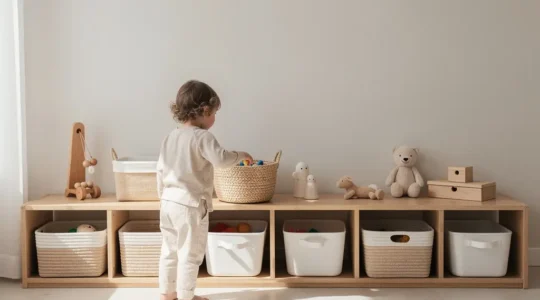
Designing a Child-Friendly Environment That Promotes Independence
The secret to a calmer, more independent household isn’t more rules; it’s a smarter environment that acts as a silent teacher. Physical cues like low shelves and accessible storage are more effective at shaping behavior than constant verbal instructions. True…
Read more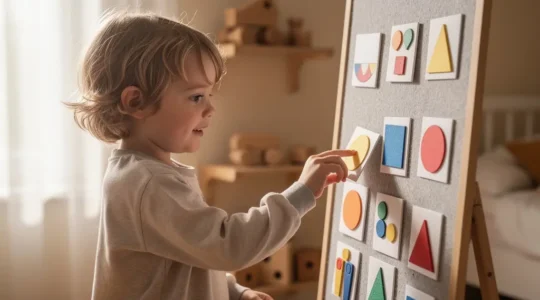
Why Do Consistent Schedules Dramatically Improve Preschooler Behavior? A Data-Driven Answer
The core reason consistent schedules work is scientific, not magical: they provide an external source of executive function for a child’s developing brain, drastically reducing the cognitive load that fuels stress and meltdowns. Unpredictability measurably increases cortisol (the stress hormone)…
Read more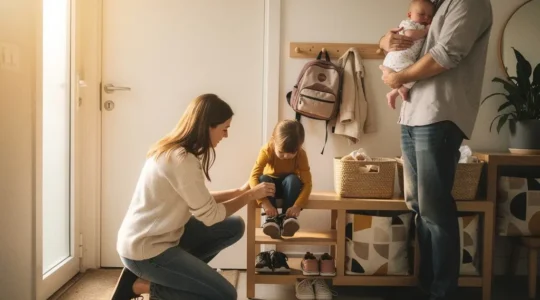
A Gentle Guide to New Family Routines After a Sibling Arrives
In summary: Your older child’s resistance to routines is often a cry for connection and control, not defiance. Visual aids and environmental design are more effective than constant verbal reminders for toddlers. A flexible “hybrid” schedule with fixed anchors often…
Read more