In summary:
- Transform brushing from a parental chore into a child-led routine by explaining the “why” behind it—protecting their future teeth.
- Use tools like apps and timers as temporary scaffolds, with a clear plan to transition to screen-free habits.
- Choose a toothbrush (electric or manual) based on your child’s unique sensory needs, not just plaque removal claims.
- Prevent fluorosis by using the correct amount of toothpaste: a rice grain-sized smear for under 3s, and a pea-sized amount for ages 3-6.
- Build an automatic “routine architecture” at home to make brushing a non-negotiable, just like washing hands.
The scene is all too familiar: a sweet, angelic child transforms into a head-thrashing, tight-lipped protestor the moment a toothbrush appears. You plead, you bargain, you might even start singing a silly song with the energy of a Broadway star, all for that dentist-mandated two minutes. Parents are often told the solution is a fun toothbrush or a new toothpaste flavor, but these quick fixes often lose their magic after a week. The tears and frustration return, leaving you to wonder if you’re destined for a nightly battle until they leave for college.
What if the problem isn’t the toothbrush, the song, or even your child’s stubbornness? The real challenge is that we often treat brushing as a chore to be endured, a task forced upon a child. We focus on distraction and external rewards, which are temporary solutions. This guide is different. As a pediatric dental hygienist, I’ve seen firsthand what works in the long run. The secret isn’t just about making it fun; it’s about shifting the entire dynamic from a power struggle to a moment of empowerment.
The key is to transform oral hygiene from a parental mandate into a child’s own routine of health ownership. It’s about building a solid routine architecture in your home where brushing becomes as automatic as putting on shoes to go outside. By focusing on the *why* (protecting their ‘forever’ teeth), understanding their unique sensory needs, and strategically building habits, you can end the brushing wars for good. We’ll explore the hidden risks of baby tooth cavities, the right way to use technology, choosing the best tools, and how to build a routine that sticks, turning those two minutes from a daily dread into a moment of connection and self-care.
In this guide, we will break down the essential strategies to build a positive and lasting oral hygiene routine. The following sections provide a complete roadmap, from understanding dental risks to implementing practical, tear-free techniques.
Summary: Your Roadmap to Tear-Free Brushing
- Why cavities in baby teeth can damage permanent teeth before they erupt?
- How to use a brushing app without creating screen addiction?
- Electric or Manual: Which removes more plaque for a 4-year-old?
- The quantity mistake that causes fluorosis in permanent teeth
- What do pre-cavity spots look like on toddler teeth?
- The Psychology of Rewards: When to Stop Giving Treats for Brushing Without Regression?
- Mastering the Details: How to Teach Tricky Cleaning Techniques to Impatient Kids?
- The Final Step: Establishing a Sanitary Routine to Cement the Brushing Habit
Why cavities in baby teeth can damage permanent teeth before they erupt?
It’s a common misconception to think, “They’re just baby teeth; they’re going to fall out anyway.” But treating primary teeth as disposable is a significant risk to a child’s long-term dental health. An untreated cavity in a baby tooth is more than just a small hole; it’s a bacterial infection that can escalate quickly. When this infection reaches the root of the baby tooth, it can form a painful abscess. This is where the real danger to their “forever teeth” begins.
The permanent teeth are not distant bystanders; they are actively developing in the jawbone directly beneath the roots of the baby teeth. An infection at the root of a primary tooth creates a toxic environment. According to pediatric dental research, abscesses at a baby tooth’s root can directly damage the soft enamel of the permanent teeth developing below. This can result in a permanent tooth erupting with white or brown spots, pits, or malformed enamel—a condition known as Turner’s Tooth. Essentially, the decay of a baby tooth can permanently scar a grown-up tooth before it even sees the light of day.
Beyond direct damage, a severe infection can cause intense pain that spreads, swelling in the gums, fever, and difficulty eating or sleeping. This is the scenario we are actively trying to prevent. Thinking of baby teeth as the crucial guardians of the permanent teeth shifts the perspective. They hold the proper spacing for adult teeth and, most importantly, create a healthy environment for them to develop in. Taking care of them isn’t just about today; it’s about protecting the smile they’ll have for the rest of their lives.
How to use a brushing app without creating screen addiction?
Brushing apps with their catchy songs and animated characters can be a lifesaver, instantly turning a reluctant brusher into an engaged one. However, the fear of trading a brushing problem for a screen time problem is very real. The key is to use the app as a temporary scaffold to build a habit, not as a permanent crutch. The goal is for the child to internalize the two-minute duration and the routine itself, so the external cue (the screen) is no longer needed.
The strategy is to create a clear “weaning plan” from the very beginning. Think of the app not as entertainment, but as a transitional tool. A great way to do this is by dedicating an old, boring device solely for the brushing app. This prevents the child from navigating to other games or videos, containing the experience strictly to oral hygiene. After a few weeks of consistent use, once the two-minute routine feels more natural, you can begin the transition. This is where the habit loop—Cue, Routine, Reward—comes into play.
Case Study: Delta Dental’s Screen-Free Timing Solution
Recognizing the need for screen-free timers, Delta Dental created Spotify playlists with songs that are exactly two minutes long. This helps families establish the proper brushing duration using audio cues that children already enjoy. By targeting different age groups with familiar tunes, they make the transition from an app-based timer to a music-based one seamless and engaging, proving that the timer doesn’t have to be on a screen.
Start by replacing the app with a two-minute song your child loves (like the ones from the Delta Dental playlist). The music now becomes the new cue. After that habit is established, you can transition again to an even more low-tech solution like a colorful two-minute sand timer. The final reward should always be offline: enthusiastic praise, a hug, or a sticker for their chart. This ensures the motivation shifts from “I get to watch a video” to the intrinsic pride of a “job well done” and the feeling of clean, sparkling teeth.
Electric or Manual: Which removes more plaque for a 4-year-old?
Parents often wonder if upgrading to an electric toothbrush is the magic bullet for a cleaner mouth. While some studies suggest electric brushes can remove more plaque, for a 4-year-old, the “best” brush is less about the motor and more about the child. The most effective toothbrush is the one your child will actually use correctly and without a fight. The decision should be guided by your child’s unique sensory profile and developing motor skills.
A child’s reaction to a toothbrush is highly personal. Does your child love vibration and intense sensations, or are they easily overwhelmed? The buzzing and vibrating of an electric brush can be a fantastic novelty for a sensory-seeking child, making them excited to brush. For a child with sensory sensitivities, however, that same vibration can feel jarring and unpleasant, leading to more resistance. A manual brush offers a gentler, more controlled experience that may be a better fit.
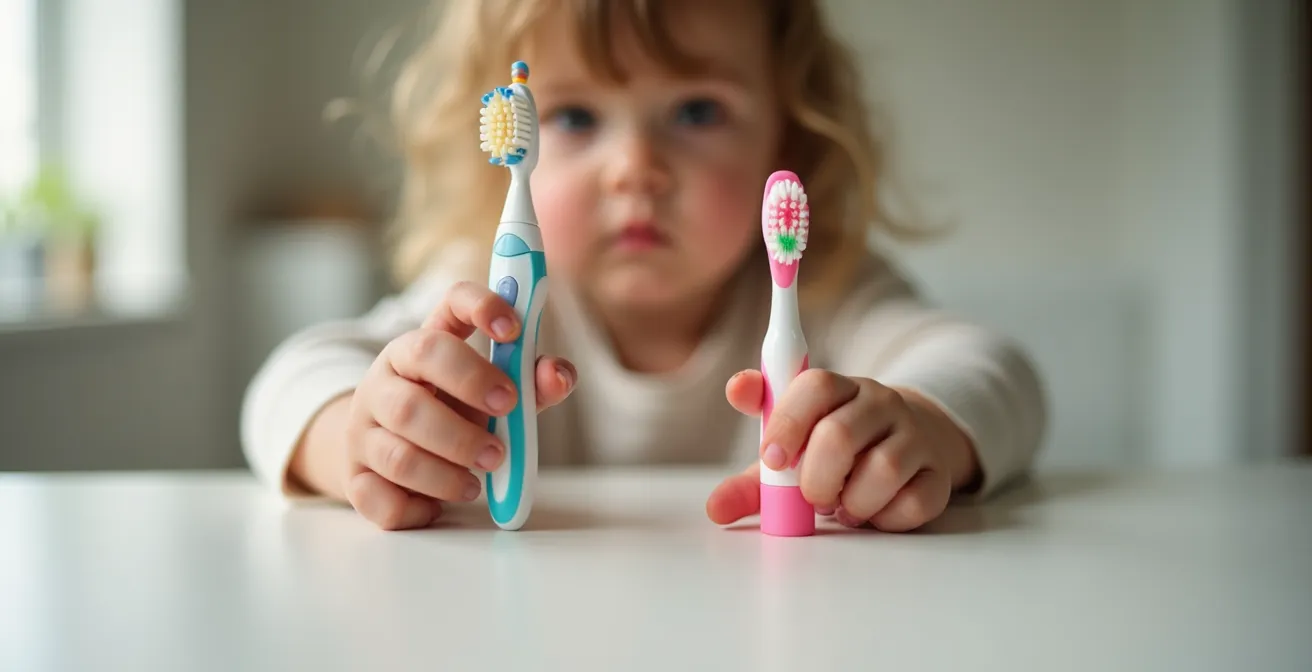
Involving your child in the choice can give them a powerful sense of ownership. Let them pick the color or character of their brush. It’s also vital to remember that no brush is a substitute for proper technique and supervision. A common question is, “At what age can my child brush alone?” While they may want to, children typically lack the fine motor skills to brush effectively until they are 7 or 8 years old. Until then, whether you choose electric or manual, you’ll need to follow up to ensure every tooth surface is cleaned.
This comparative table can help you decide which tool might better suit your child’s needs, based on a recent analysis of factors beyond just plaque removal.
| Factor | Electric Toothbrush | Manual Toothbrush |
|---|---|---|
| Motor Skill Requirements | Lower – vibration compensates for developing skills | Higher – requires proper circular motions |
| Sensory Considerations | May overwhelm sensitive children with vibration | Better for sensory-sensitive kids |
| Child Engagement | Novel sensation may increase interest | Allows child more control over pressure |
| Parental Supervision Need | Still essential for proper coverage | Critical for technique effectiveness |
| Best For | Sensory-seeking children who enjoy vibration | Children who prefer gentle, controlled brushing |
The quantity mistake that causes fluorosis in permanent teeth
Fluoride is a superhero for teeth, a mineral that strengthens enamel and fights cavities. However, as with any superhero, the dose makes the hero, not the poison. One of the most common mistakes well-intentioned parents make is using too much toothpaste. While it seems like more foam means a better clean, over-exposing developing teeth to fluoride can lead to dental fluorosis, a cosmetic condition that causes white or brown discoloration on the permanent teeth.
The problem is widespread. Shockingly, CDC research reveals that 38% of children aged 3-6 years use a half or full load of toothpaste on their brush, which is far more than the recommended amount. Children, especially toddlers, are not proficient at spitting and inevitably swallow some of the toothpaste during each session. When this happens consistently over time, the excess fluoride is ingested and can interfere with the development of the permanent teeth forming in their gums, leading to the tell-tale spots of fluorosis.
The good news is that preventing this is entirely within your control. It all comes down to mastering the correct dosage. The American Dental Association has clear, evidence-based guidelines. The rule is simple: less is more. For a young child, you are not aiming for a brush full of paste like you see in commercials. You are applying a tiny, measured amount that is safe even if partially swallowed. Storing toothpaste out of reach is also critical, as sweet flavors can tempt children to treat it like a snack.
Your Action Plan: Proper Fluoride Toothpaste Dosing by Age
- Birth to 3 years: Use a ‘smear’ the size of a single grain of rice (about 0.1mg of fluoride).
- Ages 3-6 years: Apply a pea-sized amount only (about 0.25mg of fluoride).
- Press the toothpaste into the bristles. This simple action makes it harder for the child to just lick the paste off the top.
- Supervise brushing to ensure spitting, not swallowing. Make a fun game out of spitting into the sink.
- Store toothpaste where children cannot access it independently. This prevents accidental ingestion.
What do pre-cavity spots look like on toddler teeth?
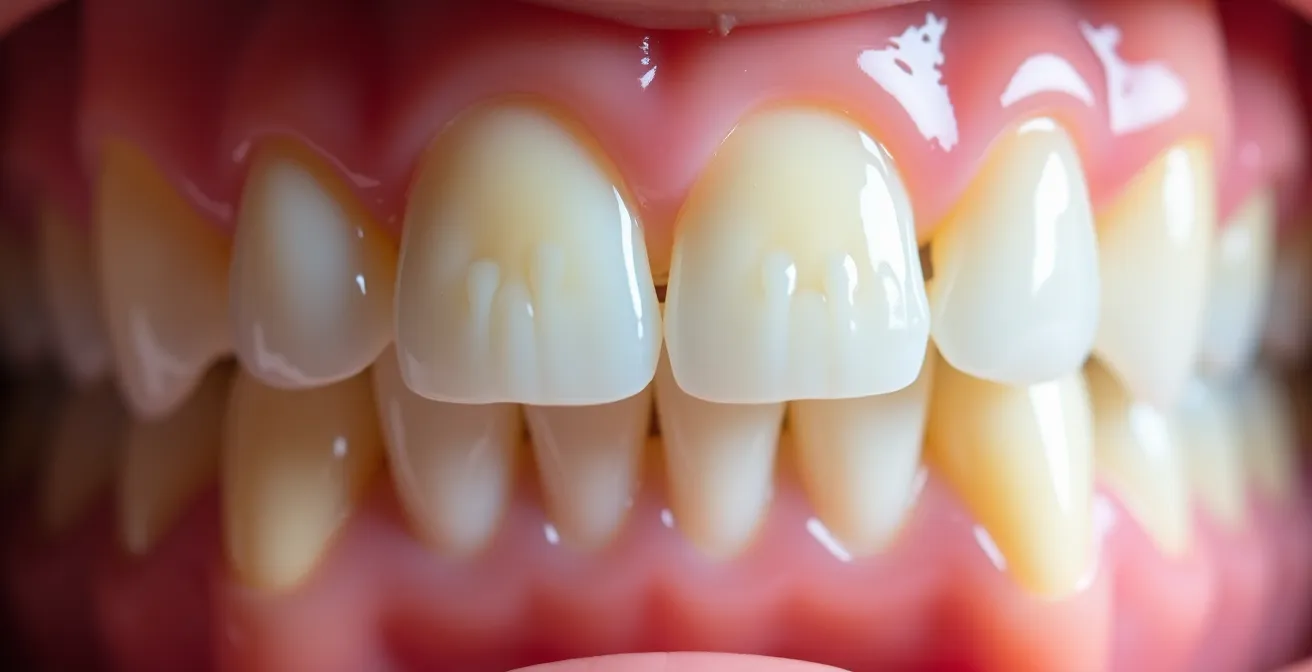
Before a full-blown cavity forms, a tooth sends out an SOS signal. This early warning sign is a “white spot lesion,” the very first visible stage of tooth decay. These spots are often missed because they are subtle and painless. They appear as chalky or dull white patches on the tooth’s surface, most commonly along the gumline of the upper front teeth. Unlike the natural, uniform color of healthy enamel, these spots have a flat, matte appearance, as if a tiny area has been lightly etched.
These white spots are areas where the tooth’s enamel has lost essential minerals, a process called demineralization. This is caused by acids produced by plaque bacteria after consuming sugars. Think of healthy enamel as a strong, tightly woven crystal wall. The white spot is where the acids have started to pull bricks out of that wall, making it weaker and more porous. If this process continues, the surface will eventually collapse, creating a hole—what we call a cavity.
The Reversibility Window: A Chance to Heal
The appearance of a white spot is not a dental death sentence; it’s a critical call to action. As explained in materials from leading institutions like Boston Children’s Hospital, white spot lesions represent a reversible stage. At this point, the underlying structure of the enamel is still intact. With a combination of excellent oral hygiene (thorough brushing and flossing) and topical fluoride application from a dentist, the tooth can “remineralize.” The lost minerals can be replenished, and the enamel can heal itself, effectively reversing the damage and preventing the need for a filling.
Catching these spots early is a cornerstone of preventative dentistry. The best way to check is to gently lift your child’s lip after brushing, in a well-lit room, and look closely at the area where the teeth meet the gums. If you see any dull, chalky spots, it’s time to schedule a visit with your pediatric dentist. They can confirm the diagnosis and create a plan to help that tooth heal, turning that SOS signal into a story of success.
The Psychology of Rewards: When to Stop Giving Treats for Brushing Without Regression?
Sticker charts and post-brushing treats can be incredibly effective at first. They provide a clear, immediate incentive that motivates a child to complete a task they’d rather avoid. However, many parents find themselves stuck in a reward loop, fearing that if they stop the treats, the good brushing habits will disappear along with them. The secret to successfully phasing out rewards without causing a relapse lies in understanding a key principle of behavioral psychology: variable reinforcement.
A reward given after every single success (e.g., a sticker every time they brush) creates a predictable pattern. The behavior becomes dependent on the reward. The moment the reward is removed, the motivation can plummet. The goal is to make the brushing habit itself the reward. To get there, you need to transition from a predictable reward schedule to an unpredictable one. This creates a powerful psychological hook, often called the “slot machine effect,” which makes behaviors much more durable.
Once the habit is established, switch from a reward for every success to a variable, unpredictable reward. This ‘slot machine effect’ makes the learned behavior much more durable and resistant to extinction.
– Behavioral Psychology Principles, Applied to Habit Formation in Children
So, how do you apply this? Once your child has been brushing consistently for a few weeks with a reward every time, start making the reward intermittent and surprising. Instead of a sticker every night, maybe they get one “randomly” on a Tuesday and a Friday. Or perhaps you introduce a “mystery jar” where they get to pull out a slip of paper—some might say “High Five!” or “Extra Story,” while a few have a small tangible reward. This unpredictability keeps them engaged and slowly shifts the focus away from the treat and onto the act of brushing itself. Over time, you can decrease the frequency of the tangible rewards until the habit is driven by intrinsic motivators: the feeling of clean teeth, the pride of accomplishment, and your enthusiastic praise.
Mastering the Details: How to Teach Tricky Cleaning Techniques to Impatient Kids?
Getting a child to simply put a toothbrush in their mouth can be half the battle. Getting them to clean the tricky spots—like the backs of the molars, along the gumline, or the tops of their teeth—is a whole other level of challenge. Impatient kids tend to do a quick, superficial scrub on the easy-to-reach front teeth and call it a day. The key to teaching these detailed techniques is to transform the mundane task into a fun, imaginative mission.
Instead of issuing dry commands like “brush in circles” or “get the back ones,” create a playful narrative around the process. You can personify the plaque as “sugar bugs” or “food monsters” that love to hide in specific places. The toothbrush then becomes a “superhero tool” designed to find them. This gamified approach taps into a child’s natural love of stories and play, making them an active participant in the “mission” rather than a passive recipient of instructions.
Drawing inspiration from fun handwashing guides, we can adapt these creative methods for brushing. The goal is to isolate and focus on one tricky spot per session in a fun way, rather than overwhelming them with a long list of rules. Here are some ideas for turning detailed cleaning into a game:
- The Molar Foam Party: Make a big deal about creating lots of foamy bubbles and then guiding the brush to the very back to have a “party” on the molars.
- Gumline Treasure Hunt: Pretend the gumline is a “secret shoreline” where “sugar treasures” (plaque) are hiding, and use the bristles to gently sweep them away.
- The Chewing Surface Car Wash: For the tops of the molars, have them make “choo-choo train” back-and-forth motions to give the “bumpy roads” a good scrub.
- Sugar Bug Hide-and-Seek: Play a game where you call out a hiding spot (“The sugar bugs are hiding behind your top front teeth!”) and they have to “find” them with the brush.
By using imaginative language and focusing on one small, achievable “mission” at a time, you can teach proper technique without it feeling like a lecture. This builds both their skills and their health ownership.
Key takeaways
- Untreated cavities in baby teeth can cause infections that permanently damage the developing adult teeth below.
- The correct amount of fluoride toothpaste is crucial: a rice-sized smear for kids under 3, and a pea-sized amount for ages 3-6.
- The “best” toothbrush is one that fits your child’s sensory preferences; engagement is more important than the motor.
The Final Step: Establishing a Sanitary Routine to Cement the Brushing Habit
You can have the best toothbrush, the perfect technique, and the most engaging two-minute song, but if the brushing routine isn’t seamlessly integrated into your child’s day, it will always feel like an optional, negotiable event. The ultimate goal is to make brushing as automatic and non-negotiable as washing hands after using the bathroom. To achieve this, we can borrow a brilliant concept from public health: creating a “landing strip” routine.
The idea is to design a physical and sequential path that naturally leads to the desired action, removing the need for constant verbal reminders. It’s about building a solid routine architecture in your home. Just as an airport landing strip guides a plane to its gate, your home’s routine should guide your child through a series of automatic actions that culminate in brushing their teeth.
Case Study: The CDC’s “Landing Strip” Concept for Hygiene
In school settings, the CDC’s Clean Hands and Spaces program demonstrated the power of this concept. By creating a physical zone near the entrance for shoes, coats, and backpacks, with the sink as the mandatory final stop, they created an automatic routine. This simple environmental design significantly reduced illness-related absenteeism by making handwashing an ingrained, non-negotiable part of the arrival process. The same principle can be applied to oral hygiene at home.
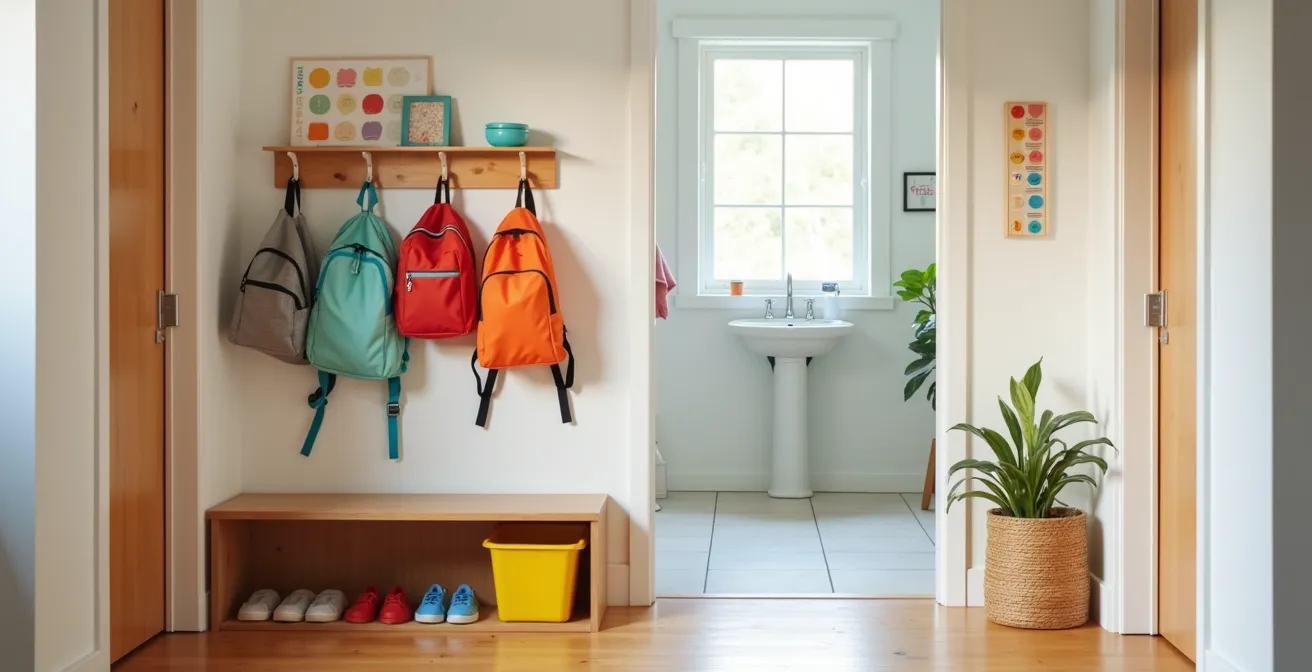
For the evening routine, the landing strip might look like this: Bath time -> Pajamas on -> Go to the bathroom -> Use the potty -> Brush teeth -> Story time. Brushing is no longer a standalone event to be debated; it’s simply the required step between “potty” and “story.” For the morning, it could be: Get dressed -> Go to the bathroom -> Use the potty -> Brush teeth -> Breakfast. By sandwiching brushing between two other concrete, unchangeable activities, you remove the friction and the mental space for negotiation. It becomes just “what we do next.”
Your 5-Step Brushing Routine Audit
- Points of Contact: Where and when do you currently try to initiate brushing? Is it consistent or random?
- Collecte: Inventory your current routine. Write down the sequence of events before bed and in the morning. Is brushing a clear step?
- Cohérence: Does the routine happen the same way every single day, even on weekends? Consistency is the foundation of automation.
- Mémorabilité/Emotion: Is the routine a source of stress or connection? Identify the main point of friction. Is it the timing? The location?
- Plan d’intégration: Redesign your routine “landing strip.” Write down the new, non-negotiable sequence and place brushing between two fixed points.
You now have the tools and strategies to move beyond the nightly struggles. It’s not about finding a magic trick, but about a thoughtful shift in approach—from enforcing a chore to cultivating a lifelong habit of health. Start building your family’s new, tear-free brushing routine tonight by applying these principles of ownership and thoughtful design.