Family & Parenting
Parenting is perhaps the most rewarding yet challenging role anyone can undertake. Every family faces moments of doubt, frustration, and uncertainty—from the toddler who refuses to sleep to the teenager who seems emotionally distant. What separates thriving families from struggling ones isn’t perfection, but rather a solid foundation built on four essential pillars: emotional connection, positive guidance, physical safety, and healthy development.
These aren’t abstract concepts reserved for parenting textbooks. They’re practical frameworks that shape daily interactions, from the moment you walk through the door after work to how you respond when your child breaks a rule or competes with siblings. This comprehensive resource explores each pillar in depth, offering you evidence-based approaches and actionable strategies to navigate the complexities of modern family life with greater confidence and clarity.
Building Emotional Connection and Secure Attachment
The foundation of effective parenting rests on emotional security—the deep sense children develop that they are valued, understood, and unconditionally loved. This isn’t built through grand gestures or expensive gifts, but through consistent, authentic presence in everyday moments.
Quality Over Quantity in Daily Interactions
Many parents struggle with guilt over time constraints, believing they must dedicate hours each day to “quality time.” Research consistently shows, however, that fifteen minutes of undivided attention creates more secure attachment than three hours of distracted co-presence. When you’re with your child, put away the phone, make eye contact, and engage fully in whatever activity they’ve chosen—whether that’s building blocks or simply talking about their day.
The distinction matters because children are remarkably perceptive. A parent physically present but mentally elsewhere communicates unintentional rejection. Conversely, a parent who works long hours but creates predictable rituals of connection—even brief ones—provides the consistency children crave. Think of it like watering a plant: regular, focused attention nourishes growth better than occasional flooding.
Reconnection Rituals and Repair After Distance
Disconnection happens in every relationship. Perhaps you’ve been traveling for work, distracted by stress, or navigated a conflict that created emotional distance. The key isn’t avoiding these ruptures—it’s developing intentional repair strategies. A simple three-step ritual can rebuild bridges immediately upon returning home:
- Pause and reset: Take sixty seconds before entering to mentally shift from work mode to family mode
- Physical connection first: Greet with a hug, eye contact, or sitting down at their level before diving into tasks
- Check in before checking out: Ask one genuine question about their day and listen to the complete answer
This pattern signals to children that they matter more than your to-do list. When emotional distance has accumulated over days or weeks, acknowledge it directly: “I realize I’ve been distracted lately, and I’m sorry. You deserve my full attention.” This models accountability and teaches children that relationships can be repaired through honest communication.
Positive Behavior Guidance Through Encouragement
Shaping behavior is one of parenting’s most persistent challenges. The traditional punishment-focused approach may achieve short-term compliance, but it rarely builds the internal motivation children need to make good choices independently. Encouragement-based guidance offers a more sustainable path, though it requires understanding subtle but crucial distinctions.
Encouragement vs. Praise: Understanding the Difference
Most parents praise liberally—”Good job!” “You’re so smart!” “I’m proud of you!”—believing this builds confidence. Yet praise focused on outcomes or inherent traits can paradoxically create anxiety. A child praised for being “smart” may avoid challenging tasks that risk revealing they’re not. Instead, encouragement focuses on effort, strategy, and progress:
- Instead of “You’re such a good artist,” try “I notice you experimented with blending those colors—what made you try that?”
- Replace “I’m so proud you got an A” with “Your study strategy really paid off. How does it feel to see that improvement?”
- Swap “Good boy for sharing” for “You noticed your sister wanted a turn. That was thoughtful.”
This shift from judgment to observation helps children develop intrinsic motivation—they learn to evaluate their own progress rather than constantly seeking external validation. Think of yourself as a sportscaster narrating what you see, rather than a judge awarding scores.
Reward Systems: When and How to Use Them
Token economies, sticker charts, and reward systems can be powerful tools when implemented correctly, but they’re easily misused. The critical principle: rewards should jumpstart new behaviors, not become permanent fixtures. Use them for specific, time-limited goals like potty training or establishing a homework routine, then gradually fade them out as the behavior becomes habitual.
Timing matters enormously. Verbal affirmation works best for behaviors you want to become self-sustaining (kindness, creativity, problem-solving), while tangible rewards suit discrete skills with clear endpoints (using the toilet, completing chores). The common mistake? Accidentally reinforcing the wrong behavior—like giving attention to whining, which teaches children that whining works. Pay attention to what immediately follows the behavior; you’re teaching that pattern whether you intend to or not.
Creating a Physically Safe Home Environment
Physical safety forms the bedrock of everything else—a child cannot develop emotionally or intellectually if their basic safety is compromised. Yet many parents underestimate risks or rely on ineffective strategies like verbal warnings for hazards young children cannot cognitively process.
Anchoring and Preventing Tip-Over Accidents
Furniture tip-overs send thousands of children to emergency rooms annually, yet remain largely preventable. Simply saying “no” to a toddler near a dresser is insufficient—their developmental stage prioritizes exploration over obedience. Environmental modification is the only reliable solution. Modern anchoring systems attach to furniture backs and wall studs without requiring large holes or damaging walls permanently. L-brackets, safety straps, and museum putty offer options for different furniture types and rental situations.
The critical difference between pressure-mounted and hardware-mounted gates illustrates this principle perfectly. Pressure gates work for low-traffic doorways and rooms you want to temporarily block, but they lack the structural integrity for stairs or high-traffic areas. Hardware-mounted gates bolt directly into wall studs, creating a barrier that withstands a child’s full body weight—essential for stairways where falls carry serious consequences. Using the wrong type in the wrong location creates a false sense of security more dangerous than no gate at all.
Common Hidden Hazards Parents Miss
Get down at your child’s eye level and scan your living room. You’ll likely spot risks invisible from adult height: dangling cords that invite pulling, tablecloth edges perfect for yanking, small decorative objects at grabbing height. Commonly overlooked hazards include:
- Button batteries in remote controls and musical greeting cards (cause severe internal burns if swallowed)
- Blind cords and window treatment strings (strangulation risks)
- Unstable TV stands and electronics balanced on furniture edges
- Cleaning products in lower cabinets, even when closed (determined toddlers open cabinets)
Many parents make the mistake of trusting older siblings with supervision responsibilities beyond their developmental capacity. A seven-year-old may seem mature and responsible, but lacks the judgment and reaction speed to prevent a toddler from choking or climbing. Supervision is an adult responsibility that cannot be safely delegated to children.
Fostering Healthy Ambition and Managing Competition
In a culture saturated with comparison—social media highlight reels, competitive sports, academic rankings—helping children develop healthy ambition without toxic comparison requires intentional effort. The goal isn’t eliminating competition entirely, but rather teaching children to measure success against their own potential rather than others’ achievements.
Shifting Focus from Comparison to Personal Growth
When your child comes home upset that a classmate scored higher on a test, your response shapes their relationship with achievement. “You’re still better than most of the class” reinforces external comparison. Instead, redirect to personal progress: “I remember you struggled with fractions last month. What helped you improve?” This personal best mentality builds resilience because it’s always actionable—there’s always room for individual growth, regardless of what others achieve.
The participation trophy debate misses the deeper question: What are we actually rewarding? Trophies for mere attendance do feel hollow, but recognition of effort, improvement, or specific contributions (best teammate, most improved, greatest perseverance) validates meaningful qualities. The key distinction: reward what children control (effort, attitude, strategy) rather than what they don’t (natural talent, outcomes dependent on others).
Teaching Integrity Through Games and Activities
Family game night reveals character in action. When a child cheats at Monopoly or Uno, resist the urge to simply ban them from playing. Instead, use it as a teaching moment: “I noticed you drew an extra card. What’s happening for you right now?” Often, cheating reflects discomfort with losing, which becomes your real teaching opportunity. Introduce collaborative games where the family wins or loses together—these break rivalry cycles and teach that success can be shared rather than zero-sum.
Public comparison—”Why can’t you be more like your sister?”—inflicts lasting damage on sibling relationships and self-esteem. Even positive comparisons (“You’re the athletic one”) create rigid identities that limit children’s willingness to try new things or show vulnerability. Keep observations individual: comment on each child’s specific actions and growth without reference to siblings or peers.
Parenting demands no perfection, only persistent effort toward creating a home environment where children feel emotionally secure, physically safe, positively guided, and encouraged to grow into their unique potential. Each family will emphasize different elements based on their children’s ages, temperaments, and specific challenges. Return to these foundational pillars whenever you feel uncertain, using them as guideposts to evaluate whether your current approach aligns with your deeper values and long-term goals for your family.
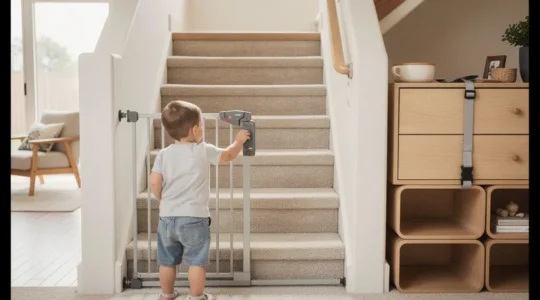
A Professional’s Guide to Keeping Toddlers Safe from Stairs and Furniture Tip-Overs
True home safety for toddlers isn’t about constant supervision; it’s about engineering a passive safety system that neutralizes hazards before an accident is possible. Verbal warnings fail because toddlers lack the brain development for impulse control. Environmental controls are the…
Read more
Why Do Positive Reinforcement Interactions Fail With Strong-Willed Children?
Positive reinforcement fails with strong-willed children not because the method is flawed, but because the application ignores their core psychological needs for autonomy and competence. Generic praise like “Good job!” is perceived as controlling and loses its value, fostering dependence…
Read more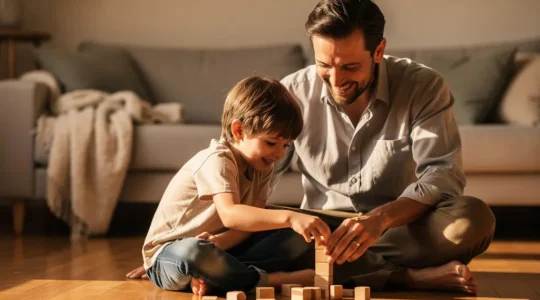
Overworked and Out of Time? How to Build Unbreakable Bonds With Your Child
The key to a strong bond isn’t more time; it’s mastering emotional attunement to make short moments profoundly impactful. Focus on co-regulating your child’s nervous system through present, focused interaction, not just proximity. Replace guilt-driven gifts with connection rituals that…
Read more