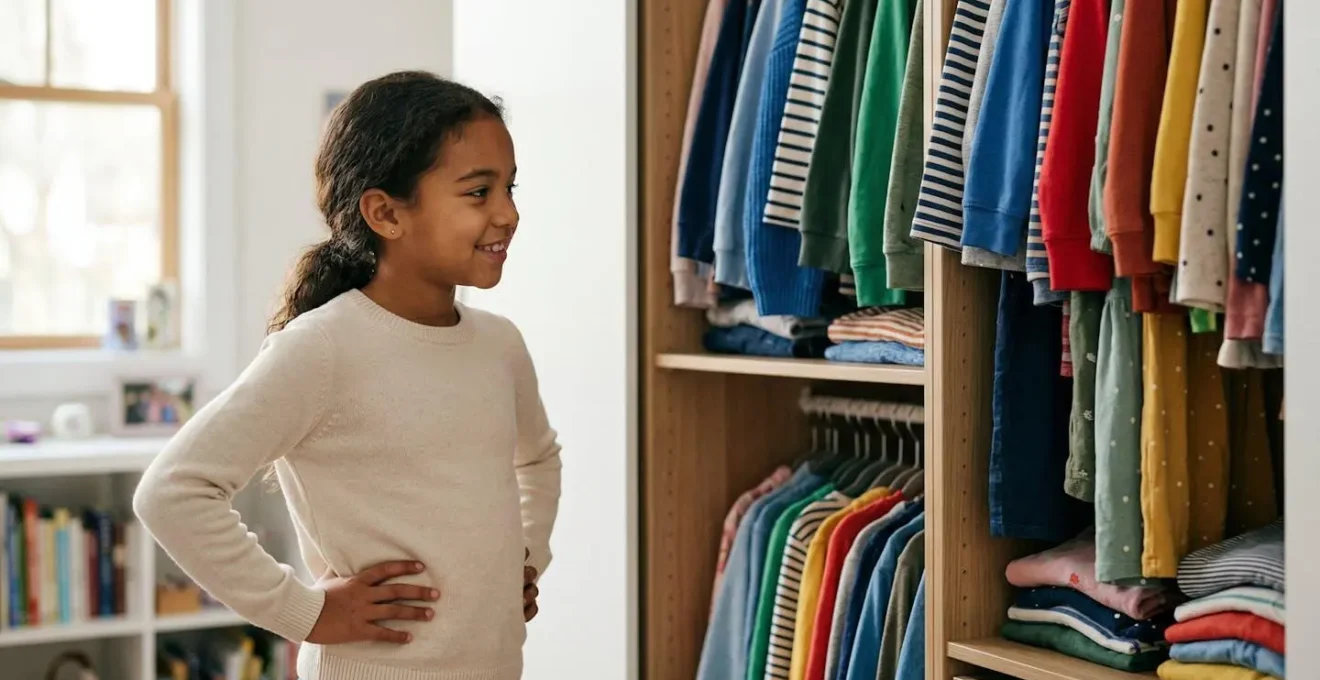
The daily clothing battle is not a power struggle to be won, but a design challenge to be solved collaboratively.
- Self-expression and dress codes can coexist when you act as a “Style Diplomat” for your child.
- Understanding their sensory needs and creating a functional wardrobe system are the keys to ending morning stress.
Recommendation: Reframe rules as “creative constraints” and work together to find solutions that respect both their identity and the situation’s requirements.
The scene is familiar to countless parents: the clock is ticking, the school bus is minutes away, and a full-blown negotiation is underway over a sequined top in freezing weather or a pair of shorts that violate the school dress code. These daily clashes feel like a power struggle, pitting your need for practicality against their burgeoning desire for self-expression. The common advice to “pick your battles” often feels dismissive, ignoring the genuine frustration on both sides. Many parents simply want their child to be warm, comfortable, and appropriately dressed without crushing their creative spirit.
The conventional wisdom of laying out clothes the night before only solves a fraction of the problem if the chosen outfit is still a point of contention. What if the issue isn’t about control, but about communication and creativity? The true challenge lies in navigating the delicate balance between their identity and the non-negotiable boundaries of weather, school rules, and physical comfort. This often involves understanding deeper needs, from the texture of a fabric to the story a superhero logo tells about who they are.
But what if we could reframe this conflict entirely? Instead of seeing it as a battle, we can approach it as a collaborative design project. This guide moves beyond the generic advice to position you as a “Style Diplomat”—a creative partner who empowers your child to explore their identity within practical and respectful boundaries. It’s about transforming the wardrobe from a battleground into a shared space for problem-solving, creativity, and mutual respect. We’ll explore how to build a functional system that fosters independence, honours sensory needs, and ultimately brings peace back to your mornings.
This article will guide you through a series of common clothing challenges, providing diplomatic strategies and creative solutions for each. The following summary outlines the key areas we will explore to help you and your child find common ground in style.
Summary: Fashionable Outfits: A Parent’s Guide to Navigating Dress Codes and Self-Expression
- How to find tag-free clothes that don’t look like pajamas?
- How 10 items can create 20 outfits and reduce morning stress?
- How to get them to wear a coat without ruining their “look”?
- The criticism mistake that hurts body image and confidence
- How to accessorize older sibling clothes so they feel fresh?
- How to compromise when they want a cheap superhero bag?
- Why forcing a child with sensory issues to eat backfires?
- Waterproof Jackets: Keeping Kids Dry Without Overheating
How to find tag-free clothes that don’t look like pajamas?
The first step in becoming a Style Diplomat is understanding that for many children, clothing choices are not about defiance but about comfort. What seems like a fussy preference may be a genuine reaction to an irritating seam or a scratchy tag. This is their “sensory signature”—their unique sensitivity to textures, fits, and fabrics. Honouring this is non-negotiable for building trust. The complaint that sensory-friendly clothes often look like sleepwear is valid, but the market has evolved significantly.
The goal is to find garments that meet their sensory needs without sacrificing style. This means looking for brands that prioritize soft, breathable materials like modal or bamboo blends and use flat seams instead of bulky, raised ones. Many mainstream brands now offer “tagless” options where the information is printed directly on the fabric. The key is to shift your shopping criteria from just aesthetics to a combination of feel, fit, and fashion. It’s about finding the intersection where the fabric feels good on their skin and the design makes them feel good about themselves.
Case Study: The Cat & Jack Adaptive Line Success Story
Target’s Cat & Jack adaptive line demonstrates how mainstream retailers can successfully integrate sensory-friendly features into stylish children’s clothing. The line includes dresses with kangaroo pouches for abdominal access, pajamas with insulin pockets, and jeans with side zipper closures and wheelchair-friendly construction in soft fabric. All Cat & Jack clothing is tagless, featuring flat seams and soft cotton-blend fabric that provides a smooth, comfortable sensory-friendly feel. This case shows that adaptive wear no longer means sacrificing style for function, proving that comfort and cool can coexist.
By treating their sensory needs as a valid design requirement, you’re not just buying clothes; you’re communicating that their physical comfort matters. This builds a foundation of trust that makes future negotiations about style and appropriateness much more successful. You become an ally in their quest for comfort, not an adversary.
How 10 items can create 20 outfits and reduce morning stress?
Once comfort is established, the next diplomatic mission is to conquer morning chaos. The “I have nothing to wear!” cry in front of a full closet is a classic symptom of decision fatigue. The solution isn’t more clothes; it’s a better system. Enter the capsule wardrobe: a small, curated collection of versatile items that can be easily mixed and matched. According to minimalist wardrobe experts, just 10-15 core pieces can create 20+ outfit combinations, drastically reducing mental load for both you and your child.
The magic of this system is that it empowers your child with choice while ensuring any choice they make works. The process starts with a collaborative edit of their current wardrobe. Together, select a few favorite items and build a cohesive color palette around them—think versatile neutrals (denim, gray, khaki) paired with two or three of their favorite accent colors. The core collection should include a mix of tops, bottoms, and a layering piece. Everything in the capsule should go with everything else.
This approach transforms dressing from a stressful scramble into a creative exercise. By pre-approving every item in the system, you give them the autonomy they crave. They get to be the master of their look each morning, but within a framework that guarantees a stylish and coordinated outcome. It’s a strategic win-win that teaches them the fundamentals of style and simplifies life for everyone.
How to get them to wear a coat without ruining their “look”?
The dreaded puffy coat—functional, warm, and often the sworn enemy of a carefully crafted “look.” For a child, a bulky coat isn’t just an inconvenience; it’s a betrayal of their identity. Forcing it on them creates a power struggle, but letting them go out in the cold isn’t an option. The diplomatic solution lies in reframing outerwear not as a cover-up, but as part of the outfit itself. This requires a stylist’s secret weapon: strategic layering.
Instead of one heavy coat, think in layers that add warmth without completely obscuring their chosen outfit. This “three-piece rule” is a cornerstone of good styling. Start with their base outfit, then add a stylish and functional middle layer. This could be anything from a trendy puffer vest to an open flannel shirt or a classic denim jacket. These pieces add warmth while complementing, rather than hiding, their look. The final step is personalization. A basic jacket can become a canvas for self-expression with iron-on patches, enamel pins, or a cool scarf that reflects their personality.
Here are some creative compromises to avoid the outerwear battle:
- The Third Piece: Add a puffer vest, open flannel shirt, or denim jacket that complements rather than covers the look.
- Personalization Project: Transform a basic jacket with enamel pins or iron-on patches that reflect their interests.
- Aesthetic-Approved Outerwear: Invest in a coat that aligns with their style identity (e.g., a skater-style jacket, a preppy trench). The coat becomes part of the look.
- The 3-Layer System: For extreme cold, use the professional system: a moisture-wicking base layer, a fleece mid-layer, and a waterproof outer shell for ultimate temperature regulation.
By presenting these options, you’re not just saying “wear a jacket.” You’re asking, “How can we solve the creative challenge of staying warm while looking cool?” This collaborative approach respects their aesthetic vision and solves the practical problem at hand.
The criticism mistake that hurts body image and confidence
As a Style Diplomat, your words carry immense weight. A seemingly harmless comment like, “That makes you look bigger,” or “Are you sure you want to wear that?” can plant seeds of self-doubt that last a lifetime. In fact, studies show that children as young as age 3 can have concerns about their bodies. The most damaging mistake is focusing criticism on how clothes fit their body, rather than whether the clothes are appropriate for the occasion.
When you shift the conversation from “That’s not flattering on you” to “That’s a great outfit for a party, but for school we need something without sequins,” you achieve two things. First, you validate their taste. Second, you teach them about context and dress codes without making it personal. Your role is to guide their understanding of social and practical norms, not to police their body or style. This means focusing your language on the function and appropriateness of the clothing, not its aesthetic effect on their shape.
Positive reinforcement is a far more powerful tool. Instead of pointing out what’s “wrong,” praise what’s “right.” Comments like, “I love how you combined those colors,” or “That’s a really creative way to wear that shirt,” build their confidence and encourage them to see fashion as a fun, creative outlet. This positive communication builds a resilient self-image, ensuring their relationship with clothing—and their body—remains healthy and joyful.
How to accessorize older sibling clothes so they feel fresh?
Hand-me-downs are a sustainable and budget-friendly choice, but they can be a tough sell for a child eager to forge their own identity. The key to a successful hand-off is to rebrand the experience from receiving “used” clothes to getting a “vintage” piece ready for a modern update. The Style Diplomat’s job is to facilitate a creative transformation that makes the garment feel new and uniquely theirs.
This is a perfect opportunity for a collaborative DIY project. Don’t just give them a plain t-shirt; give them a t-shirt and a set of cool iron-on patches that reflect their current obsession, be it dinosaurs, space, or a favorite video game. A simple pair of jeans can be reborn with some fabric paint or by cropping the hem for a trendier look. The focus should be on empowering them to put their personal stamp on the item. This process of co-creation is what transfers ownership and makes them feel proud to wear it.
Here are some simple, no-sew transformation techniques:
- No-Sew Cropping: Use fabric scissors to crop t-shirts or create a fringe on the bottom hem for an instant, trendy update.
- Iron-On Patches: Let your child choose patches that reflect their interests and apply them to plain hand-me-downs to create a one-of-a-kind design.
- Fabric Paint Personalization: Set up a weekend customization station with fabric paint and stencils to co-create original designs.
- Strategic Accessorizing: Use the hand-me-down as a base and add personality with cool patterned socks, funky shoes, a new belt, or fun hair accessories.
- Reframe the Narrative: Use sustainable fashion language. Call it “vintage,” “archival,” or “upcycled” rather than “used” or “hand-me-down.”
By turning hand-me-downs into a creative project, you’re not just saving money; you’re teaching valuable lessons about sustainability, creativity, and the power of personal style.
How to compromise when they want a cheap superhero bag?
The allure of a brightly-colored, character-themed backpack is powerful, but so is the parent’s knowledge that its flimsy construction won’t survive a single semester. Saying a flat “no” invites conflict, while giving in feels like a waste of money. The diplomatic path forward is to turn this decision into a teachable moment about value versus cost. This is a prime opportunity to introduce the concept of long-term thinking.
Instead of a unilateral decision, present a choice with clear consequences. Explain that the durable, higher-quality bag is a family investment, designed to last. The character bag, while fun, is less of an investment and more of a “toy.” A great compromise is to agree on a high-quality, plain backpack and then embark on a DIY project to add the character theme with high-quality patches, custom zipper pulls, or stenciled fabric paint. This “high-low” approach satisfies their desire for self-expression and your need for durability.
Another effective strategy is the “two-bag system.” The durable bag is for the heavy lifting of school, while the cheaper character bag can be used for lighter duties like sleepovers or weekend outings. You can also frame the choice in financial terms appropriate for their age. For example, explain that if the $20 character bag breaks, the replacement cost will have to come from their allowance, whereas the $40 durable bag is guaranteed for the year. This involves them in the decision-making process and introduces a tangible sense of responsibility.
By framing the discussion around value, durability, and creative solutions, you’re not just buying a backpack; you’re teaching critical thinking, financial literacy, and the art of a good compromise.
Key Takeaways
- Your role is to be a “Style Diplomat,” guiding your child’s choices with collaboration, not control.
- Respecting your child’s “sensory signature” (sensitivity to textures and fits) is the foundation of trust.
- Focus criticism on the appropriateness of clothing for an occasion, never on how it looks on their body.
Why forcing a child with sensory issues to eat backfires?
While it may seem unrelated, a child’s strong feelings about a “scratchy” sweater and their refusal to eat “mushy” foods often stem from the same place: their unique neurological wiring. Forcing them to wear an uncomfortable garment or eat an offensive texture sends the same message—that their physical experience is invalid. Understanding this connection is crucial for a Style Diplomat, as it reinforces that these are not behavioral issues to be corrected, but sensory needs to be accommodated. In fact, research indicates that about 1 in 20 children are affected by sensory processing issues to some degree.
When a child with sensory sensitivities is forced into a situation that causes them physical discomfort, their nervous system enters a state of high alert. This “fight or flight” response makes cooperation and rational thought nearly impossible. Pushing them to “just eat it” or “just wear it” can create negative associations with mealtimes or getting dressed, leading to long-term anxiety and power struggles. The Child Mind Institute explains this holistic connection perfectly:
The nervous system that finds a food texture aversive is the same one that finds a clothing tag intolerable – sensory processing issues are holistic.
– Child Mind Institute, Sensory Processing Issues Explained
Recognizing that a clothing aversion is a legitimate sensory response, just like a food aversion, transforms your approach. It moves the conversation from discipline to problem-solving. Instead of a battle of wills, it becomes a collaborative search for clothes—and foods—that work for their body. This empathy is the cornerstone of effective, diplomatic parenting, building a foundation of trust that extends far beyond the closet.
Waterproof Jackets: Keeping Kids Dry Without Overheating
The final frontier for the Style Diplomat is often technical wear. A waterproof jacket seems simple enough, but the wrong one can be a recipe for disaster. A cheap plastic shell might keep rain out, but it also traps sweat in, leaving your child feeling clammy, cold, and miserable—and even less likely to wear a jacket next time. The key is to find a jacket that is both waterproof and, crucially, breathable. This allows moisture vapor from their body to escape while blocking rain from getting in.
This is where a little technical knowledge empowers you to make a much better choice. Waterproofing and breathability are measured with specific ratings. For a jacket that can handle genuine rain during active play, you should look for ratings of at least 10,000mm for waterproofing and 10,000 g/m² for breathability. These numbers ensure your child stays dry from the outside and the inside. This is also where the layering system we discussed earlier proves its worth. A breathable shell jacket combined with a fleece mid-layer offers far better temperature regulation than a single, bulky, non-breathable coat.
By investing in a technically sound jacket that also aligns with their aesthetic, you solve the problem for good. They get a jacket that doesn’t “ruin their look” or make them uncomfortable, and you get the peace of mind that they are protected from the elements. This final piece of the puzzle demonstrates that practicality and personal style can always find common ground with a little bit of knowledge and diplomacy.
Your Waterproof Jacket Audit Checklist
- Waterproof Rating Decoded: Look for jackets rated 10,000mm or higher. This means the fabric can withstand a 10,000mm column of water before leaking, suitable for heavy rain.
- Breathability Rating Explained: Measured in g/m² (grams per square meter), aim for 10,000 g/m² or higher to allow moisture vapor to escape and prevent overheating.
- The 3-Layer System Check: Does the jacket work as an outer shell? A system with a base layer (moisture-wicking t-shirt), mid-layer (fleece), and outer shell is more versatile than one bulky coat.
- Temperature Regulation Advantage: Verify the jacket allows for adding or removing layers as activity levels and temperatures change throughout the day.
- Function Meets Fashion: Seek brands creating breathable, waterproof jackets that align with current youth fashion trends to solve the “ruins my look” problem.
Now that you are equipped with these diplomatic strategies, you can begin transforming morning routines from a source of conflict into an opportunity for connection and creativity. Start by opening a collaborative dialogue about comfort and style, and build a wardrobe system that empowers you both.