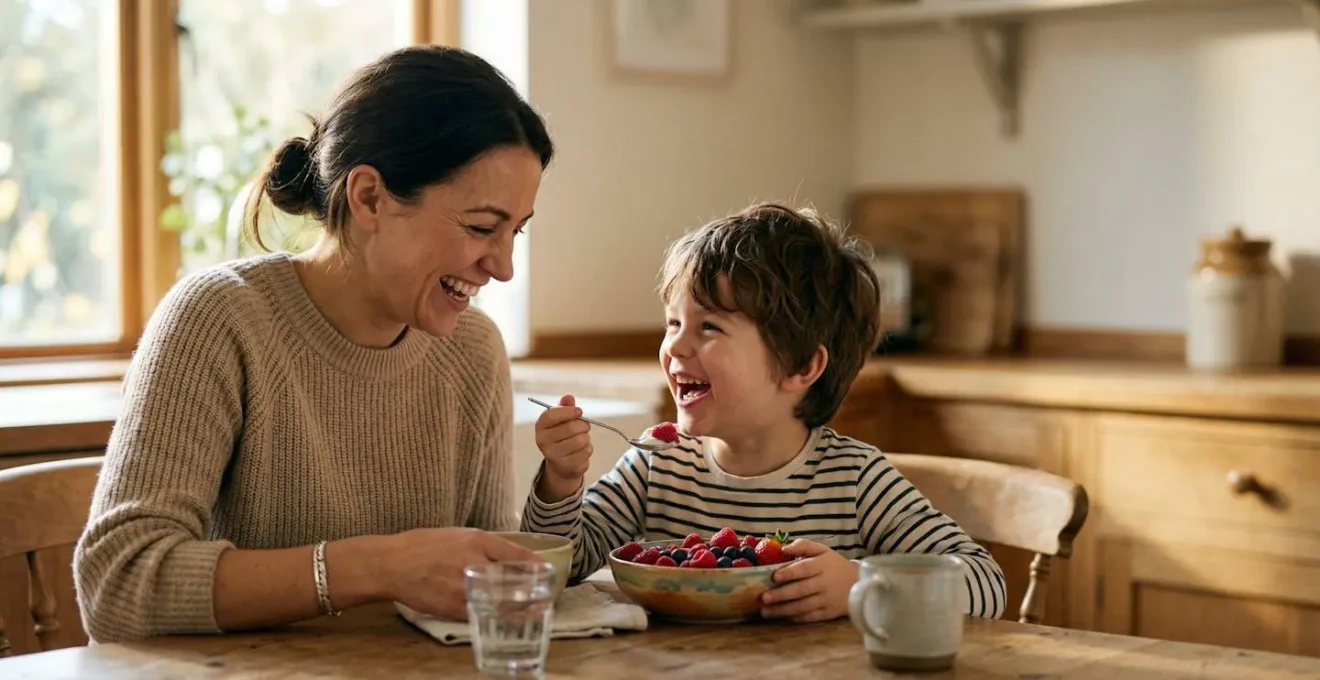
The key to regulating your child’s mood may lie in their gut, but the solution isn’t just adding probiotics—it’s cultivating a resilient internal ecosystem.
- Antibiotics create a microbial “wildfire” requiring a strategic, multi-phase recovery, not just a pill.
- Probiotics are “seeds” that will fail without prebiotic “soil,” making fiber the unsung hero of gut health.
- Environmental exposure, from playing in the dirt to owning a dog, is a powerful and necessary tool for building microbial diversity.
Recommendation: Shift your mindset from “fixing” symptoms to becoming a “microbial gardener” who actively cultivates the diversity and resilience of your child’s gut environment.
As a parent, observing your child struggle with anxiety can feel helpless. You’ve likely explored psychological strategies, routine adjustments, and dietary changes, yet the unease persists. The conversation around children’s mental health often focuses on the brain, but pioneering research in psychobiotics reveals a more profound connection: the state of your child’s gut can directly influence their emotional landscape. We’re told to add a probiotic yogurt or avoid sugar, but these are just single notes in a complex symphony. This approach often fails because it treats the gut like a machine needing a simple part replacement, rather than what it truly is: a dynamic, living ecosystem.
What if the key to your child’s emotional balance wasn’t just about what you eliminate, but about what you intentionally cultivate? The true paradigm shift is moving from a parent to a microbial gardener. This perspective reframes gut health not as a checklist of “good” and “bad” foods, but as a holistic practice of nurturing a diverse and resilient internal environment. By understanding the ecological principles that govern this world within, you can create the biological foundation for a calmer, more regulated nervous system. This guide will walk you through the science and strategy of becoming that gardener, moving beyond simplistic fixes to foster a robust gut-brain axis that supports your child from the inside out.
To help you navigate this new territory, this article is structured to build your expertise as a microbial gardener, from recovering the soil to planting the right seeds and protecting the entire ecosystem.
Summary: Healthy Microbiome: Can Gut Health Influence Your Child’s Anxiety?
- How to restore gut flora after a 10-day course of Amoxicillin?
- Why probiotics fail if you don’t feed them fiber?
- Why owning a dog improves your child’s gut diversity?
- The cleanliness mistake that kills beneficial bacteria
- Pickles or Yogurt: Which is the easiest fermented win?
- Kefir or Capsule: Which builds a better immune wall in the gut?
- Why unpredictable days cause stress spikes in young children?
- Building Immunity Naturally: Does Playing in Dirt Actually Help?
How to restore gut flora after a 10-day course of Amoxicillin?
A course of antibiotics like Amoxicillin is a necessary medical intervention, but for your child’s gut microbiome, it’s the equivalent of a forest fire. It doesn’t just target the harmful bacteria; it indiscriminately clears out vast populations of beneficial microbes that are essential for everything from digestion to neurotransmitter production. The immediate aftermath is a barren landscape, vulnerable to opportunistic “weeds” or harmful bacteria taking over. Research shows that while initial recovery can take 1-2 months, some beneficial bacteria may not fully recover for up to four years, leaving a long-term impact on the ecosystem’s resilience.
Restoring this delicate balance requires more than just hoping for the best. It demands a strategic, multi-phase approach akin to ecological restoration. Simply throwing in a single-strain probiotic is like scattering a few seeds on scorched earth and expecting a forest to grow. A microbial gardener understands the need for a protocol that supports the environment at every stage. This involves protecting what’s left during the antibiotic course, aggressively “reseeding” with diverse species immediately after, and then diligently “feeding” those new colonies to ensure they establish themselves and rebuild the complex, multi-layered community that was lost.
Your Antibiotic Recovery Action Plan
- During Treatment: Administer a high-quality probiotic 2-3 hours apart from each antibiotic dose. This separation is crucial to maximize the survival of the beneficial bacteria you are introducing.
- Immediate Reseeding (Post-Treatment): Introduce a high-potency, age-appropriate probiotic supplement with diverse strains, focusing on key families like Lactobacillus and Bifidobacterium species.
- Nutrient-Rich Feeding (Weeks Following): Emphasize a diet rich in diverse prebiotic fibers. Focus on foods like bananas, apples (with the peel), and whole oats to serve as “fertilizer” for the new bacterial colonies.
- Sustained Support: Continue providing a variety of probiotic-rich fermented foods and prebiotic fibers for at least 2-4 weeks post-treatment to fortify the recovering microbiome.
- Gut Lining Nourishment: Include foods that support the gut lining itself, such as bone broth for its collagen and glutamine content, and polyphenol-rich berries to reduce inflammation.
Why probiotics fail if you don’t feed them fiber?
Many parents invest in expensive probiotic supplements or yogurts, only to see little to no change in their child’s health or mood. The reason for this common failure is a fundamental misunderstanding of gut ecology. Probiotics are living organisms—the “seeds” in our microbial garden. Pouring them into the gut without providing the proper food is like scattering seeds onto concrete. Without the right “soil” and “fertilizer,” they simply cannot survive, thrive, or perform their functions. That essential fertilizer is prebiotic fiber.
Unlike the probiotics themselves, prebiotics are non-digestible fibers found in many plant-based foods. They pass through the upper gastrointestinal tract untouched and arrive in the colon, where they become the primary food source for beneficial bacteria. When microbes like Bifidobacterium and Lactobacillus consume these fibers, they produce powerful compounds called short-chain fatty acids (SCFAs), such as butyrate. These SCFAs are the real workhorses of gut health: they fuel the cells of the gut lining, reduce inflammation, and play a direct role in the gut-brain axis, influencing the production of mood-regulating neurotransmitters like serotonin. Without a steady supply of diverse fibers, probiotic colonies starve, and the promised benefits never materialize. The synergy between probiotics and prebiotics isn’t just helpful; it’s non-negotiable for building a healthy internal ecosystem.
As this image illustrates, the rich, complex structures of plant foods are precisely what our gut microbes are designed to break down. A diet lacking in this fibrous diversity—foods like onions, garlic, bananas, asparagus, and whole grains—effectively starves the very organisms we are trying to cultivate. A true microbial gardener focuses less on planting more seeds and more on cultivating a rich, fertile soil where those seeds can flourish naturally.
Why owning a dog improves your child’s gut diversity?
One of the most powerful and perhaps surprising ways to enhance your child’s microbial ecosystem has nothing to do with food—it’s about welcoming a four-legged family member. From a psychobiotic perspective, a dog acts as a living, breathing vector for microbial diversity, constantly shuttling new and varied bacteria from the outside world directly into your home environment. They roll in the grass, sniff everything on their walks, and then bring that rich collection of environmental microbes back to share with the family through petting, licking, and simply co-existing. This constant, low-dose exposure is a natural and effective way to “diversify the portfolio” of your child’s gut bacteria.
This isn’t just a quaint theory. The science confirms that this co-habitation has a measurable impact on both our microbiome and mental well-being. In fact, a 2025 study in iScience found that adolescents with dogs showed significantly lower psychological problem scores and possessed a distinct oral microbiome with a higher abundance of beneficial bacteria. The greater the diversity in the gut, the more resilient the ecosystem is to stressors, inflammation, and imbalances that can contribute to anxiety. By introducing a dog, you are essentially providing a daily “supplement” of environmental bacteria that modern, overly sterile lifestyles have stripped away.
Case Study: Dogs as Microbial Bridges
Research on cohabiting families revealed a fascinating truth about our furry companions. A study published in eLife demonstrated that adults who own dogs share significantly more types of skin bacteria with their canine friends than with other humans. The effect of dog ownership on the shared microbial community was found to be as significant as the effect of two people living together. The highest level of shared bacteria was found in couples who both lived together and owned a dog, suggesting that dogs act as a crucial bridge, transferring environmental microbial diversity that ultimately benefits the entire household’s collective microbiome.
The cleanliness mistake that kills beneficial bacteria
In our well-intentioned quest to protect our children from germs, we’ve fallen into a trap. The modern obsession with sterility, fueled by the widespread use of antibacterial soaps, hand sanitizers, and harsh cleaning products, has become a major detriment to our children’s microbial health. These products function as indiscriminate “pesticides” in our personal ecosystems. They don’t just kill the rare harmful pathogen; they annihilate the vast communities of beneficial and neutral bacteria on our skin and in our environment that are essential for training a balanced immune system.
One of the most notorious culprits is triclosan, an antibacterial agent once ubiquitous in products from hand soap to toothpaste. Although now banned by the FDA in certain products, its legacy and the prevalence of similar chemicals persist. The danger of these agents is twofold. First, they reduce our exposure to the everyday microbes needed for immune education, a concept known as the “hygiene hypothesis.” Second, they can be absorbed into the body, where they can directly disrupt the gut microbiome. Research shows that approximately 75% of U.S. adults have detectable levels of triclosan in their urine, indicating widespread, long-term exposure.
A microbial gardener understands that a healthy ecosystem is not a sterile one. The goal is not to eliminate all microbes but to foster a diverse and balanced community. This means ditching the harsh antibacterial agents in favor of simple soap and water for handwashing. It means allowing for a little bit of dirt and mess. By over-sanitizing our world, we are inadvertently creating a barren internal landscape, making our children’s systems less resilient and more prone to the inflammatory responses and immune dysregulation linked to conditions like anxiety and allergies.
Pickles or Yogurt: Which is the easiest fermented win?
Introducing fermented foods is a cornerstone of microbial gardening, as they deliver live, beneficial bacteria directly to the gut. For parents, the challenge is finding options that children will actually eat. Two of the most accessible choices are yogurt and pickles, but they offer different benefits and challenges. Yogurt, with its creamy texture and often sweet flavor, is typically an easy sell. When choosing yogurt, the key is to look for the “live and active cultures” label and select plain, unsweetened varieties to avoid the high sugar content that can feed undesirable bacteria. It’s a reliable source of well-studied strains like Lactobacillus and Bifidobacterium.
Pickles, on the other hand, can be a hit or miss due to their sour and salty profile. However, they offer a different kind of win. For a child who dislikes dairy or creamy textures, a crunchy, fermented pickle can be a great alternative. The critical distinction here is between pasteurized, shelf-stable pickles and refrigerated, unpasteurized ones. Only the latter contain live probiotic cultures. While their bacterial count might be more modest than a high-potency yogurt or kefir, they add valuable diversity to the diet. The “easiest win” ultimately depends on your child’s palate. The best strategy is to offer small amounts of different fermented foods regularly, mixing them into familiar meals to gradually expand their taste for these powerful microbial allies.
To help you decide where to start, this table compares some of the most common fermented foods and their kid-friendly factors. This analysis, based on guidance from health experts at Banner Health about gut health and behavior, can guide your choices.
| Fermented Food | Flavor Profile | Kid-Friendly Factor | Probiotic Benefit | Key Consideration |
|---|---|---|---|---|
| Yogurt with live cultures | Sweet/Creamy | High | Contains Lactobacillus and Bifidobacterium | Choose products with ‘live and active cultures’ label; avoid sugar-laden varieties |
| Kefir | Sweet/Tangy/Creamy | Medium-High | Wider diversity of bacteria and beneficial yeasts | Can be blended into fruit smoothies for palatability |
| Sauerkraut | Sour/Salty | Low-Medium | High bacterial diversity | Must be unpasteurized and refrigerated; mix small amounts into familiar foods |
| Pickles (fermented) | Sour/Salty | Medium | Moderate bacterial benefit | Avoid shelf-stable pasteurized versions; look for refrigerated, unpasteurized varieties |
Kefir or Capsule: Which builds a better immune wall in the gut?
When seeking to boost gut health, parents often face a choice between a probiotic capsule and a traditional fermented food like kefir. While capsules offer convenience and standardized doses, they represent a “monoculture” approach to gardening—planting rows of a single, well-understood species. Kefir, in contrast, is like planting a wild, symbiotic meadow. This fermented milk drink contains a far more complex and diverse ecosystem, boasting dozens of strains of beneficial bacteria and yeasts that work in synergy. This diversity is crucial for building a resilient “immune wall” along the gut lining.
Kefir’s superiority extends beyond just diversity. The food matrix itself provides a significant advantage. Nutritional science consensus suggests that the natural combination of proteins and fats in the kefir acts as a protective buffer for the probiotics. As a leading guide on the topic explains:
The compounds in the kefir milk matrix actually protect the bacteria as they travel through the stomach acid, potentially leading to better survival rates than for some non-enteric-coated capsules.
– Nutritional science consensus, Probiotics After Antibiotics: Complete Recovery Guide
This means more beneficial microbes are likely to arrive in the colon alive and ready to work. Furthermore, the fermentation process in kefir produces bioactive compounds—like peptides and enzymes—that are not present in a capsule. These compounds have their own anti-inflammatory and immune-modulating effects, offering benefits that a simple collection of bacteria cannot. While a capsule can be a useful tool, especially during travel, kefir offers a more holistic, powerful, and ecosystem-centric approach to fortifying your child’s gut.
Why unpredictable days cause stress spikes in young children?
A child’s world is built on predictability. Consistent routines for meals, sleep, and play provide a sense of safety and control. When that predictability is shattered—by a chaotic weekend, a rushed morning, or an inconsistent schedule—it triggers a physiological stress response. This isn’t just a psychological phenomenon; it’s a biological one with direct consequences for the gut. As Dr. Swati Kolpuru, MD, an expert in pediatric health, emphasizes, “Stress directly affects the gut-brain connection.” The brain, perceiving a threat from the lack of routine, releases stress hormones like cortisol.
These hormones travel through the body and have a profound impact on the gut ecosystem. Cortisol can increase intestinal permeability (often called “leaky gut”), allowing inflammatory molecules to pass into the bloodstream. It can also alter the composition of the gut microbiota, favoring the growth of less beneficial bacteria and suppressing the “good” ones. This disruption in the gut sends distress signals back to the brain, perpetuating a vicious cycle of anxiety and physical discomfort. For a child, an unpredictable day is the “bad weather” in their internal garden—a storm that can damage the delicate balance you’ve worked to cultivate.
Therefore, a microbial gardener’s job includes managing the “climate.” By establishing stable and comforting routines, you are not just managing behavior; you are actively regulating your child’s stress-hormone levels and protecting their gut microbiome from turmoil. Some effective gut-stabilizing strategies include:
- Establish consistent meal times: The gut thrives on rhythm; regular mealtimes support both digestion and microbiome stability.
- Maintain predictable sleep schedules: Consistent sleep helps regulate the gut-brain axis and reduce cortisol spikes.
- Incorporate daily physical activity: Exercise is a natural stress-reducer that also promotes healthy digestion.
- Create calming transition routines: Use mindfulness, deep breathing, or quiet story time to ease the transition between activities and reduce anxiety.
- Prepare ‘transition foods’: On potentially high-stress days, such as a Sunday evening before the school week, offer gut-calming foods like a kefir smoothie or oatmeal with berries.
To Retain
- Your Role is a Gardener, Not a Mechanic: Stop trying to “fix” gut issues with single ingredients. Focus on cultivating a diverse, resilient internal ecosystem through a variety of foods and lifestyle choices.
- Probiotics are Seeds, Fiber is Soil: Probiotic supplements and foods are only effective if you provide a consistent supply of diverse prebiotic fibers to feed them. Without fiber, you are planting on concrete.
- Diversity is Resilience: A healthy gut is not a sterile one. Resilience comes from exposure to a wide range of microbes from food (kefir, yogurt), pets (dogs), and nature (dirt).
Building Immunity Naturally: Does Playing in Dirt Actually Help?
The instinct to tell a child “Don’t get dirty!” is a modern one, born from a misplaced fear of germs. From the perspective of a microbial gardener, dirt is not a threat; it’s an inoculant. Soil is one of the most microbially rich and diverse environments on the planet, containing billions of bacteria, fungi, and other microorganisms in a single teaspoon. When a child plays in the dirt—making mud pies, digging for worms, or simply sitting in the grass—they are engaging in a primal and essential act of microbial exchange. This exposure is fundamental to building a robust and intelligent immune system.
This principle is at the heart of the “hygiene hypothesis,” which posits that the rise in allergies, asthma, and autoimmune diseases in Western societies is partly due to our increasingly sterile, nature-divorced lifestyles. Without regular exposure to a wide array of harmless environmental microbes, the immune system doesn’t get the “training” it needs to learn the difference between a real threat (like a pathogen) and a harmless substance (like pollen). It becomes jumpy and overreactive. As experts in the field confirm, “Time in nature and with pets helps kids build microbial diversity and immunity.”
Encouraging your child to play outside and get a little dirty is one of the most effective, free, and enjoyable strategies for cultivating their internal ecosystem. It seeds their microbiome with novel organisms, enhances immune function, and has the added benefit of reducing stress through connection with nature. It’s the ultimate expression of the microbial gardener’s philosophy: a healthy system is one that is deeply and actively connected to the world around it.
By embracing your role as a microbial gardener, you empower yourself to move beyond symptom management and address a root cause of your child’s anxiety. This holistic approach, grounded in the science of the gut-brain axis, provides a sustainable and nurturing path toward building their emotional resilience from the inside out. Start today by choosing one small change—a new fermented food, more unstructured time outside, or a commitment to a consistent meal schedule—and begin cultivating a healthier, happier ecosystem for your child.