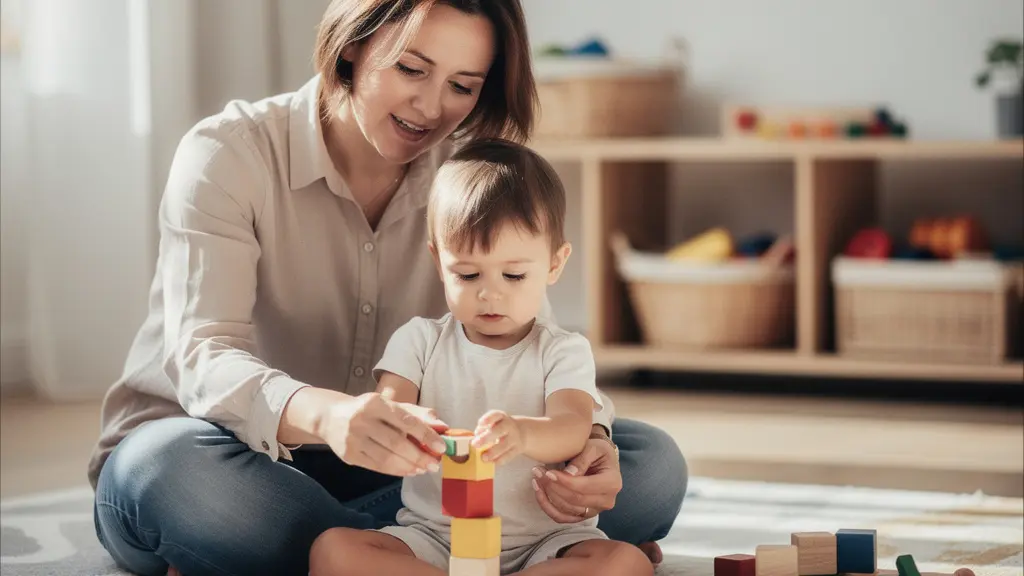
The secret to a successful toddler learning routine isn’t about the right toys or forced fun; it’s about creating a neurologically safe environment that minimizes stress.
- Inconsistent routines can elevate a toddler’s stress hormone (cortisol), which directly hinders the development of cognitive skills like attention and self-control.
- A prepared environment with visual cues (like low shelves) is far more effective at guiding behavior than repeated verbal instructions, which can overwhelm a toddler’s brain.
Recommendation: Shift your focus from managing activities to managing the environment and your child’s emotional state. Start with a simple 5-minute visual warning before transitions to dramatically reduce tantrums.
As a parent of a toddler, you’ve likely felt the pressure to “start early.” You’ve bought the educational toys, tried the sing-alongs, and attempted to introduce a “learning time,” only to be met with a short attention span, outright refusal, or a full-blown tantrum. It’s easy to feel like you’re failing before you’ve even begun, caught between the desire to nurture their potential and the reality of a busy, unpredictable little person.
Much of the common advice centers on simply “being consistent” or “making it fun.” While well-intentioned, these tips often miss the fundamental reason why toddlers thrive on routine and struggle without it. The issue isn’t a lack of engaging activities; it’s often a biological response to an environment that feels chaotic and unpredictable to their developing brain.
But what if the key wasn’t in the activity itself, but in the atmosphere surrounding it? What if we could shift our focus from forcing a schedule to fostering a state of neurological safety? This guide moves beyond the surface-level tips to explore the science behind why routines work. We’ll look at how predictability regulates your toddler’s stress hormones, how the physical environment can be your greatest teaching tool, and how to build a simple, brief learning rhythm that your child will not only tolerate but genuinely enjoy.
By understanding the “why” behind your toddler’s behavior, you can create a foundation for learning that is built on connection and calm, not conflict and stress. This article will guide you through the essential steps, from understanding the cognitive impact of inconsistency to designing a home that silently encourages independence and focus.
Summary: How to Build a Calm, Stress-Free Learning Routine for Your Toddler
- Why Inconsistent Learning Times Delay Cognitive Readiness by 6 Months?
- How to Start a 15-Minute Learning Session That Toddlers Actually Enjoy?
- Structured vs. Child-Led Routines: Which Works Best for Active Boys?
- The Scheduling Mistake That Causes Tantrums in 80% of Toddlers
- What to Do When Your Child Refuses the New Learning Routine After 3 Days?
- Why Unpredictable Days Cause Stress Spikes in Young Children?
- Why Low Shelves Change Behavior Better Than Repeated Verbal Instructions?
- How to Encourage Creative Play in Small Apartments Without Mess?
Why Inconsistent Learning Times Delay Cognitive Readiness by 6 Months?
The common parental wisdom to “be consistent” is more than just a behavioral trick; it’s a fundamental principle of early brain development. A toddler’s brain is not wired for surprises. When their day lacks a predictable rhythm, especially around core activities like meals, sleep, and play, their body enters a state of low-grade, chronic alert. This unpredictability triggers the release of the stress hormone, cortisol. While cortisol is necessary in small bursts, consistently high levels create a toxic internal environment for a developing brain. In fact, research shows toddlers in disorganized environments with inconsistent routines showed 30% higher cortisol levels throughout the day.
This biological stress directly impacts their ability to learn. The prefrontal cortex, the part of the brain responsible for executive functions—like paying attention, remembering rules, and controlling impulses—is highly sensitive to cortisol. When the brain is busy managing stress, it simply cannot allocate resources to these higher-order cognitive tasks. This is not defiance; it is a matter of brain capacity. The energy that should be going toward building neural pathways for learning is instead being used for stress management.
A landmark 2024 study from Bristol and Oxford Universities provided a clear window into this process. Using advanced brain imaging, researchers found that the period around 16 months is a critical window for developing executive functions. A key finding from the study tracking 103 toddlers was that those with consistent, predictable home routines demonstrated significantly better inhibitory control and ability to follow instructions. Their brains were calmer and more organized, allowing them to engage the necessary regions for complex tasks. In contrast, children in unpredictable environments continued to struggle with self-regulation, effectively delaying their cognitive readiness for more structured learning.
How to Start a 15-Minute Learning Session That Toddlers Actually Enjoy?
The goal of a “learning session” for a toddler isn’t to impart academic knowledge, but to create a positive and engaging ritual. The key is to make the experience feel safe, predictable, and connection-driven. A 15-minute session is an ideal length, as it respects their naturally short attention span. Instead of jumping straight into an activity, the focus should be on the “on-ramp”—the transition into the dedicated time. Using a special song, a silly handshake, or lighting a specific “learning time” candle can act as a powerful auditory or visual cue that signals a shift in activity, preparing their brain for what’s to come.
This small, predictable ritual creates a sense of safety and anticipation. Once in the session, success hinges on offering structured choice. Rather than dictating the activity, present two or three pre-selected, parent-approved options and let your child lead. This simple act of choosing gives them a sense of autonomy and control, which dramatically increases their engagement and willingness to participate. The feeling of “this is my choice” is far more powerful than “this is what I’m being told to do.”
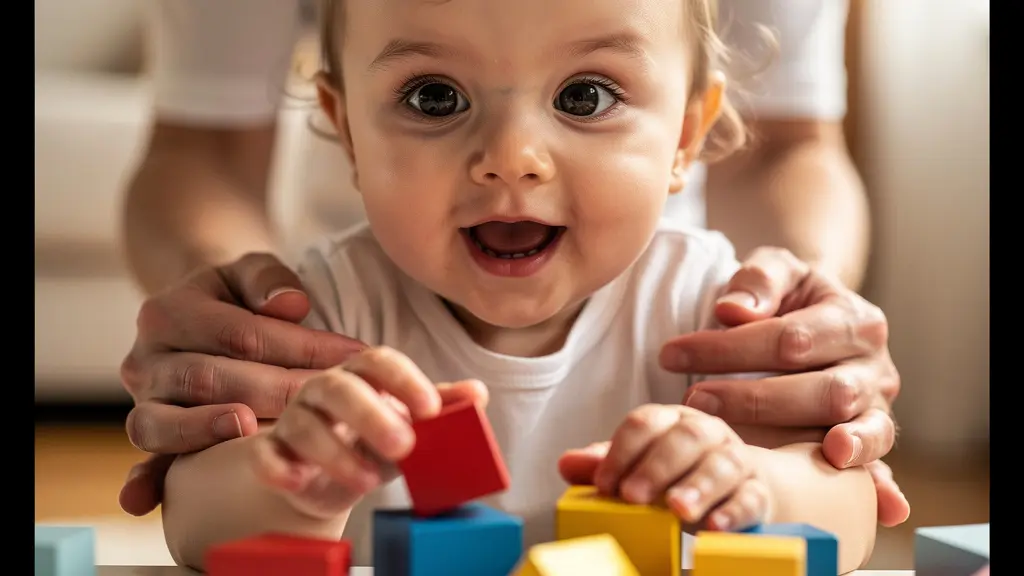
As you engage in the activity, use language that sparks curiosity rather than gives commands. Instead of “Put the red block on the blue block,” try “I wonder what would happen if we put the red block here?” This “wondering” language invites collaboration and exploration, turning you into a play partner rather than an instructor. It taps into their innate curiosity and makes the process a shared discovery.
Your Action Plan: The First Five Sessions
- Create a predictable opening ritual: Use the same short song or special greeting each time to signal the start.
- Follow the child’s lead within structure: Offer 2-3 activity choices and let them pick which one to do first.
- Use ‘wondering’ language instead of commands: Say “I wonder what happens if…” to encourage curiosity rather than direct instruction.
- Build in movement breaks: Include 1-2 minutes of physical activity like stretching or jumping mid-session to help them reset.
- End with a consistent closing routine: Use the same cleanup song or goodbye ritual to clearly signal completion and transition out.
Structured vs. Child-Led Routines: Which Works Best for Active Boys?
When considering learning routines for toddlers, particularly for highly active children, parents often debate between a rigid, parent-directed structure and a completely free-form, child-led approach. However, research suggests the most effective method is a hybrid: a child-led approach within a structured framework. This model provides the predictability toddlers need to feel secure, while honoring their innate drive for autonomy and movement.
A purely structured routine, where the parent dictates every activity and its timing, can often lead to power struggles and disengagement. The child has no stake in the process. Conversely, a completely unstructured approach can feel chaotic and overwhelming, failing to build the foundational skills of attention and task completion. The hybrid model takes the best of both worlds. The parent provides the structure—the “when” (a consistent time of day) and the “what” (a curated set of 2-3 appropriate activities)—but the child directs the “how” by choosing which activity to do and setting the pace.
This is particularly crucial for active children, who often learn best through movement. A rigid, seated activity can feel restrictive and trigger frustration. By building short, 3-5 minute movement breaks into the 15-minute session, you give their bodies what they need, which in turn frees up their minds to focus. Research consistently shows that integrating movement improves, rather than distracts from, executive function.
The following comparison, based on findings from studies on early childhood cognitive development, clearly illustrates the benefits of this balanced approach.
| Approach Element | Structured Framework | Child-Led Within Structure |
|---|---|---|
| Time Management | Fixed 15-minute blocks | Flexible 10-20 minute range |
| Activity Choice | Parent selects all activities | Child chooses from 3 curated options |
| Movement Integration | Seated activities only | 3-5 min movement breaks included |
| Learning Pace | Adult-determined progression | Child signals readiness for next step |
The data is clear: granting choice within a predictable framework can result in 40% higher engagement and better skill retention. For active toddlers, this flexibility is not just a preference; it’s a prerequisite for successful learning.
The Scheduling Mistake That Causes Tantrums in 80% of Toddlers
One of the most common triggers for a toddler tantrum is an abrupt transition. Parents often make the mistake of a “cold start,” suddenly announcing, “Okay, time to put the toys away, we’re going to read a book now!” For a toddler deeply engrossed in their play, this is incredibly jarring. Their developing prefrontal cortex makes task-switching extremely difficult, and the sudden demand to disengage and re-engage feels like a threat. This isn’t defiance; it’s a physiological stress response. A recent study on toddler stress responses found that toddlers experiencing transitions without warning showed cortisol increases of up to 75% within minutes.
The solution is simple but powerful: provide a transition warning. A 5-minute and a 2-minute verbal warning (“In five minutes, we’re going to clean up the blocks and get ready for snack”) combined with a visual or auditory cue (like a sand timer or a specific chime) gives their brain time to process the change. It respects their focus and allows them to wind down one activity before starting another, preventing the cortisol spike that leads to a meltdown.
Before even attempting a transition, it’s wise to perform a quick “H.A.L.T.” check. This acronym stands for Hungry, Angry/Anxious, Lonely, or Tired. A toddler experiencing any of these basic unmet needs is not in a state to learn or cooperate. Trying to start a learning activity when a child is hungry or exhausted is setting everyone up for failure. Addressing these fundamental needs first is non-negotiable.
Finally, consider your own emotional state. Toddlers are masters of emotional co-regulation and possess active mirror neurons. If you approach learning time feeling stressed, rushed, or anxious, your child will instantly pick up on it and their own stress system will activate in response. This is known as emotional mis-attunement. Before starting, take 30 seconds for a few deep breaths. Approach your child with a genuine smile and a calm demeanor. Your emotional state is the most important tool you have for setting a positive tone.
What to Do When Your Child Refuses the New Learning Routine After 3 Days?
You’ve done everything right. You created a gentle ritual, offered choices, and gave clear transition warnings. For two days, your toddler was engaged and happy. Then, on day three, they flatly refuse. They cry, throw the activity, or run away. This is an incredibly common and disheartening experience for parents, but it’s also a predictable and even positive sign. Developmental specialists refer to this phenomenon as an “extinction burst.”
An extinction burst is a temporary increase in an unwanted behavior right before it disappears. Your toddler’s brain has realized that this “new thing” is not a one-off event but is becoming a permanent part of the day—a routine. The resistance is their final attempt to return to the old, more familiar way of doing things. It’s not a sign that your routine is failing; it’s a sign that it’s beginning to stick.
Day 3 is when the reality of a ‘routine’ sets in, often leading to resistance. This is an extinction burst—a temporary increase in unwanted behavior before it diminishes. Parents should anticipate this and respond by shortening sessions to even 2 minutes while maintaining consistency.
– Dr. Karla Holmboe, University of Bristol Developmental Science Study
The absolute worst thing you can do during an extinction burst is give up. Doing so teaches your child that if they protest loudly enough, the new routine will go away. Instead, the correct response is to hold the boundary gently but firmly, while dramatically lowering the expectation. Acknowledge their feelings (“I see you’re not feeling like puzzles today”) but maintain the ritual. Shorten the session to just one or two minutes. You might simply sing the opening song, have them touch one puzzle piece, and then sing the closing song. You have preserved the consistency of the routine without forcing a battle. By staying calm and consistent through the burst, you are teaching them that the routine is a safe and immovable part of their day.
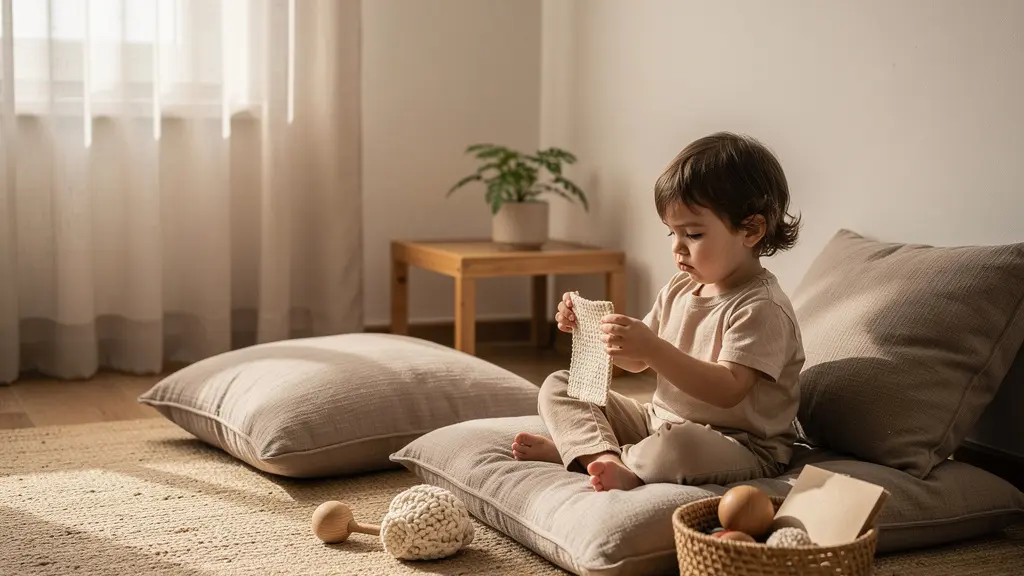
This is also an ideal time to ensure your home has a designated “calm-down corner.” A cozy space with soft pillows and a few sensory items isn’t a “time-out” spot, but a safe retreat where they can go to regulate their big emotions. It teaches them that feeling overwhelmed is okay and gives them the tools and space to find their way back to calm.
Why Unpredictable Days Cause Stress Spikes in Young Children?
While inconsistent learning times specifically impact cognitive readiness, a generally unpredictable day creates a much broader state of anxiety in young children. From a toddler’s perspective, the world is a big, confusing place. They have very little control over their lives. A predictable sequence of daily events—wake, eat, play, nap, eat, play, bath, sleep—acts as a roadmap for their day. It tells their brain what’s coming next, which creates a profound sense of security and psychological safety.
When this roadmap is missing or constantly changing, the child’s nervous system remains on high alert. They are in a constant state of “what’s next?”, which consumes significant mental energy. This chronic uncertainty is a major source of stress. A comprehensive 2024 study examining 213 toddlers found that children with irregular daily rhythms showed 54% higher overall cortisol levels compared to those with predictable routines. This elevated stress doesn’t just affect their mood in the moment; it has long-term impacts on their emotional regulation, immune system, and even sleep quality.
Case Study: The Lasting Impact of a Predictable Environment
Norwegian researchers tracked cortisol levels in 320 toddlers in daycare settings over a full year. Children placed in well-organized classrooms with highly predictable daily routines and clear visual schedules showed a significant decline in their stress hormone levels after just three months. More importantly, this calm state was maintained throughout the year. In contrast, toddlers in disorganized settings with unpredictable schedules maintained elevated cortisol all year long. The researchers noted that this stress often “spilled over” into the children’s evening hours at home, leading to more difficulty settling down for sleep and increased family conflict. This demonstrates that the calming effect of predictability is not temporary but cumulative, building a foundation of resilience.
A predictable day is not about a rigid, minute-by-minute military schedule. It is about a consistent flow and sequence. It’s the “what” and “when” that matters most. Whether snack time happens at 10:00 AM or 10:15 AM is less important than the fact that snack time reliably happens after morning playtime and before naptime. This predictable sequence is what allows their nervous system to relax, freeing up their brain to do what it does best: play, explore, and learn.
Why Low Shelves Change Behavior Better Than Repeated Verbal Instructions?
Parents often find themselves in a loop of verbal corrections: “Don’t throw that,” “Put your shoes here,” “Time to clean up your toys.” While necessary at times, relying solely on verbal instructions is one of the least effective ways to guide a toddler’s behavior. A toddler’s brain is not yet fully equipped to process, remember, and execute multi-step verbal commands, especially when they are focused on something else. As Dr. Abigail Fiske of Oxford University’s Baby Lab notes, “A toddler’s brain is wired to respond to visual, tangible cues far more effectively than to process and follow multi-step verbal commands.”
This is where the concept of a prepared environment, a cornerstone of Montessori philosophy, becomes a parent’s most powerful tool. A low, open shelf with a small, curated selection of three to five toys is not just storage; it is a permanent, silent instruction. It visually communicates: “These are your choices. You can reach them yourself. You can put them back here when you are done.” It fosters independence, builds a sense of order, and eliminates the need for the parent to constantly direct their play.
Contrast this with a large, overflowing toy box. The visual chaos is overwhelming to a toddler, making it impossible to choose an activity. They often resort to dumping the entire contents, creating a mess and then moving on. A low shelf with rotated toys, on the other hand, presents a clear, manageable choice. This environmental cue works with their brain’s natural tendencies instead of against them. The following data highlights the stark difference in effectiveness between environmental design and verbal commands.
| Communication Method | Toddler Success Rate | Cognitive Load Required |
|---|---|---|
| Low shelf with 3-5 items | 85% task completion | Low – visual processing only |
| Single verbal instruction | 45% task completion | Medium – auditory processing + memory |
| Multi-step verbal commands | 20% task completion | High – sequencing + memory + execution |
| Visual routine cards | 70% task completion | Low-medium – pattern recognition |
By shifting the focus from correcting behavior to designing an environment that guides it, you empower your child to succeed independently. A low coat hook by the door, a small stool by the sink, and accessible shelves for their toys are all silent partners in teaching responsibility and routine.
Key Takeaways
- A toddler’s learning routine is less about the activities and more about regulating their stress hormone (cortisol) through predictability.
- Resistance around day three is a normal “extinction burst,” a sign the routine is working. Respond with consistency, not by giving up.
- A prepared environment with low shelves and clear choices (“environmental cues”) teaches independence more effectively than constant verbal reminders.
How to Encourage Creative Play in Small Apartments Without Mess?
Living in a small space doesn’t have to mean sacrificing creative, and sometimes messy, play. The key to managing this is not to eliminate mess, but to contain and ritualize it. By designating specific zones, times, and materials for creative endeavors, you can encourage exploration while keeping your home from descending into chaos. This approach aligns perfectly with a toddler’s need for structure and predictability.
One of the most effective strategies is the “One Box, Big Magic” rotation system. Instead of having all art and building supplies available at once, you have a single, designated container for the week’s “big play” item. This focuses the child’s attention, dramatically reduces clutter, and makes cleanup manageable. Because the item is novel each week, it maintains a high level of engagement. This system teaches focus and respect for materials within a contained boundary.
Here are some examples of a four-week rotation that encourages different types of creative play with minimal footprint:
- Week 1: The Cardboard Box. A single large box can become a spaceship, a house, a car, or a tunnel. It is the ultimate open-ended toy that fuels imagination with zero financial cost and is easily recycled at the end of the week.
- Week 2: Building Blocks. A single set of Magna-Tiles or wooden blocks, stored in their own container, is enough to build spatial reasoning skills. The rule is simple: the blocks live in the box, and we clean them up together.
- Week 3: Vertical Art Space. Tape a large roll of butcher paper to a wall or the back of a door. This creates a dedicated “graffiti wall” for drawing that contains the mess to one vertical surface and encourages big arm movements.
- Week 4: The Sensory Bin. A simple under-the-bed plastic tub filled with dried beans, rice, or even water (on a towel in the kitchen) provides a rich sensory experience that is entirely self-contained.
The final, crucial element is the cleanup ritual. Make cleaning up the last creative act of the activity. Use a dedicated “cleanup song,” turn it into a sorting game (“Can you find all the red blocks?”), and keep it short—five minutes maximum. This transforms a chore into a predictable and even fun part of the routine, completing the cycle of play.
Start today by transforming one small part of your toddler’s environment or routine. The journey to stress-free learning begins not with a grand plan, but with a single, predictable step that builds a foundation of trust and calm for years to come.