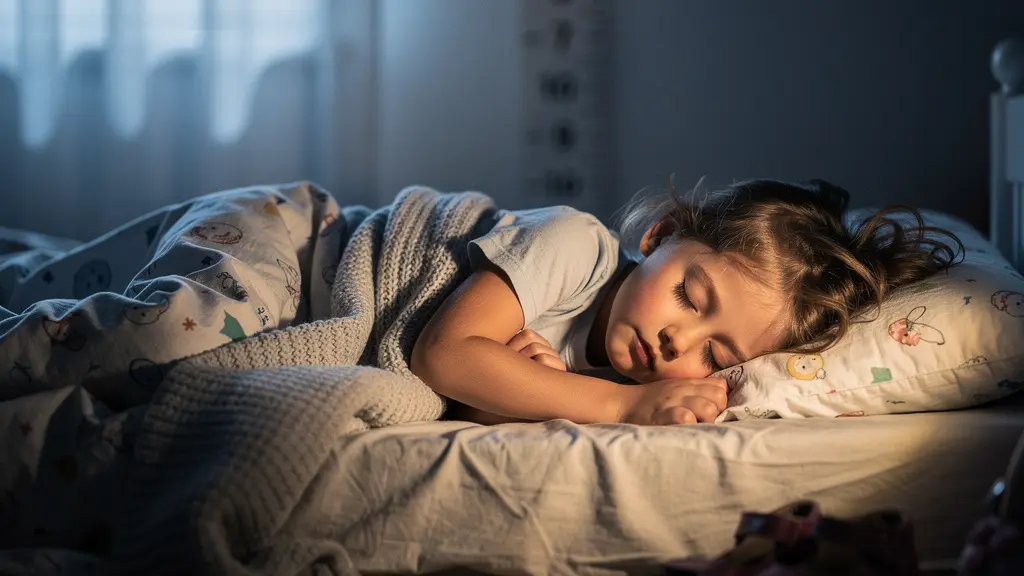
In summary:
- Sleep disruptions are often biological signals, not just behavioral issues. Understanding the “why” is key.
- Growth hormone is primarily released during deep sleep; an early bedtime directly supports physical development.
- Hyperactivity can be a sign of being overtired (“false energy”) due to a cortisol spike, not a sign they’re ready to drop a nap.
- Tailor your response to the specific cause, whether it’s a sensory need, a night terror, or a metabolic demand from a growth spurt.
- A single night of poor sleep can significantly impact immunity, making sleep recovery a health priority.
You’ve finally mastered a predictable bedtime routine. Your toddler is sleeping through the night, and you’re starting to feel human again. Then, without warning, it all falls apart. Bedtime becomes a battle, nights are filled with wake-ups, and naps are a distant memory. As a certified sleep consultant, I see parents in this exact situation every day. You’re exhausted, confused, and likely wondering what you’re doing wrong. The truth is, you’re probably not doing anything wrong. These sudden shifts, often labeled sleep regressions, are frequently tied to intense developmental periods like growth spurts.
The common advice to “be consistent” and “stay patient” is valid, but it’s incomplete. It doesn’t give you the tools to understand the profound biological changes happening in your child’s body. These aren’t just phases to be endured; they are physiological events that send out specific signals. The hyperactivity, the sudden ravenous appetite, the night terrors—these are not random acts of defiance. They are clues. They are your child’s body communicating a specific need that, once understood, can be met with precision.
So, what if the key wasn’t just to power through, but to decode these signals? This guide moves beyond generic tips to explore the science behind these disruptions. We will unpack the physiological triggers, from hormonal surges to sensory needs, that turn your peaceful sleeper into a nighttime enigma. By learning to read these biological cues, you can move from a reactive state of frustration to a proactive position of support, equipped with strategies that address the root cause, not just the symptom.
This article will guide you through the intricate connections between sleep, growth, and behavior. We’ll explore why certain times are critical for development, how to create an optimal sleep environment, and how to respond effectively to the most common and confusing nighttime events. Let’s begin decoding your child’s sleep needs together.
Summary: A Parent’s Guide to Navigating Sleep Disruptions
- Why missing the 8 PM window affects physical growth?
- How to adjust the bedroom for a child who needs sensory input to sleep?
- White Noise or Silence: When should you stop using sound machines?
- The “False Energy” sign that tricks parents into dropping naps too soon
- What is the best immediate response when night terrors strike?
- Why one night of short sleep drops immune efficiency by 70%?
- Why she is suddenly eating more than her father?
- Transitioning From Naps to Quiet Time: The 3-Step Strategy
Why missing the 8 PM window affects physical growth?
For young children, the old adage “an hour of sleep before midnight is worth two after” holds a surprising amount of scientific truth, especially concerning physical growth. The connection isn’t just about total sleep duration; it’s about timing. A child’s circadian rhythm, their internal 24-hour clock, is naturally primed for an early bedtime, typically between 7:00 and 8:00 PM. This window is crucial because it aligns with the body’s peak production of Human Growth Hormone (HGH).
The vast majority of this vital hormone isn’t released when a child is awake and active. Instead, its secretion is deeply linked to sleep architecture. Specifically, studies show that approximately 70-80% of HGH secretion occurs during slow-wave sleep (SWS), the deepest and most restorative stage of the sleep cycle. The body’s most significant pulse of SWS happens in the first third of the night. When a child misses that early bedtime window, they are often overtired. This can make it harder to fall asleep and can shorten that initial, critical deep-sleep phase, directly interfering with the body’s prime time for growth and repair.
Consistently pushing bedtime later, even by 30-60 minutes, means you are tangibly reducing the primary window for physical construction. This isn’t just about height; HGH is essential for bone density, muscle repair, and overall cellular regeneration. Honoring that 8 PM cut-off is less about enforcing a strict rule and more about synchronizing your child’s schedule with their fundamental biology to provide the essential building blocks for healthy development.
How to adjust the bedroom for a child who needs sensory input to sleep?
When a child struggles to settle, we often default to making the room darker and quieter. But for many children, especially those wired as “sensory seekers,” this lack of stimulation can actually increase anxiety and restlessness. These children don’t need less input to calm down; they need the right kind of input. Their nervous systems crave proprioceptive feedback (pressure, weight) and vestibular feedback (gentle motion) to feel grounded and secure. Creating a sensory-friendly sleep environment is about strategically adding, not just removing, stimuli.
The first step is to identify your child’s sensory profile. Are they a “seeker” who loves tight hugs, heavy blankets, and constant movement? Or are they an “avoider” who is sensitive to touch, bothered by tags on their pajamas, and prefers light sheets? Understanding this distinction is fundamental to tailoring their environment effectively. This comparative table, based on common observations from sleep consultants, can help you identify your child’s tendencies.
| Sensory Seekers | Sensory Avoiders |
|---|---|
| Craves tight hugs and pressure | Dislikes being touched while falling asleep |
| Enjoys heavy blankets | Prefers light sheets only |
| Needs movement to calm down | Overwhelmed by rocking or swinging |
| Seeks rough textures | Bothered by clothing tags and seams |
| Calmed by background noise | Startled by sudden sounds |
Once you’ve identified a seeking profile, you can introduce targeted sensory tools into the bedroom. A weighted lap pad (safer than a full weighted blanket for young children) can provide calming deep pressure during the bedtime story. A small, cozy tent or a “bed cave” can create a secure, enclosed space that feels like a hug. Even simple things like a textured wall hanging for tactile exploration before bed can help fulfill that sensory need. The goal is to provide a predictable, calming sensory diet that signals to their nervous system that it’s safe to power down.
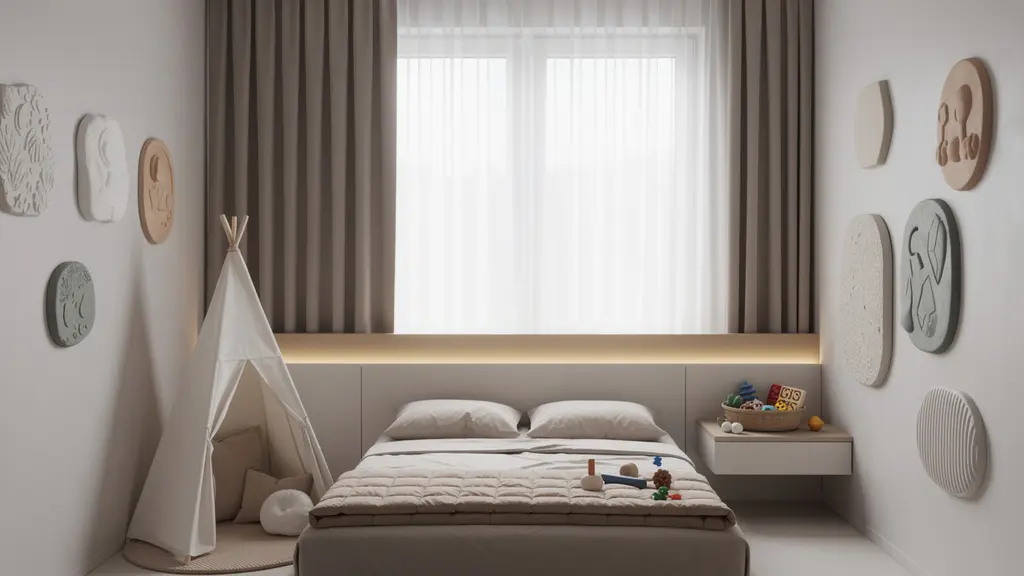
As this image of a thoughtfully designed room illustrates, a sensory-friendly space is organized, calming, and free of overwhelming clutter. It features a cozy, cave-like sanctuary and subtle textures, providing just the right amount of input to promote tranquility. It’s not about filling the room with toys, but about curating a few key elements that meet a specific biological need for regulation.
White Noise or Silence: When should you stop using sound machines?
White noise machines are a staple in modern nurseries, and for good reason. They can effectively mask disruptive household or environmental sounds, preventing startling wake-ups. For newborns, the constant “shushing” sound can mimic the womb environment, promoting longer stretches of sleep. However, as a child grows, what was once a helpful tool can sometimes become a sleep crutch—an association so strong that the child cannot fall asleep without it. The question for parents isn’t whether white noise is “good” or “bad,” but rather when and how to evaluate its continued necessity.
The key is to determine if your child has a true dependency. A simple dependency test can be revealing: during a nap, try putting your child down in a quiet room without the sound machine. If they are unable to fall asleep after their usual wind-down time (e.g., within 30 minutes) or become distressed, they may have developed a dependency. It’s also important to note the type of sound. White noise contains all sound frequencies equally, which can sound harsh (like static). Pink noise is gentler, with lower frequencies being more prominent (like steady rain), while brown noise is even deeper (like a strong waterfall). Often, simply switching to a less intense form of noise can be a step toward weaning.
The ultimate goal isn’t always complete silence. Many adults and children sleep better with some form of ambient sound. The objective is to find the minimal effective level and to ensure your child has the skill to fall asleep in various environments. If you decide to wean, do it gradually. A sudden removal can be jarring and counterproductive. A slow reduction in volume over several weeks, or using a timer so the machine turns off after they’ve entered deep sleep, allows their brain to slowly adjust to a quieter baseline. This gives them the flexibility to sleep soundly, with or without their sound machine.
The “False Energy” sign that tricks parents into dropping naps too soon
One of the most confusing signals a toddler can send is that frantic second wind just when you think they should be crashing. It’s 2 PM, they’ve refused their nap, and are now laughing maniacally while running in circles. A parent’s logical conclusion? “They must not need a nap anymore.” This is often a misinterpretation of a classic biological sign: the overtired cortisol spike. Instead of being a sign of readiness, this “false energy” is a screaming signal that the optimal sleep window has been missed and the body has switched into a state of emergency.
When a child becomes overtired, their body perceives the extreme fatigue as a stressor. In response, the adrenal glands release cortisol, a stimulating hormone designed to keep you alert in “fight or flight” situations. This floods their system with a jolt of energy that is brittle and chaotic. It’s not calm, focused energy; it’s clumsy, hyper-silly, and emotionally volatile energy. This is why a nap-fighting toddler can go from hysterical laughter to tears in a matter of seconds.
Recognizing Overtired Cortisol Spike Behaviors
Parents often report that children experiencing overtired cortisol spikes display counterintuitive behaviors including increased clumsiness (bumping into furniture), emotional volatility (laughing then crying within minutes), and hyper-silliness that escalates rather than calms. These behaviors, occurring typically 2-3 hours past the optimal nap window, indicate extreme fatigue despite appearing energetic.
This macro photograph captures the very essence of that paradox. Notice the glossy, wide eyes paired with a slight facial flush—physiological signs of exhaustion that contradict the hyperactive expression. This is the face of “false energy.”

So how can you know for sure if your child is ready to drop their nap or is simply overtired? Instead of forcing a nap, which can create a power struggle, the best approach is to implement a diagnostic quiet time. This removes the pressure while still giving their body the opportunity to rest if needed.
Your 14-Day Nap-Readiness Diagnostic Plan
- Instead of forcing a nap, enforce a 45-minute “quiet time” in your child’s room daily.
- Provide quiet, low-stimulation activities: books, puzzles, or coloring books (no screens).
- Observe without engaging. Do not intervene if the child is playing quietly.
- Track the outcome: Did your child fall asleep naturally during quiet time? Record “yes” or “no” for 14 consecutive days.
- Make your decision: If your child falls asleep on 7 or more days out of the 14 (50%), it is a clear sign they still biologically need a nap. Maintain the nap schedule.
What is the best immediate response when night terrors strike?
A child sits bolt upright in bed, eyes wide open, screaming. You rush to their side to comfort them, but they don’t seem to see you. They may push you away or thrash wildly. This terrifying event is the hallmark of a night terror, and it is fundamentally different from a nightmare. The most critical part of a parent’s response is understanding this difference. A night terror is not a psychological event; it’s a physiological one. It’s a partial arousal from the deepest stage of non-REM sleep (slow-wave sleep), almost like a glitch in the transition between sleep stages.
During a night terror, your child is not truly awake or aware of their surroundings, even if their eyes are open. They are not dreaming and will have no memory of the event the next day. This is the opposite of a nightmare, from which a child wakes up, is conscious, and can often describe the bad dream. Because they are not conscious during a terror, attempts to “wake them up” or console them are not only ineffective but can often prolong and intensify the episode. Your primary role during a night terror is not comfort, but safety.
The first step is to correctly identify the event. This triage chart helps distinguish between the most common night wakings and dictates the appropriate response for each.
| Type | Eyes | Consolable | Memory | Response |
|---|---|---|---|---|
| Night Terror | Open but unseeing | No – makes it worse | No memory next day | Safety only, don’t wake |
| Nightmare | Closed then open | Yes – seeks comfort | Can describe dream | Comfort and reassure |
| Growth Pain | Open and aware | Yes with intervention | Remembers pain | Gentle massage, warmth |
Once you’ve identified a night terror, the best immediate response is to stay calm and intervene as little as possible. Your job is to act as a quiet guardian. Stand by to ensure they don’t fall out of bed or run into furniture. Do not try to hold them, talk to them, or turn on bright lights. Simply wait for the episode to pass, which it typically will within 5 to 20 minutes. Once they naturally calm down and lie back down, you can gently guide them back under the covers. The key is to be a silent, protective presence, allowing their brain to complete its confusing transition and settle back into peaceful sleep on its own.
Why one night of short sleep drops immune efficiency by 70%?
The claim that a single night of insufficient sleep can cause a dramatic drop in immune function—often cited as high as 70%—is a stark reminder that sleep is not a passive state, but an active and essential biological process. This significant decrease in efficiency isn’t just about feeling tired; it’s a tangible crippling of the body’s frontline defense system. The “why” is rooted in how sleep deprivation sabotages the production and function of our most critical immune cells, particularly the Natural Killer (NK) cells.
Think of NK cells as your body’s elite security guards. They are tasked with identifying and destroying dangerous invaders like viruses and even precancerous cells. The majority of this cellular regeneration and deployment happens during deep, slow-wave sleep (SWS). When sleep is cut short, you are effectively defunding your security team. The body simply doesn’t have the protected time it needs to manufacture and release these cells in sufficient numbers. The 70% figure reflects this drastic reduction in the army of NK cells available to fight off pathogens the next day.
Furthermore, the disruption of sleep architecture itself plays a role. For example, specific research shows that auditory sleep disruption causes a 40% decrease in slow-wave sleep—the very stage required for this immune-building work. Even if total sleep time seems adequate, poor quality sleep fragmented by noise or other disturbances prevents the body from reaching and sustaining this vital phase. After a bad night, you can take practical steps to support your child’s compromised immune system. An “Immune Rescue Plan” can help mitigate the damage:
- Morning: Offer a breakfast rich in Vitamin C, like oranges, strawberries, or sliced bell peppers.
- Throughout the day: Focus on hydration with extra water and provide snacks with zinc, such as pumpkin seeds or yogurt.
- Avoid sugar: For 24 hours, eliminate all added sugars, which can further suppress immune function.
- Early Bedtime: Put your child to bed 30-45 minutes earlier than usual to begin repaying their sleep debt.
Why she is suddenly eating more than her father?
You watch in disbelief as your four-year-old polishes off a second helping of pasta, then asks for a banana, all while you’re still working on your first plate. A sudden, ravenous appetite that seems to defy the logic of their small size is one of the most classic and telling signs of an impending growth spurt. This isn’t just “pickiness” in reverse; it is a powerful biological demand for fuel. The immense energy required for the body to build bone, muscle, and neural pathways happens primarily during sleep, and that construction project requires a massive stockpile of resources.
During these intense periods of development, a child’s metabolic rate can skyrocket. Their body is working overtime, and their caloric needs can increase dramatically to support this process. This is not an exaggeration; it’s a metabolic necessity. The extra food they consume is converted directly into the energy and raw materials for growth.
Understanding Growth Spurt Caloric Needs
Medical experts confirm that during intense growth periods, children may need 20-30% more calories than usual. For a growing teenager, this can mean requiring over 3,000 calories daily—equivalent to adding an entire extra meal. This increased intake directly supports the body’s overnight construction of bone, muscle, and neural pathways.
Instead of restricting their intake or worrying about overeating, the key is to provide the right kind of calories, especially in the evening. A meal that is high in sugar and simple carbs can cause a blood sugar spike and subsequent crash, disrupting sleep architecture. A well-balanced evening meal, on the other hand, can support both growth and sleep. The focus should be on nutrient-dense foods that provide sustained energy and the building blocks for development.
- Complex carbohydrates: Offer whole-grain pasta, brown rice, or sweet potatoes for slow-release energy throughout the night.
- Lean protein: Include chicken, fish, beans, or lentils to support muscle repair and synthesis during sleep.
- Healthy fats and calcium: Avocado, cheese, or full-fat yogurt provide essential fatty acids for brain development and calcium for growing bones.
- Timing is key: Serve the main meal 2-3 hours before bed. If they are still hungry closer to bedtime, a small, protein-rich snack like a glass of milk or a piece of cheese is ideal.
Key Takeaways
- Sleep regressions are often signals of biological needs, such as a growth spurt or sensory overload, not just a behavioral issue.
- An early bedtime (around 8 PM) is critical as it aligns with the peak release of Human Growth Hormone during deep sleep, directly impacting physical growth.
- Hyperactive behavior in the afternoon can be a sign of being overtired (a “cortisol spike”), indicating a need for rest, not that the child is ready to drop their nap.
Transitioning From Naps to Quiet Time: The 3-Step Strategy
The end of the daily nap is a major milestone, but it’s rarely a clean break. Many children go through a lengthy in-between phase where they don’t sleep every day, but clearly still need a period of rest to make it to bedtime without a meltdown. Forcing a nap on a resistant child creates a power struggle, while skipping it entirely leads to an overtired, dysregulated evening. The strategic solution is to rebrand the nap. You transition from “nap time” to “quiet time”—a non-negotiable period of low-stimulation rest for their brain and body.
The key to a successful transition is removing the pressure to sleep. The goal of quiet time is rest, and if sleep happens, it’s a bonus. This reframing gives the child autonomy while still providing the essential downtime their developing brain needs. A successful implementation often involves creating a “Quiet Time Box” filled with special, low-key activities that are only available during this period. This creates positive anticipation rather than dread.
The Quiet Time Box Strategy
A successful implementation involves creating a special box containing low-stimulation activities exclusively for quiet time. This might include audiobooks with child-safe headphones, lacing cards for fine motor practice, mess-free coloring pads, simple puzzles, or fidget toys. The key is making these items only accessible during this rest period, which builds a positive association and makes quiet time feel like a privilege, not a punishment.
Introducing independent quiet time should be a gradual process to build comfort and confidence. Starting with short durations and your presence can help ease the transition. A visual timer is an excellent tool, as it makes the abstract concept of time concrete for a child, empowering them to see how much rest time remains. A gradual release schedule over three weeks can set the foundation for success:
- Week 1 (Building Comfort): Start with 15 minutes of quiet time. You stay in the room, reading your own book, modeling quiet activity.
- Week 2 (Fading Your Presence): Increase to 20 minutes. You can “check in” every 5 minutes with a quiet thumbs-up from the doorway.
- Week 3 (Establishing Independence): Aim for 30 minutes of fully independent quiet time with their special activity box and a visual timer. Celebrate their success with a special high-five or sticker to reinforce the positive routine.
By learning to decode these biological signals, you can meet your child’s true needs with confidence and precision. The next step is to consistently apply these insights, transforming frustrating nights into opportunities for connection and restorative rest for the whole family.
Frequently Asked Questions About Sound Machines
How do I know if my child is dependent on white noise?
Try a dependency test: have your child take a nap in a quiet room. If they can’t fall asleep within 30 minutes, they may have developed dependency.
What’s the difference between white, pink, and brown noise?
White noise has equal power across all frequencies (harsh), pink noise has more power in lower frequencies (gentler), and brown noise emphasizes even deeper frequencies (most natural).
Should the goal always be complete silence?
No. Some children sleep better with ambient sound throughout life. The goal is finding the minimal effective sound level, not necessarily eliminating it.