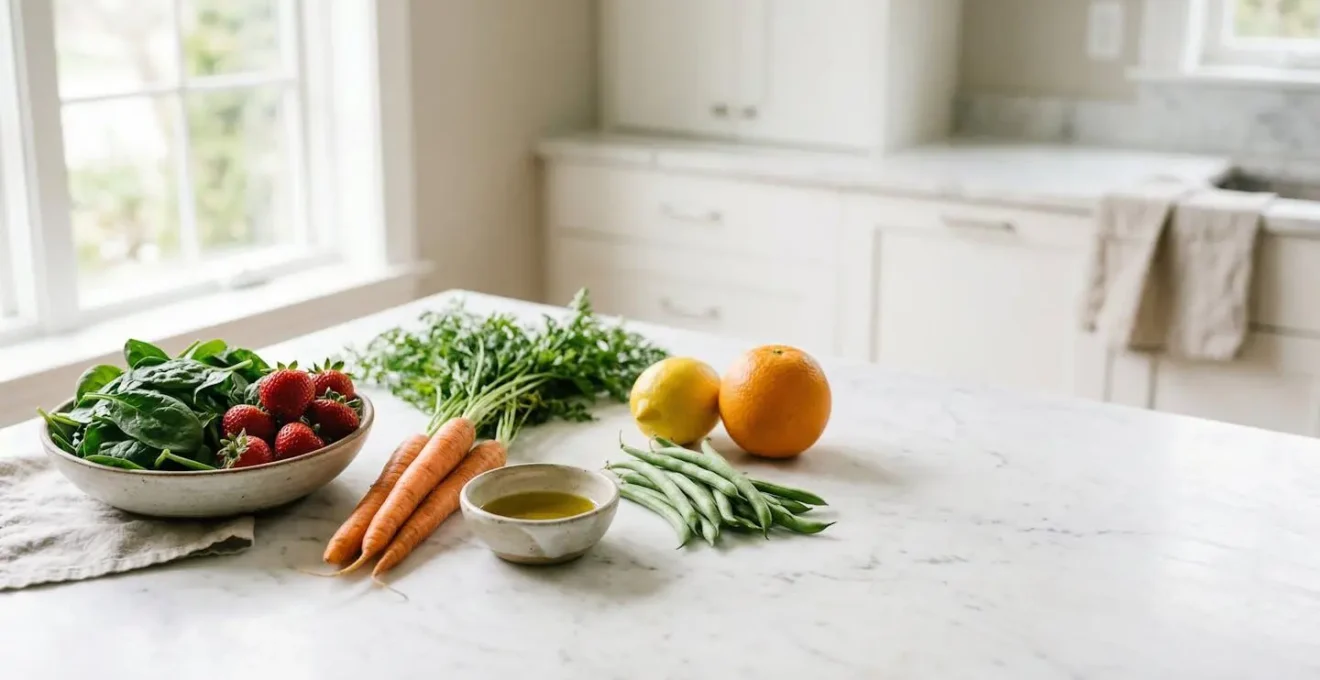
The key to your child’s nutrition isn’t just serving healthy food; it’s strategically pairing ingredients to unlock their full biochemical potential.
- Certain food combinations dramatically increase the absorption (bioavailability) of key vitamins and minerals.
- Other foods contain “antinutrients” that can block absorption, but their effects can be managed with smart timing and preparation.
Recommendation: Shift your focus from what your child eats to *how* foods work together on their plate, turning every meal into a more effective source of nourishment.
As a parent, you meticulously plan meals, encouraging just one more bite of vegetables, hoping you’re providing all the building blocks for a healthy, growing body. You focus on serving a “balanced diet,” which is the advice we all hear. But what if the benefits of that carefully chopped spinach or those bright carrot sticks are being lost before they even have a chance to work their magic? The common approach focuses on food groups, but it often misses the most crucial element: nutrient synergy.
The truth is, the body’s ability to absorb nutrients is a complex dance of chemistry. Some food components act as catalysts, unlocking essential vitamins and minerals and making them more available for use. Others act as inhibitors, binding to nutrients and preventing them from being absorbed. This isn’t about exotic superfoods or complicated recipes. It’s about understanding the fundamental biochemical interactions already present in your kitchen.
The real secret to maximizing the benefit of every bite lies not just in the *what*, but in the *how*. What if the key wasn’t simply serving more iron-rich foods, but knowing the simple catalyst that multiplies its absorption? This guide moves beyond generic advice to give you a culinary nutritionist’s perspective. We will explore the science of food synergy, revealing not only which foods to pair but, more importantly, the mechanisms behind why these combinations work. We’ll examine how to amplify vitamins, mitigate nutrient blockers, and turn even the smallest meals into nutritional powerhouses.
This article provides a strategic framework for unlocking the full nutritional power of the food you serve. Below is a summary of the key biochemical strategies we will explore, from foundational synergies to practical tips for picky eaters.
Summary: How to Maximize Nutrient Absorption Through Smart Food Pairing?
- Why you should serve strawberries with spinach?
- Why raw carrots alone won’t give them enough Vitamin A?
- Why tea or too much fiber can block calcium absorption?
- The fiber mistake: Why juicing removes the absorption regulators?
- Why inhaling food prevents proper nutrient extraction?
- How to pair rice and beans effectively for maximum absorption?
- How to pack maximum nutrition into the 3 bites they actually eat?
- Are Organic Meals Worth the Extra Cost for Toddler Brain Development?
Why you should serve strawberries with spinach?
Serving spinach is a classic move for parents aiming to boost their child’s iron intake. However, the iron found in plants (non-heme iron) is notoriously difficult for the body to absorb on its own. Its bioavailability is low, meaning much of its potential benefit passes right through the system. This is where a synergistic partner becomes essential, and Vitamin C is iron’s most powerful ally. Vitamin C acts as a biochemical catalyst, transforming non-heme iron into a form that is much more readily absorbed by the intestines.
The effect is not minor; it’s transformative. In fact, compelling research shows a 1.65 to 9.57 times higher iron absorption ratio when Vitamin C is consumed in the same meal. Pairing spinach with a potent Vitamin C source like strawberries isn’t just a tasty combination; it’s a strategic move to unlock the full potential of the iron you’re so carefully serving. This principle applies to all plant-based iron sources, including beans, lentils, and tofu. Adding a squeeze of lemon, a side of bell peppers, or a tomato-based sauce can make a world of difference.
To make this pairing delicious and kid-approved, you can easily incorporate it into meals they already love. The sweetness of the strawberries often masks the earthy flavor of the spinach, making it a perfect “stealth health” ingredient.
- Hulk Smoothie: Blend 1 cup milk, 1/2 cup strawberries, 1/4 cup fresh spinach, and 1 banana until smooth—the strawberry sweetness masks the spinach flavor completely.
- Spinach-Ricotta Stuffed Shells: Mix cooked spinach with ricotta, stuff into pasta shells, and top with a strawberry-tomato sauce for a powerful vitamin C boost.
- Dinosaur Pancakes: Add spinach puree to pancake batter, cook into fun shapes, and top with fresh sliced strawberries.
- Power Salad: For adventurous toddlers, combine baby spinach with sliced strawberries, crumbled cheese, and a simple vinaigrette for a colorful finger food.
By thinking synergistically, you’re not just serving food; you’re orchestrating a nutritional upgrade at a molecular level.
Why raw carrots alone won’t give them enough Vitamin A?
Carrots are celebrated as a primary source of Vitamin A, but this is a common misunderstanding. Carrots don’t contain Vitamin A itself; they contain beta-carotene, a precursor that the body must convert into active Vitamin A. This conversion process, and the subsequent absorption, is highly dependent on the presence of another key macronutrient: dietary fat. Vitamin A is a fat-soluble vitamin, meaning it requires fat to be transported from the digestive system into the bloodstream where it can be used for vision, immune function, and cellular growth.
Serving raw, plain carrot sticks might seem like the healthiest option, but without a source of fat, the body’s ability to utilize the beta-carotene is dramatically reduced. In fact, studies demonstrate that pairing vegetables with fat can increase vitamin A absorption from as little as 5-10% to over 50%. Fat acts as a transport vehicle, carrying these vital nutrients across the intestinal wall. This principle also applies to other fat-soluble vitamins like D, E, and K, found in foods like leafy greens, broccoli, and tomatoes.
This doesn’t mean you need to douse vegetables in oil. A small, strategic amount of healthy fat is all that’s required to unlock their full potential. Pairing carrots with a fat-rich dip is one of the easiest and most kid-friendly ways to ensure maximum nutritional benefit.
As the image shows, a simple dip can transform a snack. Here are several fat-rich, kid-approved options to serve alongside carrots and other veggies:
- Full-fat Greek yogurt ranch: Mix plain Greek yogurt with dried herbs and a squeeze of lemon for a protein-rich, fat-containing dip.
- Classic hummus: Made from chickpeas and tahini (sesame seed paste), it provides healthy fats that boost beta-carotene absorption.
- Guacamole: Mashed avocado is rich in monounsaturated fats that enhance vitamin A uptake from carrots.
- Sunflower seed butter: A great nut-free option for schools, providing essential fats to unlock beta-carotene.
- Olive oil drizzle: Lightly steaming or roasting carrots with a small amount of olive oil or butter not only adds fat but also helps break down the vegetable’s tough cellular walls, further increasing bioavailability.
This simple strategy ensures that the beta-carotene in those carrots actually has a chance to become the Vitamin A your child’s body needs.
Why tea or too much fiber can block calcium absorption?
While food synergy focuses on beneficial pairings, it’s equally important to understand nutritional antagonism—when certain compounds, known as antinutrients, actively block the absorption of vital minerals. Two of the most common culprits in a child’s diet are oxalates and phytates, which can significantly interfere with calcium absorption. Calcium is crucial for building strong bones and teeth, particularly during the rapid growth of childhood.
Oxalates are compounds found in high concentrations in healthy foods like spinach, rhubarb, and beet greens. When consumed, they bind with calcium in the intestines to form calcium oxalate, an insoluble compound that the body cannot absorb. This means that even though spinach contains calcium, its high oxalate content makes very little of it bioavailable. Similarly, phytates (or phytic acid), found in the outer hulls of whole grains, nuts, seeds, and legumes, can bind to calcium, iron, and zinc, preventing their absorption.
Even beverages like tea contain tannins, another type of antinutrient that can hinder mineral absorption. This doesn’t mean these foods are “bad,” but rather that a strategic approach to timing and preparation is necessary to mitigate their blocking effects. The goal is not to eliminate these nutrient-rich foods, but to consume them wisely to maximize mineral uptake from your child’s entire diet.
Here are some practical strategies for managing antinutrients and creating safe timing windows for calcium-rich foods:
- Wait 60-90 minutes: Keep high-oxalate foods (spinach, rhubarb) and high-phytate foods (pure wheat bran) separate from primary calcium sources like yogurt, cheese, or fortified milk by at least an hour or two.
- Pair spinach with cheese: If serving spinach in a meal, add a source of calcium like cheese. The oxalates will bind to the calcium in the cheese within the dish itself, rather than blocking the absorption of calcium from other foods eaten in the same meal.
- Soak and rinse beans: For dried beans, soaking them overnight and rinsing them thoroughly before cooking can significantly reduce their phytate content, improving mineral absorption.
- Choose low-oxalate greens for calcium: When you need a reliable green source of calcium, opt for kale, collard greens, or broccoli, which have much higher calcium bioavailability than spinach.
- Avoid pure wheat bran with milk: While fiber is good, 100% wheat bran is so high in phytates it’s one of the few foods proven to block calcium from other foods eaten at the exact same time. Avoid serving it with milk at breakfast.
By managing these compounds, you ensure that the essential minerals you serve have the best possible chance of being utilized by your child’s growing body.
The fiber mistake: Why juicing removes the absorption regulators?
In the quest for convenient nutrition, many parents turn to fruit juice, believing it’s a healthy equivalent to whole fruit. However, this common practice overlooks a critical component: soluble fiber. When you juice a fruit, you extract the vitamins, minerals, and sugar, but you leave behind the fiber that nature designed as a sophisticated metabolic regulator. This fibrous pulp does more than promote digestive regularity; it plays a vital role in controlling how quickly sugar is absorbed into the bloodstream.
Without fiber, the natural sugars in fruit juice hit the system like a tidal wave, causing a rapid spike in blood glucose and a subsequent insulin surge. Whole fruit, in contrast, releases its sugar slowly. The soluble fiber forms a gel-like substance in the small intestine, slowing down digestion and providing a steady, controlled release of energy. This prevents the “sugar high” and “crash” cycle and is far healthier for metabolic stability in the long term. This distinction is a perfect example of how removing one part of a whole food can completely change its effect on the body.
Case Study: Orange Juice vs. Whole Orange Glycemic Load
To illustrate this point, researchers compared the metabolic impact of whole oranges versus orange juice. A whole orange, with its 3.1g of fiber, produced a gentle glycemic load of 6.2 per serving. In stark contrast, the equivalent serving of orange juice, containing only 0.5g of fiber, had a glycemic load of 13.4—more than double the blood sugar impact. The mechanism is clear: the fiber in the whole fruit slows gastric emptying and the secretion of digestive enzymes, ensuring sugars are released gradually.
The visual difference between whole and processed fruit highlights this fundamental nutritional gap.
When you must opt for a liquid format, a smoothie is a far superior choice to juice. Blending retains the fiber, preserving the food’s natural structure and its ability to regulate sugar absorption. Adding a source of fat or protein, like avocado or Greek yogurt, can further slow down sugar release, creating a more balanced and sustaining meal or snack for your child.
Choosing whole fruits over juice is one of the most impactful decisions you can make for your child’s metabolic health.
Why inhaling food prevents proper nutrient extraction?
In the rush of daily life, it’s common to see children (and adults) “inhale” their food, eating so quickly that they barely chew. While it may seem like a simple matter of table manners, the speed of eating has profound physiological consequences. Digestion doesn’t start in the stomach; it begins in the brain and mouth. This initial stage, known as the cephalic phase of digestion, is critical for proper nutrient extraction. The sight, smell, and taste of food trigger the brain to signal the digestive system to prepare for action.
Chewing is the primary mechanical part of this phase. It does more than just break food into smaller, swallowable pieces. The act of mastication signals the salivary glands to release enzymes, such as amylase, which begins the breakdown of carbohydrates right in the mouth. Thoroughly chewed food has more surface area, allowing digestive enzymes in the stomach and small intestine to work more efficiently. When food is swallowed in large chunks, these enzymes can’t penetrate it effectively, leading to poor nutrient absorption, indigestion, and bloating.
Furthermore, eating slowly and mindfully activates the parasympathetic nervous system, often called the “rest-and-digest” system. Rushed eating keeps the body in a “fight-or-flight” state, which diverts blood away from the digestive tract, further impairing its function. Teaching a child to slow down and chew is not about etiquette; it’s a foundational lesson in digestive health. But how do you encourage this in a child who just wants to get back to playing?
The key is to make it a calm and engaging experience rather than a chore. Here are some slow-down games and strategies for fast eaters:
- Guess the Flavor Game: Have your child chew slowly (5-10 times per bite) to identify different ingredients or spices in the meal, turning digestion into a sensory learning activity.
- Count the Chews Challenge: For soft foods, aim for 5-10 chews per bite; for harder foods like raw vegetables or meat, aim for 15-20 chews to fully activate salivary enzymes.
- Use Smaller Utensils: Child-sized forks and spoons naturally force smaller, more manageable bites that are easier to chew thoroughly.
- Create a Calm Mealtime Environment: Turn off all screens, play soft music, and sit together as a family. A relaxed atmosphere is essential to activate the “rest-and-digest” response.
- Model Slow Eating: Children are excellent mimics. Demonstrate putting your own fork down between bites and chewing your food completely.
Patience at the dinner table directly translates to more efficient nutrition for your child’s body.
How to pair rice and beans effectively for maximum absorption?
Rice and beans are a nutritional staple across the globe, celebrated for their affordability and ability to form a complete protein. Grains like rice are low in the amino acid lysine but high in methionine, while legumes like beans are the opposite—high in lysine but low in methionine. When eaten together, they provide all the essential amino acids the body needs, making them a powerhouse for plant-based diets. However, simply combining them is only half the story. To truly maximize their nutritional value, we must once again apply the principles of synergy and antinutrient management.
Like spinach, beans are a source of non-heme iron, which has low bioavailability. They also contain phytates, which can block the absorption of iron and other minerals. The solution is the same winning combination: Vitamin C. Adding a source of Vitamin C to your rice and beans dramatically enhances iron absorption. In fact, research demonstrates that vitamin C is a powerful enhancer of plant-based iron, capable of increasing its absorption by up to six times. This simple addition transforms a basic meal into a superior source of this crucial mineral.
There’s also a common myth that you must eat rice and beans in the very same meal to get the complete protein benefit. Fortunately, the body maintains a pool of amino acids, so as long as you consume both within the same day, your body can pull what it needs to build complete proteins. This gives you much more flexibility in meal planning for picky eaters.
Here are the key strategies for building the perfect rice and bean combination:
- The Trifecta Formula: Always combine Rice + Beans + a Vitamin C source. Squeeze fresh lime juice over the top, mix in some salsa (tomatoes), or serve with a side of sliced bell peppers or oranges.
- Soak and Rinse Beans: If using dried beans, soak them overnight and rinse thoroughly before cooking to wash away a significant portion of the phytates. If using canned beans, always rinse them well in a colander to remove excess sodium and phytates.
- Picky Eater Variations: For children who dislike the texture, try mashing beans into a refried bean dip for rice crackers, blending beans into a savory soup to pour over rice, or forming cooked rice and beans into small “meatballs” for little hands.
- Cook with a little fat: Add a small amount of healthy fat like olive oil when cooking to help enhance the absorption of any fat-soluble vitamins present in the meal.
– Complete Protein Myth-Busting: Remember, you don’t need to eat rice and beans in the exact same meal. Eating them within the same 24-hour period provides the body with all the essential amino acids it needs for growth and repair.
This approach turns a simple, budget-friendly meal into a sophisticated, highly bioavailable source of complete protein and iron.
How to pack maximum nutrition into the 3 bites they actually eat?
Parents of picky eaters know the frustration well: you prepare a beautiful, balanced meal, only to watch your child eat three bites and declare they’re full. In these situations, persuasion often fails. The strategic response is not to force more food, but to increase the nutrient density of the bites they *do* eat. This means making every spoonful count by swapping standard ingredients for more powerful alternatives and using “super garnishes” to add a hidden layer of nutrition.
Nutrient density is the measure of vitamins, minerals, and other beneficial compounds per calorie. For a picky eater, a small portion of a nutrient-dense food is far more valuable than a large portion of an empty-calorie one. This involves making simple, often unnoticeable, upgrades to foods your child already accepts. For example, switching from white pasta to a lentil- or chickpea-based pasta can double the protein and fiber content without a fight. Mashing avocado on toast instead of using butter adds healthy fats and vitamins. These small swaps add up, turning a limited diet into a more robust source of nutrition.
The table below highlights some easy, nutrient-dense swaps for common kid-friendly foods.
This comparative analysis shows how simple substitutions can significantly elevate the nutritional profile of everyday meals.
| Standard Option | Nutrient-Dense Swap | Nutrition Boost |
|---|---|---|
| White bread | Whole wheat bread with seeds | Added fiber, omega-3s, minerals |
| Plain pasta | Lentil-based or chickpea pasta | Higher protein, iron, fiber |
| Fruit juice | Whole fruit smoothie with avocado | Fiber, healthy fats, sustained energy |
| Butter on toast | Mashed avocado on toast | Monounsaturated fats, vitamins E & K |
| Plain yogurt | Yogurt with hemp or chia seeds | Omega-3s, protein, minerals |
| Plain soup | Soup with olive oil swirl | Enhanced absorption of fat-soluble vitamins |
Beyond swaps, the art of the “super garnish” allows you to add a final, potent layer of nutrients just before serving. These are ingredients with a mild taste that can be sprinkled on or stirred into meals without detection.
Your Action Plan: Super Garnish Tactics for Every Meal
- Sprinkle hemp or chia seeds on yogurt: Adds omega-3 fatty acids, protein, and minerals with minimal taste change.
- Add a swirl of olive oil to soup or pasta: Boosts absorption of fat-soluble vitamins A, D, E, and K.
- Top meals with nutritional yeast: Provides B vitamins and a host of minerals with a mild, cheese-like flavor that kids often enjoy.
- Mix ground flaxseed into oatmeal or smoothies: This is an invisible way to add a significant fiber and omega-3 boost.
- Squeeze fresh lemon or lime over meals: A simple squeeze enhances iron absorption from any plant-based foods in the meal.
This shifts the focus from quantity to quality, reducing mealtime stress and ensuring your child is well-nourished, even on their pickiest days.
Key Takeaways
- Synergy is Key: Nutrients like Vitamin C (for iron) and healthy fats (for Vitamin A) act as catalysts, dramatically increasing absorption.
- Beware of Blockers: “Antinutrients” in foods like raw spinach and wheat bran can inhibit mineral absorption, making timing and preparation crucial.
- Whole is Better than Processed: The fiber in whole fruits is a vital regulator of sugar absorption; removing it (through juicing) has negative metabolic effects.
Are Organic Meals Worth the Extra Cost for Toddler Brain Development?
The debate over organic versus conventional produce is a significant one for parents, especially given the higher cost of organic options. When considering toddlers, the conversation shifts from a general health preference to a specific concern: the impact of pesticides on a rapidly developing brain. A child’s brain undergoes exponential growth in the first few years of life, and this period of intense development makes it uniquely vulnerable to environmental toxins, including pesticide residues found on food.
While the long-term effects are still being studied, the core of the argument for organic is precautionary. A toddler’s smaller body size and developing detoxification systems mean their relative exposure to any given amount of pesticide is higher than an adult’s. Choosing organic is a strategy to minimize this exposure to potentially neurotoxic chemicals. However, a 100% organic diet is not financially feasible or necessary for many families. The key is to adopt a strategic and budget-smart approach to prioritizing which foods to buy organic.
This is where the “Dirty Dozen” and “Clean Fifteen” lists, published annually by the Environmental Working Group (EWG), become invaluable tools. These lists rank produce based on the amount of pesticide residue found after washing. By focusing your organic budget on the “Dirty Dozen”—the items with the highest contamination levels—and saving money by buying conventional versions of the “Clean Fifteen,” you can significantly reduce your child’s pesticide load without breaking the bank.
Here is a practical, budget-smart organic prioritization strategy for your family:
- Prioritize the ‘Dirty Dozen’: Focus your organic budget on produce known to have the highest pesticide loads. This typically includes items with soft or edible skins like strawberries, spinach, kale, apples, grapes, and cherries.
- Save on the ‘Clean Fifteen’: Feel more confident buying conventional versions of produce with the lowest pesticide residues. These often have thick, inedible peels, such as avocados, sweet corn, pineapples, and onions.
- Consider the Toddler’s Developing Brain: Remember that the primary concern for children under five is the potential impact of neurotoxins on brain development. This makes the “precautionary principle” of reducing exposure particularly relevant during these crucial years.
- Wash All Produce Thoroughly: Regardless of whether it’s organic or conventional, all fruits and vegetables should be washed under running water to remove dirt, bacteria, and surface residues.
- Focus on Variety: Providing a diverse diet is another protective measure. It reduces over-reliance on any single food source and, by extension, any single type of potential contaminant.
Ultimately, the decision is a personal one, but by prioritizing strategically, you can make an informed choice that balances health benefits for your child’s developing brain with the practical realities of your family’s budget.