
Relying solely on fortified foods is an unreliable strategy due to major differences in nutrient bioavailability and interactions.
- The iron in cereal (non-heme) is significantly less absorbable than the iron in meat (heme), a difference compounded by nutrient blockers like calcium.
- Many fortified products use less effective forms of nutrients, and over-consumption can lead to “nutrient stacking” and potential toxicity (e.g., Vitamin A).
Recommendation: Use fortification as a safety net, not a solution. Focus on understanding nutrient pairings, timing, and whole-food sources to fill nutritional gaps effectively.
For parents of a picky eater, the “fortified with” label on a box of cereal or a carton of plant-based milk can feel like a sigh of relief. It promises a nutritional safety net, a guarantee that even on a diet of beige-colored foods, essential vitamins and minerals are still being consumed. This reliance on fortification is a common strategy to combat the stress of ensuring a child receives a complete nutritional profile.
The conventional wisdom suggests that this approach is a practical compromise. If a child refuses broccoli but eats iron-fortified oatmeal, it seems like a net win. However, this perspective often overlooks critical scientific nuances. The presence of a nutrient on a label does not guarantee its absorption or utility by the body. The world of nutrition is not one of simple addition; it is a complex system of interactions, bioavailability, and biochemical pathways.
But what if the key to nourishing a picky eater lies not in finding more fortified products, but in understanding the scientific limitations of fortification itself? The real issue isn’t just about what’s added to the food, but about how much of it the body can actually use. This requires a shift in focus from the label’s promise to the biological reality of nutrient absorption.
This article will deconstruct the science behind micronutrient fortification. We will analyze the effectiveness of common fortified nutrients like iron and calcium, explore the risks of over-fortification, identify common nutrient blockers, and provide an objective framework for making more informed nutritional decisions for your child.
This guide provides a structured analysis of the key factors influencing the effectiveness of fortified foods. Below is a summary of the topics we will cover to provide a complete and objective understanding.
Summary: Understanding Fortification for Picky Eaters
- Why the iron in cereal isn’t absorbed as well as meat?
- Sea Salt vs. Iodized Table Salt: Which supports thyroid health?
- Does your almond milk actually have the calcium they need?
- The toxicity risk: Can you get too much Vitamin A from fortified foods?
- Which specific micronutrients are missing from a nugget-heavy diet?
- Why simply eating vegetables isn’t enough for muscle repair?
- Why tea or too much fiber can block calcium absorption?
- Essential Vitamins and Minerals: What Kids Need Most During Winter?
Why the iron in cereal isn’t absorbed as well as meat?
One of the most common fortifications in breakfast cereals is iron, a critical mineral for cognitive development and energy levels in children. However, the form of iron used is the crucial factor. Foods are fortified with non-heme iron, the type found in plant-based sources. Animal products, like red meat, contain a mix of non-heme and heme iron. The human body absorbs these two forms with vastly different efficiency.
The core issue is bioavailability. Heme iron is readily absorbed by the body, whereas non-heme iron’s absorption is significantly more complex and easily inhibited by other dietary components. According to recent research from 2024, the body absorbs up to 25% of heme iron but only up to 17% of non-heme iron under ideal conditions. For a picky eater, conditions are rarely ideal. For instance, the common practice of serving fortified cereal with milk is counterproductive. The calcium in milk acts as a potent inhibitor, drastically reducing the absorption of the non-heme iron from the cereal.
Therefore, while the nutrition label may list a high percentage of the daily value for iron, the actual amount a child’s body utilizes may be a fraction of that. This discrepancy between content and absorption is a fundamental limitation of relying on fortified plant-based products for this key mineral. It highlights the need to consider not just the nutrient, but the entire meal’s composition.
Sea Salt vs. Iodized Table Salt: Which supports thyroid health?
The shift towards “natural” and minimally processed foods has led many families to swap standard iodized table salt for alternatives like sea salt or Himalayan pink salt. While these are often marketed as healthier due to their trace mineral content, this trend has an unintended consequence: the re-emergence of iodine deficiency risk. Iodine is a crucial micronutrient for thyroid function, which in turn regulates metabolism and brain development in children.
Iodized salt was one of the most successful public health fortification initiatives of the 20th century, virtually eliminating goiter and other iodine deficiency disorders in many parts of the world. The problem is that “natural” salts contain negligible amounts of iodine. A quarter teaspoon of iodized salt provides approximately 45 micrograms of iodine, while the same amount of sea salt contains less than 2 micrograms. The trace minerals in sea salt, while present, are in such minuscule amounts that they offer no significant health advantage to offset the lack of iodine.
This “fortification paradox” was highlighted by a Middle Eastern consensus panel of pediatricians, who noted that the wellness trend of using unfortified salts has inadvertently increased micronutrient deficiencies in children. For a family with a picky eater, whose diet may already be limited, relying on unfortified salt removes a critical and reliable source of iodine. In this context, standard iodized table salt is not just an option; it is a superior choice for supporting essential thyroid health.
Does your almond milk actually have the calcium they need?
Plant-based milks, especially almond milk, are a staple in the homes of many children with dairy sensitivities or dietary preferences. Almost all are fortified with calcium to match the levels found in cow’s milk. However, once again, the form and stability of the fortified nutrient are paramount. The calcium added to most plant milks is calcium carbonate, a form that is less bioavailable than the calcium phosphate naturally present in dairy.
As Dr. Sarah Johnson of the Pediatric Nutrition Research Institute states:
Calcium carbonate, the form used in most plant milks, has significantly lower bioavailability than the calcium phosphate found naturally in dairy milk.
– Dr. Sarah Johnson, Pediatric Nutrition Research Institute
This means a child’s body will absorb less calcium from a glass of fortified almond milk than from a glass of dairy milk, even if the nutrition labels show identical amounts. Furthermore, calcium carbonate is heavy and not very soluble. It tends to settle at the bottom of the carton as a thick sediment. If the carton is not shaken vigorously before each use, the first glasses poured will contain very little calcium, while the last will contain a disproportionate amount.

This physical property of fortification adds another layer of unreliability. A parent might believe their child is consuming a calcium-rich beverage, but unless the carton is properly agitated every single time, the actual intake can be inconsistent and far below what is stated on the label. This simple mechanical factor can significantly impact a child’s ability to meet their requirements for building strong bones.
The toxicity risk: Can you get too much Vitamin A from fortified foods?
While deficiencies are a primary concern, the opposite problem—toxicity from over-consumption—is a real risk with certain fat-soluble vitamins, particularly Vitamin A. This phenomenon, known as “nutrient stacking,” can occur when a child consumes multiple fortified products throughout the day, in addition to a daily multivitamin. Cereals, juices, snack bars, and milk alternatives are often fortified with Vitamin A.
The key is to distinguish between the two forms of Vitamin A on nutrition labels. Beta-carotene is the precursor found in plants (like carrots) and is considered safe, as the body only converts what it needs. However, the form often used in fortification is preformed Vitamin A (listed as retinyl palmitate or retinyl acetate). The body absorbs this form directly, and excessive intake can accumulate in the liver, leading to toxicity over time. Symptoms can range from dizziness and nausea to more severe liver and bone damage.
For parents of picky eaters, it’s easy to fall into the trap of thinking “more is better.” A fortified cereal for breakfast, a fortified juice box with lunch, a multivitamin gummy, and a fortified snack bar can quickly add up to an intake that exceeds the Tolerable Upper Intake Level (UL) for a small child. Managing this risk requires a strategic approach to reading labels and tracking the cumulative intake from all sources.
Your Action Plan: Preventing Vitamin A Stacking
- Choose one primary multivitamin and stick to it, ensuring it is appropriate for your child’s age.
- Audit your pantry: Opt for unfortified versions of some products like juice or snack bars if your child’s main staples (cereal, milk) are already heavily fortified.
- Check labels specifically for preformed Vitamin A (retinyl palmitate) versus the safer beta-carotene.
- Keep a simple mental or written log of the main fortified products your child consumes in a day to get a rough estimate of total intake.
- Rotate between fortified and unfortified breakfast cereals to create variability and reduce consistent high intake.
Which specific micronutrients are missing from a nugget-heavy diet?
Fortification can help patch some nutritional holes, but it cannot replicate the complex synergy of whole foods. A diet heavily reliant on a few processed favorites—often called a “beige diet” of chicken nuggets, fries, pasta, and plain bread—creates significant nutritional gaps that fortification alone cannot fill. These diets are notoriously low in several key components essential for a child’s health.
The most significant missing nutrient is fiber. Fiber is crucial for digestive health, regulating blood sugar, and promoting a healthy gut microbiome. Processed foods are stripped of their natural fiber content. This is a widespread issue, as research reveals that an estimated 95% of kids do not meet daily fiber recommendations. This deficiency can lead to chronic constipation and other digestive issues.
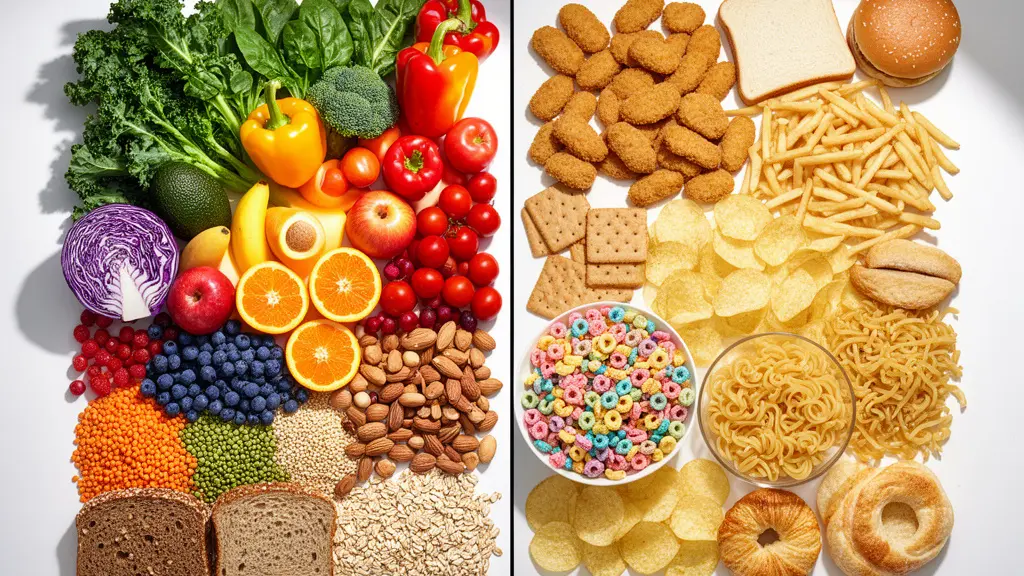
Beyond fiber, these diets are often deficient in:
- Phytonutrients: These are thousands of natural compounds in plants (like flavonoids and carotenoids) that have antioxidant and anti-inflammatory properties. They are abundant in colorful fruits and vegetables but absent in processed foods.
- Potassium and Magnesium: While some foods are fortified with major vitamins, these essential minerals are often overlooked. They play a vital role in muscle function, nerve signaling, and heart health.
- Healthy Fats: Omega-3 fatty acids, critical for brain development, are typically found in fatty fish, walnuts, and flaxseeds—foods rarely seen on a picky eater’s plate.
A fortified chicken nugget is still a chicken nugget. It cannot provide the holistic benefits of a diet rich in a variety of whole foods.
Why simply eating vegetables isn’t enough for muscle repair?
While discussions around picky eaters often focus on vitamins and minerals, protein quality is an equally important and frequently misunderstood topic. Protein is essential for growth, immune function, and muscle repair. However, not all protein is created equal. The building blocks of protein are amino acids, nine of which are “essential,” meaning the body cannot produce them and must obtain them from food.
A “complete protein” contains all nine essential amino acids in adequate amounts. Animal products like meat, eggs, and dairy are complete proteins. Most plant-based proteins (with a few exceptions like soy and quinoa) are “incomplete,” meaning they are low in one or more essential amino acids. For instance, beans are low in the amino acid methionine, while grains are low in lysine. This doesn’t mean plant-based diets are inadequate; it simply means that different plant foods must be combined to form a complete protein profile.
For a picky eater who might eat vegetables but refuses meat, simply consuming enough total protein isn’t the whole story. If their diet consists of a narrow range of plant foods, they may not be getting the full spectrum of essential amino acids needed for optimal growth. Pairing incomplete proteins strategically is key. Fortunately, many classic food combinations naturally accomplish this.
- Peanut butter on whole wheat bread
- Rice with black beans
- Hummus with whole grain crackers or pita
- A cheese quesadilla on a corn tortilla
These pairings ensure that the amino acids lacking in one food are supplied by the other, providing the body with the complete set of tools it needs to build and repair tissues effectively.
Why tea or too much fiber can block calcium absorption?
Even when a child consumes nutrient-rich foods, other compounds within their diet can actively interfere with absorption. These substances are often called “antinutrients” or nutrient blockers. They are naturally occurring in many healthy, plant-based foods and can bind to minerals, preventing the body from absorbing them. This is a critical concept that explains why a nutrient-dense diet on paper might not translate to nutrient sufficiency in reality.
Two of the most common types of nutrient blockers are:
- Phytates (or phytic acid): Found in the hulls of whole grains, seeds, nuts, and legumes. Phytates are known to strongly inhibit the absorption of iron, zinc, and to a lesser extent, calcium. A diet high in unprocessed whole grains and fiber bars can inadvertently reduce the bioavailability of these key minerals.
- Polyphenols (including tannins): These are antioxidant compounds found in tea, coffee, and some fruits and vegetables. While beneficial in many ways, tannins are powerful inhibitors of iron and calcium absorption. Giving a child tea (even herbal) with a meal can significantly reduce the mineral uptake from that food.
Timing is everything when managing these interactions. For example, separating a calcium-rich food from a high-fiber snack by a couple of hours can improve absorption. In an interesting case study on managing phytates, clinical studies demonstrated that choosing sprouted grain bread over regular whole wheat can reduce phytic acid content by up to 50%, significantly improving mineral absorption. This highlights how food preparation methods can mitigate the effects of antinutrients.
The Sprouted Grain Solution
To address the issue of phytates blocking mineral absorption, researchers investigated the impact of food processing. They found that the simple act of sprouting grains before making them into bread deactivates a significant portion of the phytic acid. In controlled trials with children, those who ate sprouted grain bread absorbed substantially more calcium and iron from their meals compared to children who ate standard whole wheat bread, even when the rest of the meal was identical. This shows that a small change in food choice can have a large impact on nutrient bioavailability.
Key Takeaways
- Fortification is a limited safety net; bioavailability is the true measure of a nutrient’s value.
- Nutrient forms matter: non-heme iron, calcium carbonate, and preformed Vitamin A have significant limitations.
- Nutrient stacking is a real risk; monitor total intake from all fortified sources and supplements.
Essential Vitamins and Minerals: What Kids Need Most During Winter?
The winter months present a unique set of nutritional challenges, particularly for picky eaters. Reduced sun exposure, combined with a higher prevalence of indoor activities, can exacerbate certain deficiencies. Focusing on a few key micronutrients during this season is a practical strategy for supporting a child’s immune system and overall well-being.
Vitamin D is arguably the most critical winter nutrient. It is synthesized by the skin upon exposure to sunlight and plays a vital role in immune function and calcium absorption. With less time spent outdoors, deficiency rates soar in winter. In fact, studies show that during winter months, up to 50% of toddlers and 70% of older kids are deficient in Vitamin D. Few foods naturally contain it, making fortified products like milk, yogurt, and orange juice, or a direct supplement, essential.
Other key nutrients for winter include:
- Vitamin C: Famous for its role in immune support, Vitamin C is an antioxidant that helps protect cells from damage. While citrus fruits are a well-known source, picky-eater-friendly options include frozen mango chunks, strawberries, and bell pepper strips.
- Zinc: This mineral is another immune system powerhouse, helping the body fight off bacteria and viruses. It’s found in meat, beans, and nuts, but is also added to many fortified cereals.
Making these nutrients appealing can involve creative, winter-friendly preparations. Warm oatmeal with fortified milk, hot chocolate made with fortified soy milk, or a simple chicken noodle soup are all effective vehicles for delivering these essential winter nutrients.

Ultimately, navigating the nutritional landscape of a picky eater requires a more nuanced approach than simply relying on fortification. By understanding the principles of bioavailability, nutrient interactions, and potential risks, you can build a more resilient and effective nutritional strategy. To apply these insights, the next logical step is to perform a detailed audit of the foods in your pantry and develop a targeted plan based on your child’s specific dietary patterns.