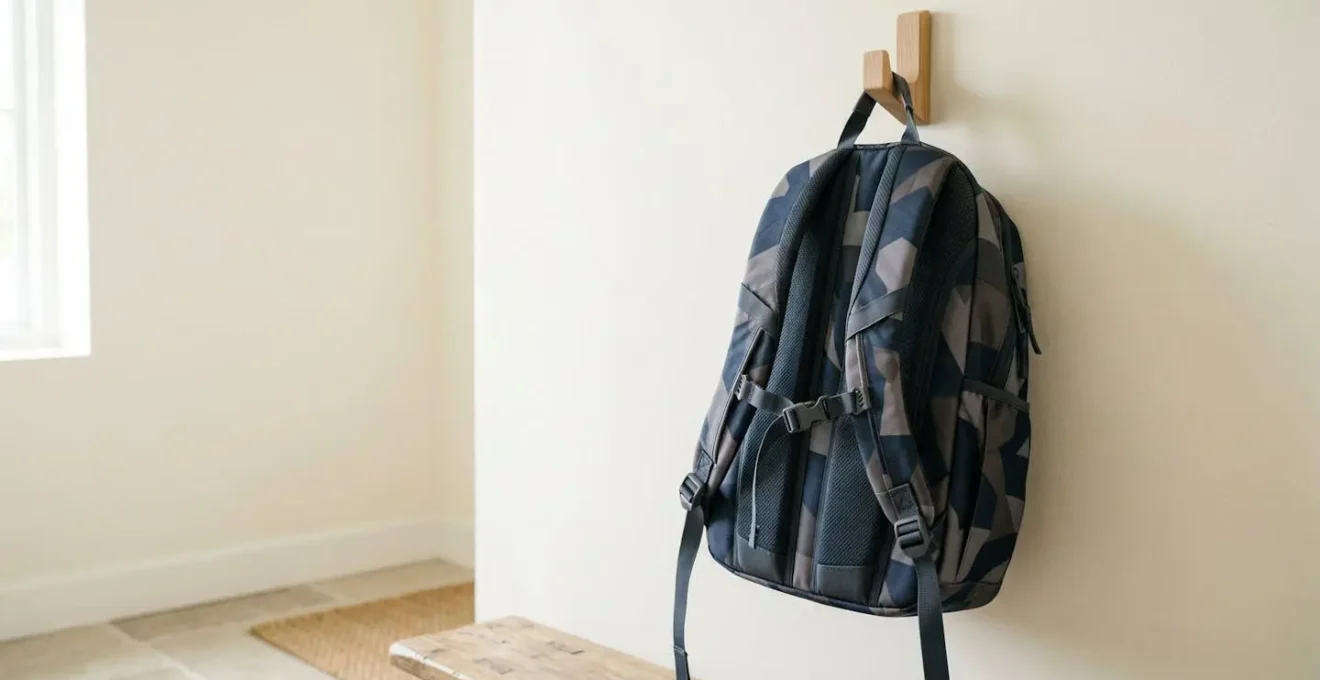
The annual battle over the “cool” but flimsy backpack versus the “boring” ergonomic one is a source of family friction. The key to winning this argument isn’t to forbid the trendy bag, but to reframe the conversation. This guide empowers you to shift the focus from safety rules to “performance ergonomics,” teaching your child how to pick pro-level gear that enhances their comfort and concentration, transforming their backpack from a fashion statement into a mobile command center for success.
Every school year, it’s the same scene in households everywhere: your child has their heart set on a flashy, character-emblazoned backpack that looks more like a toy than a tool for school. You, on the other hand, see a recipe for future back pain, with flimsy straps and zero support. The ensuing argument feels inevitable, pitting their desire for style against your concern for their spinal health. You might recite the standard rules you’ve heard—”it can’t weigh more than 15% of their body weight,” or “it needs padded straps”—but these often sound like abstract, boring restrictions to a child focused on social currency.
But what if the entire framework of this debate is wrong? What if the key to bridging this gap isn’t about forcing a compromise, but about elevating the conversation entirely? The secret lies in shifting the narrative from “safety versus cool” to “basic versus pro-level gear.” It’s about teaching them that a well-designed backpack isn’t just about avoiding pain; it’s about performance ergonomics. A great bag is a high-performance tool that helps them feel stronger, more organized, and even more focused in class.
This guide, from the perspective of a pediatric chiropractor, will arm you with the science and strategies to do just that. We’ll explore the real-world impact of poor backpack choices on your child’s body and mind. More importantly, we’ll provide concrete tactics to turn the selection process into a collaborative mission, transforming their backpack into a mobile command center they can be proud of—functionally and stylistically. We’ll even cover adjacent school-life challenges, like how to manage winter coats and advocate for their needs in the classroom, all through the lens of smart, ergonomic living.
This article will guide you through the crucial elements of backpack science, negotiation, and maintenance. Explore the sections below to become an expert on balancing your child’s health with their desire to fit in.
Summary: Trendy School Backpacks: Balancing Spinal Health With Cool Factors
- Why carrying more than 15% of body weight damages posture?
- How loose straps cause neck tension and headaches?
- How to compromise when they want a cheap superhero bag?
- The cleaning mistake that ruins the ergonomic support foam
- Does sharing hats actually spread lice as much as we think?
- How to get them to wear a coat without ruining their “look”?
- What to do if teachers limit bathroom breaks or water bottles?
- Keeping Supplies Organized: The Backpack as a Mobile Command Center
Why carrying more than 15% of body weight damages posture?
When a backpack exceeds 10-15% of a child’s body weight, it fundamentally disrupts their center of gravity. To compensate, a child instinctively leans forward from the hips or rounds their upper back. This isn’t just “bad posture”; it’s a physically taxing battle against the laws of physics. This constant forward lean puts immense strain on the lower back and forces the neck and shoulder muscles to work overtime, creating a cascade of musculoskeletal stress. The problem is far more common than parents realize; a study of seven-year-olds found only 40.37% carried backpacks within the recommended weight limits.
This concept of load dynamics goes beyond muscle strain. The forward-leaning posture compresses the chest and diaphragm, restricting full lung expansion. This can reduce oxygen intake, leading to fatigue and diminished concentration in the classroom. What begins as a temporary adjustment to carry a heavy load can, over time, become a habitual posture. The body adapts to the stress, and this rounded, forward-head posture can persist even after the backpack is taken off. This creates a blueprint for chronic back pain, neck issues, and postural deformities in adolescence and adulthood.
Think of it as a slow-motion injury. Each day with an overloaded bag reinforces faulty movement patterns. Explaining this to your child in terms of performance—”This heavy bag is literally draining your energy for sports and playing”—can be far more effective than simply stating a weight-limit rule. It reframes the issue from a restriction to a choice about their own strength and stamina.
How loose straps cause neck tension and headaches?
Loose or improperly adjusted shoulder straps are one of the most common and damaging backpack mistakes. When straps are too loose, the backpack sags down, pulling the child’s shoulders backward and downward. This forces the muscles of the upper back and neck, particularly the trapezius, to constantly contract to counteract the backward pull and lift the weight. This sustained, low-grade muscle tension is the primary culprit behind a condition known as “Backpack Syndrome.”
This isn’t just a matter of sore muscles. The chronic tension can lead to debilitating physical symptoms. According to medical research, “Backpack syndrome” involves abnormal body posture causing headaches, fatigue, and pain in the cervical and lumbar spine. The tight neck muscles can compress nerves and restrict blood flow to the head, triggering what are known as cervicogenic headaches—headaches that originate from a problem in the neck. For a child, this can manifest as unexplained head pain, difficulty concentrating, and irritability after school.
To understand the direct physical pressure, consider the image below. It highlights the specific muscles under siege from a poorly fitted bag.
As you can see, the strain isn’t isolated to the shoulders. It radiates up into the neck and the base of the skull. Teaching your child that “tight straps equal a lighter feel” is a simple way to explain this principle. The goal is for the backpack to hug their back, sitting high between the shoulder blades, so it moves *with* their body, not against it. This simple adjustment is a powerful tool for preventing chronic pain.
How to compromise when they want a cheap superhero bag?
Dismissing your child’s desire for a trendy superhero or character bag as frivolous is a losing strategy. For them, it’s about identity and belonging. The key to a successful compromise is to validate their choice while reframing the mission. Instead of saying “no,” say, “Great choice! Now let’s see if it has the pro-level features a real superhero would need.” Turn the shopping trip into a game called the “Feature Detective.” You’re on a mission together to find the coolest bag that also passes the performance test.
Your “detective’s checklist” should include the non-negotiable ergonomic features. This empowers your child to evaluate products critically, rather than just reacting to a picture. They become part of the decision-making process, learning what makes a product high-quality. The stakes are real; according to the US Consumer Product Safety Commission, an estimated 1,200 children under age 19 were treated in emergency rooms each year for backpack-related injuries from 2019 to 2021.
Here are the key clues for your Feature Detective mission:
- The Dual-Force Straps: Are there two wide, padded shoulder straps? A superhero needs to distribute force evenly.
- The Protective Shield: Does it have a padded back? This protects them from sharp objects inside the bag, like a personal shield.
- The Gravity Belt: Look for a chest or waist strap. This is a critical feature that redistributes the load’s center of gravity, just like a professional hiker’s pack.
- The Load-Balancing Chambers: Does it have multiple compartments? This helps distribute weight, preventing everything from sloshing to the bottom.
- The Proportional Fit: The backpack shouldn’t be wider than their torso or hang more than four inches below the waist. It needs to fit like a custom suit of armor.
If the desired character bag fails on multiple points, you can say, “This one looks cool, but it’s not built for a real mission. Let’s find one that is.” You can often find a compromise with patches, keychains, or other accessories to personalize a better-quality, neutral-colored bag.
The cleaning mistake that ruins the ergonomic support foam
After a few months, a school backpack can become a biohazard. The temptation is to throw it into the washing machine and dryer for a deep clean. However, this common cleaning mistake can permanently destroy the very features that provide ergonomic support. The high heat from a washing machine and, especially, a tumble dryer can melt webbing, deform the specialized foam padding, and cause the protective waterproof coatings to delaminate. You essentially strip the bag of its structural integrity.
The foam in the back panel and shoulder straps is engineered to cushion and distribute weight. Once it’s been compressed or warped by heat, it never fully recovers its shape or supportive properties. What was once an ergonomic bag becomes little more than a flimsy sack, no better than the cheap character bags you sought to avoid. Protecting this investment requires a “pro maintenance routine” instead of a brute-force cleaning approach.
To clean a backpack without compromising its performance features, follow this professional method:
- Empty and Prep: Fully empty all pockets and compartments. Use a vacuum cleaner with a brush attachment to remove all crumbs, dirt, and debris from the inside.
- Pre-Soak and Spot Treat: Never submerge the bag immediately. Instead, use a sponge and lukewarm water to wet the entire pack. Use a pH-neutral soap (like a technical wash or mild detergent) to gently scrub stains.
- Gentle Sponge Bath: Gently sponge the shoulder harness and back panel to remove sweat and oils. Allow the soapy water to sit for a few minutes but don’t let it dry.
- Thorough Rinse: Rinse the pack thoroughly with clean, cool water until all soap residue is gone. Squeeze the foam sections gently to push out any remaining suds.
- Air Dry Only: Hang the backpack to dry in a well-ventilated area, away from direct sunlight or heat sources. Never use a tumble dryer. This is the most critical step for preserving the foam and fabric coatings.
This process not only cleans the bag but also preserves the materials, ensuring the backpack continues to provide the support your child needs all year long.
Does sharing hats actually spread lice as much as we think?
The schoolyard wisdom is clear: never, ever share hats, or you’ll get head lice. This warning is often delivered with such panic that it’s become an ingrained rule of childhood. While the advice comes from a good place, the fear surrounding objects like hats, helmets, or hoodies as primary vectors for lice is largely overblown. The science of how lice are transmitted tells a different story.
The Centers for Disease Control and Prevention (CDC), the leading authority on the subject, provides a clear and reassuring explanation. It’s crucial to understand their biology to understand the real risk.
Head lice move by crawling; they cannot hop or fly. The most common way to get head lice is by head-to-head contact with a person who already has head lice.
– Centers for Disease Control and Prevention, About Head Lice
Lice are specialized parasites that need the warmth and blood supply of a human scalp to survive. They can only live for about 24-48 hours away from a host. While it is theoretically possible for a louse to crawl onto a hat and then onto another person’s head, this is an inefficient and uncommon method of transmission. The vast majority of infestations occur when children’s heads are in direct contact, such as when they are huddling over a screen, whispering secrets, or during contact sports. So, while encouraging your child not to share personal items is good hygiene practice, the primary focus for lice prevention should be on avoiding direct head-to-head contact.
How to get them to wear a coat without ruining their “look”?
The “I’m not cold” argument when it’s clearly freezing outside is another classic parent-child standoff. For many kids and teens, a bulky winter coat can feel like it ruins their carefully chosen outfit and social image. Forcing them to wear it often results in the coat being stuffed in a locker or left on the bus. The solution isn’t to fight the battle of wills, but to use their backpack as a strategic tool for weather preparedness.
The key is to equip them with lightweight, packable layers that can be easily stored without adding bulk. This approach respects their desire to manage their own “look” while ensuring they have protection when they finally admit they’re cold. A modern, multi-compartment backpack is perfect for this. It becomes a storage system for their all-weather gear, reinforcing the “Mobile Command Center” concept. A packable down or synthetic jacket can compress to the size of a water bottle, making it easy to stash.
The image below shows how a compact, packable jacket can be clipped to the outside of a bag, taking up no internal space at all.
To make this system work, teach them a three-point storage strategy using their backpack’s built-in features:
- The Water Bottle Pocket: This is perfect for stashing a rolled-up, lightweight rain shell or windbreaker for unexpected showers or windy days.
- External Bungee Cords: Many hiking-style backpacks have front bungee cords. These are ideal for quickly securing a folded fleece or heavier jacket on the outside of the pack.
- The Main Compartment: A hoodie or mid-weight fleece can be packed in the main compartment, ready to be pulled out when the temperature drops between classes or after school.
By providing options and a system for carrying them, you empower your child to manage their own comfort without sacrificing their style. It’s a practical compromise that keeps them warm and ends the morning coat argument.
What to do if teachers limit bathroom breaks or water bottles?
Classroom policies that restrict bathroom access or water consumption can be a significant source of stress for both parents and children. From a health perspective, these limitations are concerning. Proper hydration is not a convenience; it’s essential for cognitive function, energy levels, and even spinal health. The intervertebral discs that cushion the spine are largely composed of water, and dehydration can contribute to their degradation over time. As the National Spine Health Foundation notes, hydration and nutrition play a crucial role in supporting spinal wellness.
When faced with restrictive policies, your approach should be collaborative and educational, not confrontational. Frame the conversation with the teacher around your child’s performance and well-being. A well-hydrated child is a more focused and successful student. Your backpack can once again serve as a “health essentials” toolkit to navigate these rules discreetly and effectively.
Here is an advocacy and accommodation toolkit for parents:
- Equip for Quick Sips: Place a small, leak-proof, insulated 8-12 oz water bottle in the backpack’s side pocket. This allows for quick, discreet hydration between classes without disrupting lessons.
- Pack Hydrating Foods: Supplement their water intake by packing high-water-content snacks in their lunchbox. Items like cucumber slices, watermelon, grapes, and yogurt tubes all contribute to their daily hydration.
- Keep Documentation Ready: If your child has a medical need for regular hydration or bathroom breaks, keep a doctor’s note in a designated pocket of the backpack.
- Prepare Your Communication: Draft an email to the teacher that frames hydration as a key to academic success. You can mention that proper hydration is linked to better focus and is part of your child’s overall health plan.
This strategy positions you as a partner in your child’s education, advocating for their basic health needs in a way that is respectful of the classroom environment. It ensures they stay healthy and ready to learn, regardless of school policies.
Key Takeaways
- Reframe the backpack argument from “safety vs. cool” to “basic vs. pro-level gear” by focusing on performance ergonomics.
- Turn backpack shopping into a “Feature Detective” game to teach your child about quality while respecting their style choices.
- Treat the backpack as a “Mobile Command Center” for organization and success, and maintain it with a weekly reset ritual.
Keeping Supplies Organized: The Backpack as a Mobile Command Center
A disorganized backpack is more than just messy; it’s a source of daily stress, lost assignments, and wasted time. It also contributes to poor weight distribution, as heavy items sink to the bottom, creating an unbalanced load. The ultimate way to level-up your child’s backpack game is to officially transition it from a simple bag into a Mobile Command Center. This mindset shift, combined with a practical system, builds crucial executive functioning skills like planning, organization, and responsibility.
The core of this system is the “Zone Defense” method, which assigns a specific purpose to each compartment, contrasting sharply with the traditional “dump and run” approach. The table below breaks down the profound difference between these two methods.
| Organization Approach | Zone Defense Method | Traditional Method |
|---|---|---|
| Compartment Strategy | Multiple color-coded zones with specific functions: ‘Homework Turn-In,’ ‘Study Zone,’ ‘Tech Bay,’ ‘Parent-Teacher Comms’ | Everything dumped into single main compartment |
| Weight Distribution | Even distribution across compartments; heaviest items (textbooks, laptops) closest to back in center compartment | All weight settles to bottom, creating uneven load |
| Cognitive Load | Reduced—child knows exactly where each item belongs and can find it quickly | High—child must dig through entire bag to find items, causing stress and delays |
| Executive Function Development | Builds organizational skills, responsibility, and planning through dedicated zones | Limited skill development; chaotic packing reinforces disorganization |
| Maintenance Ritual | 10-minute Sunday evening ‘Backpack Reset’ ritual: empty, clean, repack for the week | Reactive cleaning only when bag becomes unusable or items are lost |
| Lost Item Prevention | High—designated pockets prevent items from getting buried or forgotten | Low—frequent discovery of moldy food, missing assignments, or broken items |
Implementing this system requires a consistent routine. The “Weekly Backpack Reset” is a non-negotiable ritual that makes the system work. It’s a 10-minute task that prevents chaos from building up and teaches your child ownership of their belongings. Use the following action plan to get started.
Your Weekly Backpack Reset: A 5-Step Action Plan
- System Scan: Identify all compartments, pockets, and storage zones in the backpack where items are regularly kept.
- Full Inventory: Completely empty the backpack, collecting and inventorying every item—from textbooks and supplies to old papers and forgotten food wrappers.
- Sort & Filter: Sort all contents against the upcoming week’s schedule and needs. Decide what is essential to repack versus what can be filed or stored at home.
- Condition Check: Assess the state of all supplies and the bag itself. Identify what is functional, what needs cleaning, and what must be replaced (e.g., broken pencils, dried markers).
- Strategic Repack: Repack the backpack using the “Zone Defense” method. Place the heaviest items in the central compartment closest to the back and assign other items to their designated zones.
This structured approach not only keeps your child organized but also transforms their backpack into a genuine tool for academic success, reducing daily stress and building lifelong habits.
By shifting your perspective and using these strategies, you can end the annual backpack battle. Start today by transforming the next purchase from an argument into a collaborative mission to find the best performance gear for your student’s success.