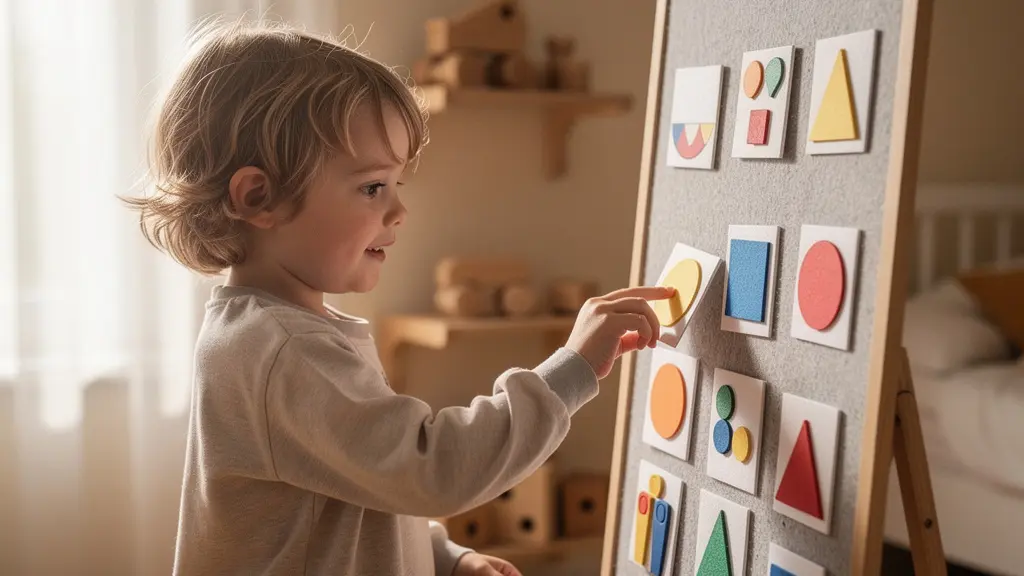
The core reason consistent schedules work is scientific, not magical: they provide an external source of executive function for a child’s developing brain, drastically reducing the cognitive load that fuels stress and meltdowns.
- Unpredictability measurably increases cortisol (the stress hormone) in young children, making emotional regulation more difficult.
- Visual tools like timers and charts succeed because they make the abstract concept of ‘time’ concrete, bypassing a developmental stage where children cannot internally grasp it.
Recommendation: Shift your goal from demanding compliance to providing predictability. Start by making just one daily transition, like leaving the park, predictable with a visual timer.
You’ve seen it happen. One minute, your preschooler is playing happily; the next, a full-blown meltdown erupts because it’s time to put on shoes. As a parent, it’s a baffling and frustrating cycle. You’ve likely heard the common advice: “be more consistent,” “use a sticker chart,” or “just stick to a routine.” While well-intentioned, this advice often misses the fundamental, data-backed reason why these outbursts occur and how schedules truly work.
What if these episodes aren’t acts of defiance, but symptoms of a brain overwhelmed by the sheer effort of navigating an unpredictable world? The evidence is increasingly clear: for a preschooler, a predictable schedule isn’t about parental control; it’s about psychological safety. It functions as a form of externalized regulation, offloading the immense mental work of predicting “what comes next” from a brain that is not yet equipped for the task. This isn’t just a parenting theory; it’s a biological reality backed by research into cognitive development and stress responses in children.
This article moves beyond the platitudes to give you the data-driven “why.” We will explore how inconsistent days trigger physiological stress, how to implement routines that are flexible enough for real life, and which tools are scientifically proven to work. By understanding the science, you can shift from feeling like an enforcer to becoming the architect of a calm, predictable environment where your child can thrive.
For those interested in the broader educational frameworks that support child development, the following video offers insights into how developmentally appropriate practices align with standards, a principle that underpins the importance of structured, predictable learning environments.
To navigate this deep dive into the mechanics of routine and behavior, this article is structured to answer your most pressing questions. We’ll break down the science, offer solutions for real-world challenges like weekends and vacations, and provide step-by-step guides for implementing these strategies effectively.
Contents: Why Consistent Schedules Dramatically Improve Preschooler Behavior
- Why unpredictable days cause stress spikes in young children?
- How to relax on weekends without destroying Monday’s routine?
- Visual Timers or Verbal Warnings: Which stops transition meltdowns?
- The rigidity trap: When staying on schedule ruins the family vacation
- How to get back on track after a week of flu and screen time?
- Why inconsistent learning times delay cognitive readiness by 6 months?
- How to create a visual routine chart for toddlers who can’t read?
- Transitioning From Naps to Quiet Time: The 3-Step Strategy
Why unpredictable days cause stress spikes in young children?
For a preschooler, the world is a series of questions: What are we doing now? What comes next? Where are we going? When their developing brain lacks the experience to answer these questions, it enters a state of high alert. This isn’t just a feeling; it’s a physiological event. Unpredictability dramatically increases a child’s cognitive load, forcing them to expend precious mental energy trying to decipher the day’s plan. When this mental work becomes overwhelming, the body’s stress response system kicks in.
The primary hormone involved is cortisol. While useful in short bursts for “fight or flight” situations, chronically elevated cortisol levels lead to irritability, anxiety, and behavioral outbursts. The link between routine and cortisol is not theoretical. In fact, research confirms that children with greater routine changes showed larger cortisol increases when transitioning between environments like preschool and kindergarten. Another study found children in disorganized care groups were considerably more stressed. This data paints a clear picture: an inconsistent day is, to a child’s nervous system, a stressful day.
Conversely, a predictable sequence of events provides a sense of security that is critical for emotional and social development. When a child knows that snack time always follows outside play, their brain doesn’t have to work to predict it. This frees up cognitive resources for learning, playing, and managing emotions. As researchers from Early Childhood Research concluded in a study on toddler stress:
Predictable, stable, and calm classroom routines may provide toddlers with a sense of security and thereby facilitate emotion regulation and social interaction
– Researchers from Early Childhood Research, Toddlers’ Cortisol Levels in Childcare and at Home Study
This sense of safety is the foundation upon which self-regulation is built. By providing a predictable structure, you are not just managing behavior; you are giving your child’s brain the calm, stable base it needs to grow.
How to relax on weekends without destroying Monday’s routine?
A common fear among parents who have worked hard to establish a weekday routine is that a more relaxed weekend will undo all their progress, leading to a “case of the Mondays” for their preschooler. The key to navigating this is to shift the goal from rigid replication to predictable flexibility. The weekend is an opportunity to teach your child that while the specific activities may change, the fundamental rhythm of the day remains a secure and reliable anchor.
The solution lies in identifying your family’s “anchor points.” These are the 2-3 non-negotiable events of the day that provide structure, even on the most relaxed Saturday. Typically, these include waking up, mealtimes, and bedtime. By keeping these core events within a consistent 30-45 minute window, you maintain the day’s structural integrity while allowing for spontaneity in between. You can have a lazy pancake breakfast or an impromptu trip to the park, because the underlying ‘skeleton’ of the day remains intact, which is what provides a child with a sense of security.

This blend of structure and freedom is not just beneficial for your child; it’s essential for the whole family. To make this work in practice, consider these strategies:
- Maintain Core Routines: Keep wake-up time, mealtimes, and the bedtime routine as consistent as possible. These are the pillars that hold up the day.
- Embrace Spontaneous Play: The time between your anchor points is perfect for unstructured, child-led activities or special family outings.
- Use Visual Cues: If you use a visual schedule, create a simplified “Weekend Mode” version. This visually communicates that the day is different but still has a predictable flow.
- Implement a “Reset” Ritual: A 20-minute Sunday evening routine, like packing the backpack for Monday or reviewing the upcoming week’s schedule, can be a powerful transition back into the weekday mindset.
By focusing on these anchor points, you teach a valuable life skill: how to be flexible within a structure, a far more useful lesson than how to follow a rigid schedule perfectly.
Visual Timers or Verbal Warnings: Which stops transition meltdowns?
“Five more minutes!” It’s a phrase uttered by parents everywhere, and it’s one that frequently fails to prevent a meltdown when time is up. The reason for this failure is rooted in developmental science. A verbal warning relies on a child’s ability to internally track the passage of time—a skill that is simply not developed in the preschool years. In fact, developmental research shows that for the first 5 years of life, 1, 5, or 10 minutes feels the same to children. To a preschooler, “five minutes” is an abstract, meaningless concept.
This is where the power of time concretization comes in. Visual timers succeed where verbal warnings fail because they make the abstract concept of time tangible and visible. A child can see the red disc shrinking on a Time Timer or watch the sand fall through a sand timer. They are no longer relying on a fuzzy internal clock; they have an external, neutral authority showing them exactly how much time is left. This externalization is key—it’s not mom or dad arbitrarily ending the fun; it’s the timer.
The following table breaks down the fundamental differences in how children experience these two common strategies, highlighting why one consistently leads to smoother transitions and fewer power struggles.
| Aspect | Visual Timers | Verbal Warnings |
|---|---|---|
| Child Independence | Children can check timer themselves | Requires repeated adult reminders |
| Emotional Response | Feels neutral and consistent | Can feel negotiable or flexible |
| Cognitive Load | Makes abstract time concrete | Requires internal time visualization |
| Best For | Highly visual or anxious children | Social children who need connection |
| Transition Success | Reduces surprise, fewer power struggles | May lead to repeated negotiations |
By using a visual timer, you are not just counting down minutes; you are providing a critical developmental scaffold. You are giving your child a tool that translates an abstract concept into a concrete reality their brain can process, empowering them to manage transitions with far less friction and stress.
The rigidity trap: When staying on schedule ruins the family vacation
While routines provide security, there is a point where adherence becomes rigidity, and the schedule starts to serve itself rather than the family. This “rigidity trap” is most apparent during vacations, holidays, or special events, when a strict insistence on the home schedule can lead to missed opportunities and unnecessary stress. The goal of a routine is to create a foundation of safety, not a cage that prevents life from happening. When the schedule causes more stress than it prevents, it has failed its purpose.
The key is to differentiate between the principle of predictability and the practice of a specific schedule. On vacation, the principle still matters—your child still benefits from knowing what to expect—but the practice must adapt. As the experts at PBS’s Whole Child program note, flexibility is what allows for true growth and discovery.
Flexible schedules let us capitalize on those moments that arise when children discover something that interests them
– PBS The Whole Child Program, The Whole Child – For Early Care Providers
Applying this flexibility requires a conscious shift in mindset. Instead of trying to replicate your home routine in a hotel room, you build a new, simplified “vacation routine.” This might mean holding onto one or two key anchor points, like a consistent bedtime story, while letting everything else flow more organically. Here’s how to adapt your principles for special circumstances:
- Create a Hyper-Simplified ‘Vacation Schedule’: Ditch the detailed chart and focus on three big blocks: “Morning Adventure,” “Afternoon Rest,” and “Evening Wind-Down.”
- Verbally Prepare for Change: Use phrases like “Today is a special beach day!” or “This is our hotel routine!” to signal that the rules are different, but there are still rules.
- Build in ‘Choice Time’: Designate blocks on the schedule for “Surprise Adventure” or “Family Choice,” which creates planned spontaneity.
- Prioritize Connection Over Compliance: When tensions rise because a schedule is being broken, ask yourself: is sticking to the plan more important than connecting with my child in this moment?
- Protect Sleep Above All: While meal and activity times can flex, preserving the sleep/nap/quiet time routine as much as possible provides a crucial anchor of consistency.
By embracing this adaptive approach, you avoid the rigidity trap and model a crucial skill for your child: how to find security and order even when the world around them changes.
How to get back on track after a week of flu and screen time?
Every parent knows the scene: illness, travel, or a holiday break upends your carefully crafted routine, leaving a trail of extra screen time and derailed schedules in its wake. The temptation is to either give up entirely or to abruptly enforce a return to the old rules, both of which often lead to power struggles and frustration. The data-driven approach, however, is a gradual reset. Your child’s system has adapted to a different, more lenient rhythm; jarring it back into place is counterproductive. The goal is to gently guide their body and brain back to the established structure.
Research on emotional regulation supports this approach. Studies show that when children learn to regulate feelings and behaviors through gradual routine restoration, they are better able to adapt to future challenges without feeling overwhelmed. You are teaching them that disruptions are temporary and that returning to a healthy structure is a manageable process. It’s not about punishment for a week of “bad” habits; it’s a collaborative process of restoring what makes everyone feel their best.
Instead of a sudden, all-or-nothing shift, you can implement a simple, multi-day protocol to ease the entire family back into its normal rhythm. This methodical approach minimizes resistance and maximizes success by re-establishing one building block of the routine at a time.
Your 3-Day ‘Back on Track’ Action Plan
- Day 1: Re-establish the Bedtime Routine Only. This is the most crucial anchor. Focus all your energy on a calm, consistent wind-down, bath, story, and bedtime, even if the rest of the day was chaotic.
- Day 2: Add Structured Mealtimes. With the bedtime anchor in place, bring back structured, screen-free meals at the kitchen table. This re-establishes the day’s primary social and nutritional anchors.
- Day 3: Return to the Full Schedule. With sleep and meals stabilized, re-introduce the full daily schedule, including structured play, learning time, and limits on screens.
- Use Collaborative Language. Frame the change positively: “Our bodies were sick and needed lots of rest and movies. Now that we’re healthy, our bodies need our healthy routine to feel strong!”
- Incorporate ‘Dopamine-Resetting’ Activities. Counteract the passive stimulation of screens with “heavy work” activities like pushing a laundry basket, carrying groceries, or outdoor play, which help re-regulate the nervous system.
This phased approach respects your child’s need for adjustment and reframes the return to routine as a positive, health-oriented family goal rather than a punitive restriction.
Why inconsistent learning times delay cognitive readiness by 6 months?
The headline-grabbing claim that inconsistent learning times can delay cognitive readiness by six months highlights a critical, often-overlooked aspect of child development: the brain learns best when it’s not under stress. While a specific six-month delay is a simplified metric, the underlying principle is scientifically sound. A brain consumed by the cognitive load of an unpredictable environment has fewer resources available for the complex tasks of learning, such as language acquisition, problem-solving, and developing focus. It’s not that the child is unwilling to learn; it’s that their mental workspace is already full.
When a child can anticipate that a specific time of day is for stories and puzzles, their brain prepares for that activity. This “priming” effect makes them more receptive to learning. Conversely, when learning activities happen sporadically, the child’s brain is constantly being pulled out of one state and forced into another, creating mental friction and resistance. This constant state of low-grade stress, fueled by unpredictable demands, directly impacts the biological conditions needed for optimal learning. The entire family system benefits from this stability; a systematic review of child development research found that maintaining family routines predicted lower cortisol levels among parents as well, creating a calmer environment for everyone.

The image of a deeply focused child, like the one above, is not an accident. It is the direct result of an environment that has eliminated the background noise of unpredictability. This child isn’t worried about what’s coming next, so they can fully immerse themselves in the “now” of the puzzle. This state of deep engagement, often called “flow,” is where the most significant cognitive leaps happen. A consistent routine is the scaffolding that makes this state of flow possible.
Therefore, a consistent learning time isn’t just about ticking a box on a schedule. It’s about creating a recurring, low-stress window where your child’s brain is calm, primed, and ready to absorb the world. By providing this predictability, you are creating the optimal neurochemical conditions for their cognitive readiness to flourish.
How to create a visual routine chart for toddlers who can’t read?
For a pre-reading toddler, a text-based schedule is meaningless. To be effective, a routine chart must speak their language: the language of pictures. A visual schedule is more than just a cute decoration; it is a powerful tool for externalizing the day’s plan. It answers the relentless “What’s next?” question without a parent having to say a word. As a result, according to the National Center for Pyramid Model Innovations, visual schedules can effectively prevent challenging behavior and help children master routines independently.
The goal is to create a tool that your child can “read” and interact with themselves. This sense of ownership is what transforms the chart from a list of parental demands into the child’s personal roadmap for the day. A truly effective visual schedule doesn’t just show the plan; it empowers the child to follow it. The most successful charts are co-created with the child and designed for their direct, hands-on use.
Creating one is simpler than you might think. It’s not about graphic design skills; it’s about clear, personal, and tangible representation. Here are the key steps to building a chart that your toddler will actually use:
- Use Personal Photos: The most powerful images are photos of your own child doing each activity. A picture of *them* brushing their teeth is far more meaningful than a generic clipart icon.
- Create “To Do” and “Done” Columns: This binary structure is simple and satisfying. It provides a clear visual representation of progress throughout the day.
- Embrace Velcro: Attaching the picture cards with velcro is a masterstroke. The act of physically moving a card from “To Do” to “Done” provides a tangible sense of accomplishment, and the “rip” sound offers satisfying sensory feedback.
- Place it at Their Level: The chart must be hung at your child’s eye level in a high-traffic area like the kitchen or playroom. If they can’t see it and reach it, they can’t use it.
- Let Them Drive: Encourage your child to be the one to check the chart and move the completed task cards. This fosters a sense of independence and control over their day.
By following these steps, you create a dynamic tool that builds autonomy, reduces transition anxiety, and puts your child in the driver’s seat of their own routine.
Key takeaways
- Predictable routines are a biological intervention, not just a behavioral one; they directly reduce the production of the stress hormone cortisol in young children.
- The most effective strategy is ‘predictable flexibility,’ which involves maintaining 2-3 daily ‘anchor points’ (like meals and bedtime) while allowing for spontaneity in between.
- Visual tools, such as timers and photo-based charts, are scientifically superior to verbal warnings because they make the abstract concept of time concrete for a developing brain.
Transitioning From Naps to Quiet Time: The 3-Step Strategy
One of the most challenging transitions for parents of preschoolers is the phasing out of the daily nap. When a child consistently resists napping but clearly still falls apart from exhaustion by evening, it signals a developmental shift. The need for rest hasn’t disappeared, but the ability to fall asleep in the middle of the day is waning. The solution is not to eliminate the midday break, but to evolve it from “Nap Time” to “Quiet Time.” This strategic pivot acknowledges their growing autonomy while ensuring their bodies and brains still get the crucial downtime they need. As educational programs have found, planning schedules with balanced active play and quiet rest periods helps children learn to pace themselves and avoid overstimulation.
The key to a successful transition is to frame Quiet Time not as a punishment or a failed nap, but as a special, new big-kid activity. It requires a clear, methodical approach that respects your child’s development. This 3-step strategy guides you through the process, turning a potential battleground into a peaceful daily ritual.
Step 1: Recognize the Signs and Rebrand the Time. The transition should begin when you see consistent nap resistance for a week or two, not just one off day. When you decide to make the change, announce it positively: “You are getting so big, your body doesn’t need a long sleep in the afternoon anymore. So now we are going to have special Quiet Time!”
Step 2: Create a Special ‘Quiet Time’ Kit. The success of Quiet Time hinges on low-stimulation, high-interest activities that are *only* available during this period. Create a bin with items like audiobooks, mess-free drawing pads, lacing cards, or simple puzzles. This novelty makes the time feel like a privilege, not a consequence.
Step 3: Start Small and Gradually Increase Duration. Do not expect your child to stay quietly in their room for 90 minutes on the first day. Start with a manageable goal of just 15-20 minutes, using a visual timer to mark the period. As they succeed, gradually increase the time by 5 minutes every few days, working your way up to a target of 45-60 minutes of independent, quiet rest.
By rebranding the time, creating special activities, and gradually building duration, you can successfully navigate the end of the nap era. You provide the structure and tools your child needs to get the rest their body requires, all while honoring their growing independence.
Frequently asked questions on Transitioning From Naps to Quiet Time
When should I start transitioning from naps to quiet time?
When your child consistently resists napping but still needs rest, typically between ages 3-5
How long should quiet time last initially?
Start with just 15-20 minutes and gradually increase by 5 minutes every few days
What activities work best for quiet time?
Low-stimulation activities like audiobooks, lacing cards, mess-free drawing pads, and puzzles that are only available during quiet time