
Positive reinforcement fails with strong-willed children not because the method is flawed, but because the application ignores their core psychological needs for autonomy and competence.
- Generic praise like “Good job!” is perceived as controlling and loses its value, fostering dependence on external validation rather than intrinsic motivation.
- Reward systems often misfire by focusing on compliance instead of building skills, leading to entitlement or power struggles over the reward itself.
Recommendation: Shift from evaluative praise to descriptive feedback and from material rewards to experience-based incentives that empower the child and strengthen your connection.
As a parent of a strong-willed child, you’ve likely felt the sting of a well-intentioned “Good job!” falling on deaf ears or a meticulously crafted sticker chart becoming the new battleground. You followed the advice: you replaced punishment with encouragement, offered rewards for good behavior, and tried to focus on the positive. Yet, the power struggles persist. The frustration is real because the conventional wisdom around positive reinforcement seems to break down when faced with a child whose inner drive for autonomy is their most dominant trait.
The common approach focuses on tools like reward charts and verbal praise as if they are universal keys. But for a strong-willed child, these can feel less like encouragement and more like attempts at manipulation. They can sense the agenda behind the sticker and often reject it not out of defiance, but as an act of self-preservation to protect their independence. This resistance isn’t a sign of a “bad” kid; it’s the feedback of a highly discerning one.
But what if the problem isn’t the tool, but how we wield it? The true challenge isn’t to find a better sticker or a more exciting treat. The key is to fundamentally shift our perspective: moving away from reinforcement as a means of control and toward reinforcement as a method for building skills and connection. This requires understanding the “why” behind your child’s reactions. It means decoding their need for control and competence and aligning our strategies with those powerful, innate drivers.
This article will dissect why these standard interactions fail and provide a solution-oriented framework. We will explore how to transform generic praise into meaningful feedback, design reward systems that foster intrinsic motivation, and turn daily conflicts into opportunities for teaching crucial life skills like patience and cooperation. The goal is to equip you with strategies that work *with* your child’s temperament, not against it.
This guide offers a structured path to understanding and applying these advanced strategies. Below, the table of contents outlines the key areas we will dissect to help you reshape your approach and build a more cooperative relationship with your child.
Summary: Why Positive Reinforcement Interactions Fail With Strong-Willed Children?
- Why generic praise like “Good Job” stops working after age 5?
- How to set up a reward chart that doesn’t lead to entitlement?
- Stickers vs. Words: Which motivates chores better for an 8-year-old?
- The common reaction that accidentally encourages bad behavior
- When to stop giving treats for potty training without regression?
- How to teach patience to a child who grabs toys?
- Why unpredictable days cause stress spikes in young children?
- Helping Siblings Learn Cooperation Through Structured Play Conflicts
Why generic praise like “Good Job” stops working after age 5?
The phrase “Good job!” is a deeply ingrained part of the parenting lexicon, often seen as the cornerstone of positive reinforcement. In early toddlerhood, it works wonders, providing a clear and simple signal of approval. However, as children develop more complex cognitive abilities, the effectiveness of such generic praise begins to wane, particularly with strong-willed personalities. The reason lies in a crucial developmental shift in how children process external feedback.
Research on the effects of praise shows that as they mature, children become more adept at interpreting the intent behind words. For a strong-willed child who values autonomy, a vague “Good job!” can feel less like genuine appreciation and more like a judgment or an attempt to control their behavior. It becomes a verbal pat on the head that implies, “You did what I wanted you to do.” This can trigger resistance, as the child’s internal goal is not to please, but to act according to their own volition. According to studies on child development, for many children, this cognitive shift in understanding praise occurs around the age of 4 or 5 years.
The solution is not to stop giving praise, but to make it more effective by shifting from evaluative to descriptive feedback. Descriptive praise acts as a mirror, reflecting back to the child exactly what they did well without attaching a generic label. Instead of “Good job cleaning your room,” try, “I see you put all your books back on the shelf and your stuffed animals in the bin.” This approach has several advantages:
- It fosters intrinsic motivation: By focusing on the action, you help the child see the positive outcome of their effort, which builds an internal sense of accomplishment.
- It builds competence: It gives specific information about what success looks like, providing a clear roadmap for them to repeat the behavior in the future.
- It respects autonomy: It is a statement of fact, not a judgment. You are an observer of their competence, not the judge of their performance.
This shift from “praise” to a “descriptive feedback loop” is a powerful tool. It communicates respect for the child’s effort and intelligence, making them a partner in recognizing their own achievements rather than a subordinate seeking approval. It’s about showing you noticed, not that you approve.
This subtle change in language moves the focus from your judgment to their action, a critical distinction for a child who is driven to be the master of their own world.
How to set up a reward chart that doesn’t lead to entitlement?
Reward charts are a go-to tool for parents, but with strong-willed children, they can easily backfire. What starts as a motivational tool can quickly devolve into a negotiation (“I’ll do it if I get two stickers”) or create a sense of entitlement, where the child expects a reward for every basic task. The fundamental mistake is framing the chart as a transaction for compliance rather than a scaffold for building skills and celebrating competence.
To avoid these pitfalls, the setup process is as important as the chart itself. A chart that is imposed upon a strong-willed child will be met with resistance. The key is co-creation and a focus on connection-based rewards. Involving the child in designing the chart, choosing the target behaviors, and deciding on the rewards gives them a sense of ownership and control, aligning the process with their innate need for autonomy. This collaborative approach turns the chart from a top-down directive into a shared project.

Furthermore, the nature of the rewards is critical. While small toys or treats can work in the short term, they reinforce extrinsic motivation. To build lasting habits and avoid entitlement, prioritize experience-based rewards that focus on connection and special privileges. These could include an extra 15 minutes of one-on-one playtime with a parent, choosing the family movie for the night, or a special trip to the park. These rewards satisfy the child’s need for connection and control in a way that material objects cannot. Strong-willed children often respond well to being given choices, which helps them feel empowered. For example, you might ask, “Would you like an extra bedtime story or to build a fort in the living room as your reward?”
Finally, reward charts should be a temporary tool with a clear exit strategy. Frame them as a way to “practice” a new skill, like getting ready for school on time. Once the behavior becomes a routine, the chart should be phased out, replaced by descriptive praise and an internalized sense of accomplishment. This positions the chart as a support system, not a permanent payment plan for expected behavior.
By focusing on collaboration, connection-based rewards, and a clear purpose, a reward chart can become a powerful tool that respects a strong-willed child’s autonomy while guiding their behavior effectively.
Stickers vs. Words: Which motivates chores better for an 8-year-old?
By age eight, a child’s understanding of motivation is more nuanced. The simple thrill of a shiny sticker may be wearing off, especially for a strong-willed child who is beginning to question the “why” behind their actions. The debate between tangible rewards (stickers) and verbal affirmation (words) isn’t about which one is universally “better,” but which tool is appropriate for the specific goal: are you trying to teach a new, difficult skill, or are you trying to build a lasting sense of responsibility?
Stickers and other external rewards are highly effective for initiating a new or challenging behavior. They provide a clear, immediate, and tangible incentive that can help a child overcome initial resistance. However, their power is primarily short-term. Over-reliance on stickers for everyday chores can lead to a dependency on external validation, where the child’s motivation is tied to “what I get” rather than the intrinsic value of contributing to the family.
Words, specifically descriptive praise and statements of appreciation, work on a different level. They build intrinsic motivation. As the Raising Children Network points out, this form of encouragement fosters a different mindset.
When praise is focused on effort, children are more likely to see trying hard as good in itself. They’re also more likely to keep trying and to be optimistic when they face challenges.
– Raising Children Network, Praise & encouragement for child behaviour
For an 8-year-old, a statement like, “Thank you for taking out the recycling without being asked; it really helps our family work as a team,” is far more powerful in the long run than a sticker. It frames the chore not as a task to be completed for a prize, but as a meaningful contribution to the family unit. This builds a sense of responsibility and connection.
The following table, based on principles from behavioral science, breaks down when to use each approach for maximum effectiveness. As a comparative analysis shows, each method has its place.
| Method | Short-term Effect | Long-term Impact | Best Use Case |
|---|---|---|---|
| Sticker Charts | High initial motivation | Can create dependency on external rewards | Learning new skills or establishing routines |
| Descriptive Praise | Builds understanding of expectations | Develops intrinsic motivation | Reinforcing established behaviors |
| Appreciation Statements | Creates sense of contribution | Builds family connection and responsibility | Daily chores and family teamwork |
The most effective strategy is a hybrid one: use stickers sparingly to jump-start a new, complex routine, but quickly transition to descriptive praise and appreciation to cultivate the internal drive that will sustain the behavior for years to come.
The common reaction that accidentally encourages bad behavior
One of the most profound paradoxes in parenting a strong-willed child is that their most challenging trait—their stubbornness and rule-breaking tendency—is often linked to future success. It’s a difficult perspective to hold in the middle of a tantrum, but it’s a crucial one. A long-term study has shown a surprising correlation between defiance in childhood and achievement in adulthood. In fact, a 40-year longitudinal study found that kids who frequently break the rules or defy their parents often go on to become educational over-achievers and high-earning adults. This suggests their “defiance” is a manifestation of independence and a willingness to stand their ground—valuable traits in the adult world.
However, the common parental reaction to this defiance is to engage in a power struggle. When a child says “No,” the instinctive response is to double down with a “Yes, you will!” This reaction, while understandable, is precisely what fuels the negative behavior. For a strong-willed child, the power struggle itself becomes the reward. The goal shifts from avoiding the task to winning the argument. By engaging in the fight, you are inadvertently giving them the attention and sense of control they crave, thereby reinforcing the very behavior you want to stop.
Breaking this cycle requires a counter-intuitive approach: disengage from the power struggle and redirect the child’s need for control toward problem-solving. This means shifting from “telling” to “asking.” Instead of issuing commands, you invite collaboration. This approach respects their intelligence and autonomy, turning them from an adversary into a partner. The following checklist provides a framework for breaking the power struggle cycle and transforming conflict into cooperation.
Action Plan: Breaking the Power Struggle Cycle
- Shift from Telling to Asking: Instead of commands, use ‘what’ and ‘how’ questions in a friendly tone. “What are we supposed to be doing now? What ideas do you have to solve this problem?” This invites collaboration.
- Use a Family Meeting Agenda: Formally put recurring problems on a family meeting agenda. Brainstorming for solutions together gives the child a voice and a sense of control over the outcome.
- Let the Routine be the Boss: Co-create visual routine charts (with pictures for younger kids) that include times. When the child is dawdling, ask, “What does our poster say we should be doing now?” The chart becomes the authority, not you.
- Provide Limited, Acceptable Choices: Offer two choices you can live with. “Do you want to put on your pajamas first, or brush your teeth first?” This fulfills their need for control within parent-approved boundaries.
- Schedule Special Time: Proactively schedule one-on-one time for play and connection into the routine. This fills their attention bucket positively, so they don’t have to seek it through negative behavior.
By refusing to be the other end of the tug-of-war rope, you remove the “reward” of the struggle and open the door for more productive, respectful communication.
When to stop giving treats for potty training without regression?
Potty training is a classic case where extrinsic rewards, like a small treat for every success, are commonly used. For many children, this can be an effective way to generate initial enthusiasm and focus. However, with any child, and especially a strong-willed one, the transition away from these rewards is a delicate process. The goal is to move from a behavior motivated by a treat to one motivated by an internal sense of accomplishment and the physical comfort of being dry. Stopping too soon can lead to regression, while waiting too long can create a deeply ingrained expectation that is difficult to break.
The key indicator for starting the weaning process is consistency. When your child has been successfully using the potty with very few accidents for a solid period—typically two to three weeks—it’s a sign that the motor skill and bodily awareness are becoming consolidated. At this point, the behavior is less of a new, challenging skill and more of a developing habit. This is the moment to begin shifting the reinforcement from external to internal.
The transition should be gradual, not abrupt. Instead of stopping treats cold turkey, start by making them intermittent. You can move to a “surprise” treat at the end of a successful day rather than after every single use. Simultaneously, you must significantly ramp up the descriptive praise and emotional connection. A high-five, a hug, and a specific statement like, “You felt your body needed to go, and you went all by yourself on the potty! You must feel so proud!” becomes the new reward. This helps the child connect their action to a positive internal feeling (pride, mastery) rather than a positive external one (taste of candy).
It’s important to recognize that if you need to use treats heavily for an extended period, it might be a signal that the child isn’t truly ready or that the process is causing them stress. As parenting experts suggest, overusing rewards can be a red flag. If weaning off treats causes significant regression, it’s often more productive to take a step back and address potential underlying issues—be it stress, a need for more control, or simply not being developmentally ready—rather than reintroducing the treats and reinforcing a transactional relationship with this basic life skill.
By timing the transition based on consistency and replacing the treat with meaningful connection and descriptive feedback, you can guide your child toward self-mastery.
How to teach patience to a child who grabs toys?
The impulsive act of grabbing a toy from another child is a classic developmental challenge. For a strong-willed child, this impulse is often magnified by a powerful sense of “I want it now.” The conventional response is to reprimand the action (“We don’t grab!”). While necessary, this approach only addresses the surface behavior. To teach true patience, we must go deeper and help the child develop the underlying skill of self-regulation, which is a core component of cognitive executive functioning.
Instead of viewing the grabbing as purely “bad behavior,” it’s more productive to see it as an underdeveloped skill. The child has a strong impulse (the “motor”) but lacks the “brakes” to control it. Our job is not to weaken the motor but to help them build the braking system. This begins with empathy and verbalizing the process. First, acknowledge their desire: “I can see you really want that red block. It looks very fun to play with.” This validation is crucial; it shows you understand their perspective, which de-escalates the situation and makes them more receptive to guidance.
Next, introduce the concept of waiting in a concrete way. This is where you connect the feeling to an action plan. You can say, “Your friend is playing with it right now. We can ask for a turn in a minute. Let’s watch the clock together for one minute, and then we’ll ask.” This externalizes the waiting process and gives them a tangible task to focus on instead of their frustration. For younger children, using a visual timer or singing a short song can serve the same purpose.
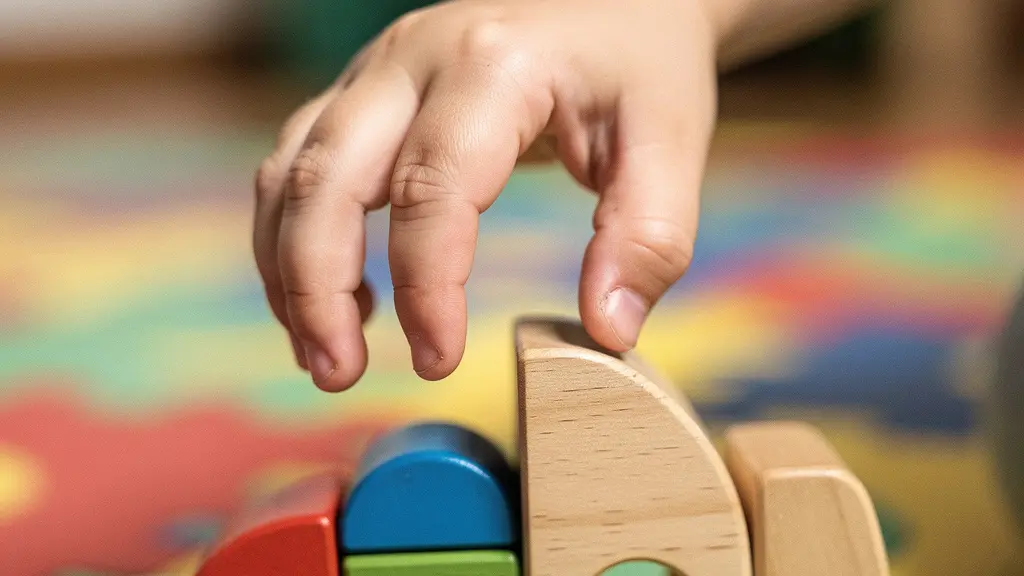
This process of “sportscasting” or narrating the social interaction provides a mental script for the child. You are essentially lending them your prefrontal cortex, modeling the internal monologue they will eventually develop on their own. Each time you guide them through this “notice, validate, plan, wait” sequence, you are helping them forge the neural pathways for patience and impulse control. You are teaching them how to direct and control their powerful will, rather than letting it control them.
This method transforms a moment of conflict into a valuable lesson in emotional intelligence, helping your strong-willed child harness their determination for positive social interaction.
Why unpredictable days cause stress spikes in young children?
Strong-willed children are often perceived as wanting to be in charge of everything. While this is partly true, this drive for control is often a coping mechanism for a deeper, underlying need: predictability. An unpredictable day, with no clear structure or routine, can be highly stressful for a young child, especially one with a determined temperament. Their brain is working hard to understand the world and its rules, and when the rules keep changing, it can lead to a state of cognitive overload and anxiety. This anxiety often manifests as “bad” behavior: meltdowns, defiance, and power struggles.
This need for structure can seem paradoxical. Indeed, observations of strong-willed children show that as babies, they may have resisted regular sleep or feeding schedules. However, as they grow, the lack of a predictable rhythm can become a major source of stress. They may not be able to articulate that they are tired or hungry, but the internal chaos of an unstructured day leads to external chaos in their behavior. A routine acts as a “predictability anchor,” a stable map that helps them navigate their day with confidence. When they know what to expect, they feel safe and in control, which frees up mental energy for cooperation and learning.
Creating this predictability doesn’t mean having a rigid, minute-by-minute schedule. It means having a consistent flow and clear rituals around key parts of the day, such as waking up, meals, and bedtime. For a strong-willed child, it is crucial that they are involved in creating this routine. This hands them back a sense of control in a productive way. Here are some effective strategies:
- Create a Visual Chart Together: Use drawings or photos to create a “routine poster” that shows the sequence of the day. This externalizes the authority; the chart becomes the boss, not you.
- Use “When/Then” Statements: Frame transitions in a way that highlights the predictable sequence. “When you have put on your shoes, then we can go to the park.”
- Incorporate Special Time: Build dedicated one-on-one connection time into the routine. Knowing that this special time is a guaranteed part of the day can motivate cooperation during less preferred activities.
By providing a predictable environment, you are not stifling your child’s spirit; you are giving them the solid foundation they need to manage their strong emotions and powerful will.
A predictable day is a calm day, for both the child and the parent.
Key Takeaways
- Generic praise like “Good job” often fails because strong-willed children perceive it as a controlling judgment rather than genuine feedback.
- Effective reward systems are co-created with the child and focus on connection-based experiences, not material items, to avoid fostering entitlement.
- The common parental reaction of engaging in a power struggle inadvertently rewards defiant behavior; disengaging and redirecting is a more effective strategy.
Helping Siblings Learn Cooperation Through Structured Play Conflicts
The strong-willed child, with their high standards and determined nature, often grows into a natural leader. They are driven, confident, and unafraid to pursue their goals. This perspective is a powerful reframe for parents in the thick of daily challenges. Your child isn’t just being “difficult”; they are practicing the skills that, if channeled correctly, will serve them well in adulthood. As one parenting resource notes, this temperament is a feature, not a bug.
Rest assured knowing that confident and fearless children grow up to be adults that are poised and certain of their own abilities. In general, strong-willed children hold themselves and others to a very high standard. This character trait serves them well in the future as they set the bar high and expect to achieve greatness.
– Our Daily Mess, Why Spirited Children Grow Up to be Successful Adults
One of the most important training grounds for channeling this will is sibling interaction. Conflicts over toys, games, and attention are inevitable, but they are also rich learning opportunities. Instead of simply punishing the conflict, we can structure it to teach empathy and cooperation. When a conflict arises, a powerful strategy is to step in not as a judge, but as a mediator. Help each child articulate their feelings and needs (“You feel angry because you wanted the blue car,” “You feel frustrated because your tower was knocked down”).
The ultimate goal is to help them move from a mindset of domination to one of influence and collaboration. This involves actively teaching and reinforcing empathy. You can guide them by asking questions like, “How do you think your brother feels right now?” and “What is one idea we can think of so you can both have fun?” By helping them see value in another person’s thoughts and well-being, you are teaching them the foundation of true leadership: the ability to influence and inspire rather than control. Every resolved sibling squabble is a step toward transforming their powerful will into a powerful capacity for connection.
By shifting your reinforcement strategies from control to connection and from praise to skill-building, you are not just managing behavior; you are nurturing a future leader who is not only determined but also empathetic and cooperative.
Frequently Asked Questions on Why Positive Reinforcement Interactions Fail With Strong-Willed Children?
When should I start reducing treat rewards?
Begin when the behavior becomes consistent for at least 2-3 weeks, gradually spacing out rewards while increasing verbal acknowledgment.
What if my child regresses after stopping treats?
Regression often signals stress or that the skill wasn’t fully consolidated. Address underlying issues and return to basics with support, not treats.
How do I handle the ‘extinction burst’?
Expect temporary worsening when removing rewards. Stay consistent and don’t reintroduce treats, as this would reinforce the negative behavior.